
Showing posts with label Octavius Winslow. Show all posts
Showing posts with label Octavius Winslow. Show all posts
Friday, April 6, 2012
An ocean of mercy
And now, beloved, with this ocean of mercy rolling its
swelling waves at your feet, each billow as it breaks murmuring in the sweetest
cadence, "God is love," can you for a moment question the wise,
gracious, tender conduct towards you, of that Father from whose heart this
ocean flows? Look at the cross; behold His precious Gift transfixed to it, and
that by His own hand, and for your sins; then look at your present
circumstances, survey your needs, your trials, your chastisements, your
bereavements, your heart-sickening, heart-breaking tribulations, and know that
God still is love.- Octavius Winslow


Thursday, April 5, 2012
Love unfathomable
That God should punish the innocent for the guilty
Oh depth of love unfathomable!
Oh height of love unsearchable!
Oh length and breadth of love unmeasurable!
Oh love of God which surpasses knowledge!
(Winslow, Octavius. The Glory of the Redeemer in His Person and Work. Philadelphia: Lindsay & Blakiston, 1859. Print. Line breaks and bullets mine)

- that He should exact the blood of His Son to cancel the guilt of His rebels
- that He should lay an infinite weight of wrath on His soul, in order to lay an infinite weight of love on ours
- that He should sacrifice His life of priceless value for ours, worthless, forfeited, and doomed
- that He should not only give His Son, but should bruise Him, put Him to grief, afflict Him, should make His soul an offering for sin
- that the Lord of glory should become a man of sorrows
- the Lord of life should die
- and the Heir of all things should be as he that serves.
Oh depth of love unfathomable!
Oh height of love unsearchable!
Oh length and breadth of love unmeasurable!
Oh love of God which surpasses knowledge!
(Winslow, Octavius. The Glory of the Redeemer in His Person and Work. Philadelphia: Lindsay & Blakiston, 1859. Print. Line breaks and bullets mine)

Thursday, January 19, 2012
The Word of God a hidden mystery
I have shared on this blog several times before how much I enjoy and am edified by the writings of Octavius Winslow. There is something about the passion with which he writes, and the manner in which he expresses his affections alongside his doctrine, that really resonates with me.
In this excerpt from The Glory of the Redeemer, Winslow draws attention to the fact that though the Word of God is pure and perfect and profitable, apart from Christ's fulfillment of all of its words and the revelation of him in its very pages, its wonder and winsomeness are less than they could and should be.

The Bible is a magnificent book. But its splendor and bounty is inextricably tied up in the One about whom, and for whom, it was written. Read your Word with an eye, and an anticipating heart full of affections, for the glorious Savior to whom all the books, chapters, and verses point to.
In this excerpt from The Glory of the Redeemer, Winslow draws attention to the fact that though the Word of God is pure and perfect and profitable, apart from Christ's fulfillment of all of its words and the revelation of him in its very pages, its wonder and winsomeness are less than they could and should be.
It is so with the word of God. In itself of infinite worth and transcendent value,- containing no type, revealing no doctrine, enjoying no precept, unfolding no promise, and recording no fact which does not occupy a position of importance and beauty of surpassing magnitude; yet, until the Sun of righteousness shines upon it,- until seen in the relation which it sustains to Jesus, it remains a “hidden mystery,” its worth and beauty shaded from the eye.
The Bible is a magnificent book. But its splendor and bounty is inextricably tied up in the One about whom, and for whom, it was written. Read your Word with an eye, and an anticipating heart full of affections, for the glorious Savior to whom all the books, chapters, and verses point to.
Friday, December 2, 2011
The stability of the covenant
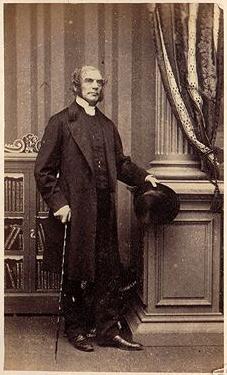
When we take the history of a child of God, compressed within the short period of a single day — mark what flaws, what imperfections, what fickleness, what dereliction in principle, what flaws in practice, what errors in judgment and what wanderings of heart make up that brief history — how we are led to thank God for the stability of the covenant, that covenant which provides for the full redemption of all believers, which from eternity secures the effectual calling, the perfect keeping and certain salvation of every chosen vessel of mercy!”
Octavius Winslow, Personal Declension and Revival of Religion in the Soul (London, 1962), page 169.
(HT: Ray Ortlund via Peter Cockrell)
Tuesday, November 22, 2011
Love smote
But all the afflictions of the believer are the effects of Divine love. They can resolve themselves into nothing else. While the same stroke, falling upon an unbelieving, rebellious, sin-loving sinner, may be the first-fruits of eternal punishment, to the saint of God it may prove the first-fruits of eternal glory. The correction which you at present consider as an argument of wrath, may be an evidence of love and an act of mercy. God will prune you, but not hew you down. The 'right hand of His mercy' knows what the 'left hand of His severity' is doing. Better for you to be a chastened son, than an undisciplined child of the devil. Oh yes! there was no anger, no vindictiveness, no vengeance in that heavy stroke which laid your heart's fondest treasure in the dust. Love smote, but love yearned while it smote. - Octavius Winslow, from "The Chastening of Love"
This week in our small group, we have decided to look at suffering and the Lord's discipline. We wanted to discuss how they relate, interact, and are defined by Scripture. In my readings I came across this article by a favourite of mine, Octavius Winslow. I was accosted by the first two lines of this paragraph. All the afflictions of the believer are the effects of Divine love. Does anything happen outside of the sovereign purview of Almighty God? No. Does God ever relate to His elect, His adopted children, as anything less than their heavenly Father? No. Therefore, it seems, every difficulty of the Christian can "resolve themselves into nothing else" than the loving, disciplining actions of a benevolent Father. To those not of the household of God, the exact same situations and experiences may be the "first-fruits of eternal punishment", but to the sheep of His pasture those trials are the "first-fruits of eternal glory".
Friday, June 3, 2011
Some warmth imparted
I love this advice that Richard Baxter gives to pastors. I think that it is great advice for all of us. Consider:We don't often get much in the form of comments on this blog, but I would be interested in hearing if you have a particular author or book that you find 'rousing' and 'awakening'. Is there a book or author that warms your heart?
Two authors that 'impart warmth' for me come to mind; one living and one dead. I find Sam Storms writes in a way that is motivating to my inner man. He is the living one in case you are unfamiliar with him. The dead guy who stirs me is Octavius Winslow. There is something about his style and substance that fans the flames of my heart.
If I wanted to listen to someone whose words were compelling and courage-inducing, my first choice would be John Piper.
How about you?
But, besides this general course of watchfulness, methinks a minister should take some special pains with his heart, before he is to go to the congregation: if it be then cold, how is he likely to warm the hearts of his hearers? Therefore, go then specially to God for life: read some rousing, awakening book, or meditate on the weight of the subject of which you are to speak, and on the great necessity of your people’s souls, that you may go in the zeal of the Lord into his house. Maintain, in this manner, the life of grace in yourselves, that it may appear in all your sermons from the pulpit, – that every one who comes cold to the assembly, may have some warmth imparted to him before he depart.
Two authors that 'impart warmth' for me come to mind; one living and one dead. I find Sam Storms writes in a way that is motivating to my inner man. He is the living one in case you are unfamiliar with him. The dead guy who stirs me is Octavius Winslow. There is something about his style and substance that fans the flames of my heart.
If I wanted to listen to someone whose words were compelling and courage-inducing, my first choice would be John Piper.
How about you?
Friday, May 13, 2011
Looks like blogger is up and running!
It's the end of the day, but I'll leave you with a quote anyways:
Had He emptied the full vials of His wrath upon the world, sweeping it before the fury of His anger, and consigning it to woeful and eternal punishment, it would not have presented to the universe so vivid, so impressive, and so awful a demonstration of the nature and glory of His holiness, of His infinite abhorrence of sin, and the necessity why He should punish it, as He has presented in the humiliation, sufferings, and death of His beloved Son. - Octavius Winslow
Had He emptied the full vials of His wrath upon the world, sweeping it before the fury of His anger, and consigning it to woeful and eternal punishment, it would not have presented to the universe so vivid, so impressive, and so awful a demonstration of the nature and glory of His holiness, of His infinite abhorrence of sin, and the necessity why He should punish it, as He has presented in the humiliation, sufferings, and death of His beloved Son. - Octavius Winslow
Monday, January 31, 2011
He wins back truant hearts
I have loved you with an everlasting love; therefore with loving-kindness have I drawn you. Jeremiah 31:3.
The law of love is the law of Gods moral government of His people. By this, and by this alone, He rules them. All that is disciplinary in His conduct is resolvable into love. It is by kindness, loving-kindness, yes, marvelous loving-kindness, that He wins back their truant hearts, and binds them closer to Himself. I am the Lord, who exercise loving-kindness. Oh, to imitate Him in this particular!- to be like God in His kindness to the children of men. Then would there be less sitting in the judgment-seat; less readiness to cast the first stone; less harshness and censoriousness in our conduct and spirit towards others; and more of that self-judging, self-condemning, and self-abasement, before the holy, heart-searching, all-seeing Lord God, without which we may be awfully deceived.
- Octavius Winslow
The law of love is the law of Gods moral government of His people. By this, and by this alone, He rules them. All that is disciplinary in His conduct is resolvable into love. It is by kindness, loving-kindness, yes, marvelous loving-kindness, that He wins back their truant hearts, and binds them closer to Himself. I am the Lord, who exercise loving-kindness. Oh, to imitate Him in this particular!- to be like God in His kindness to the children of men. Then would there be less sitting in the judgment-seat; less readiness to cast the first stone; less harshness and censoriousness in our conduct and spirit towards others; and more of that self-judging, self-condemning, and self-abasement, before the holy, heart-searching, all-seeing Lord God, without which we may be awfully deceived.
- Octavius Winslow
Tuesday, January 4, 2011
Your Conversion
And have you not reason to praise God for YOUR CONVERSION?
Oh, what a wonder of sovereign grace that ever you were brought out of nature's
darkness into God's marvelous light!
That, ever divine power drew you,
and divine love chose you,
and divine blood cleansed you,
and a divine righteousness was imputed to you!
That, ever you did hear the voice of Jesus,
when lying in your blood,
cast out to the loathing of yourself,
saying to you,
"Live!"
And that then He washed you,
and clothed you,
and decked you with
ornaments,
and put a fair chain on your neck,
a crown and a mitre on your head,
and you became lovely through His loveliness put upon you—a king and a priest unto God!
Praise, oh, praise Him loudly for that happy day when,
having betrothed you in eternity,
He savingly drew you to Himself,
and you became His.
Can you recall the memory of that blissful hour, and not make the desert ring with your loudest, sweetest praise?
From Octavius Winslow's Consider Jesus, line breaks mine)
Oh, what a wonder of sovereign grace that ever you were brought out of nature's
darkness into God's marvelous light!
That, ever divine power drew you,
and divine love chose you,
and divine blood cleansed you,
and a divine righteousness was imputed to you!
That, ever you did hear the voice of Jesus,
when lying in your blood,
cast out to the loathing of yourself,
saying to you,
"Live!"
And that then He washed you,
and clothed you,
and decked you with
ornaments,
and put a fair chain on your neck,
a crown and a mitre on your head,
and you became lovely through His loveliness put upon you—a king and a priest unto God!
Praise, oh, praise Him loudly for that happy day when,
having betrothed you in eternity,
He savingly drew you to Himself,
and you became His.
Can you recall the memory of that blissful hour, and not make the desert ring with your loudest, sweetest praise?
From Octavius Winslow's Consider Jesus, line breaks mine)
Sunday, January 2, 2011
Consider Jesus in Forgiveness
Consider Jesus—in the Forgiveness of Injury
"Father, forgive them; for they know not what they do."—Luke 23:34
If the Christian precept of FORGIVENESS be estimated by the magnitude of
the injury forgiven, then these words of Jesus present to our view a
forgiveness of an inconceivable and unparalleled injury. The greatest crime
man ever committed was the crucifixion of the Son of God; and yet, for the
forgiveness of that crime, the Savior prays at the very moment of its
perpetration, fully persuaded of the sovereign efficacy of the blood His
enemies were now shedding, to blot out the enormous guilt of the sin of
shedding it.
(from Octavius Winslow's Consider Jesus)
"Father, forgive them; for they know not what they do."—Luke 23:34
If the Christian precept of FORGIVENESS be estimated by the magnitude of
the injury forgiven, then these words of Jesus present to our view a
forgiveness of an inconceivable and unparalleled injury. The greatest crime
man ever committed was the crucifixion of the Son of God; and yet, for the
forgiveness of that crime, the Savior prays at the very moment of its
perpetration, fully persuaded of the sovereign efficacy of the blood His
enemies were now shedding, to blot out the enormous guilt of the sin of
shedding it.
(from Octavius Winslow's Consider Jesus)
Friday, December 31, 2010
Jesus' Soul-trouble
Consider Jesus—in Soul-trouble
"Now My soul is deeply troubled."—John 12:27
In this lay our Lord's greatest suffering—His soul-sorrow. Compared with this, the lingering, excruciating tortures of the cross—the extended limbs, the quivering nerves, the bleeding wounds, the burning thirst—were, as nothing.
This was physical, the other spiritual; the one, the suffering of the body, the other, the anguish of the soul.
Let a vessel traversing the ocean keep afloat, and she may still plough the deep and brave the tempest; but let the proud waves burst in upon her and she sinks.
So long as our blessed Lord endured outwardly the gibes and insults and calumnies of men, not a complaint escaped His lips; but, when the wrath of God, endured as the Surety-Head of His people, entered within His holy soul, then the wail of agony rose strong and piercing—"Save Me, O God, for the floodwaters are up to My neck. Deeper and deeper I sink into the mire; I can't find a foothold to stand on. I am in deep water, and the floods overwhelm Me. I am exhausted from crying for help; My throat is parched and dry. My eyes are swollen with weeping, waiting for my God to help Me." Psalm 69:1-3
How true is God's word—"The spirit of a man will sustain his infirmity; but a wounded spirit, who can bear?" Such was Christ's.
And why was His soul troubled?
One rational answer alone can be given—He was now bearing sin and, consequently, the punishment of sin—the wrath of God overwhelming His soul. This was the 'cup' which He prayed might, 'if possible, pass from Him.' Divine justice, finding the sins of God's elect meeting on His holy soul, exacted full satisfaction and inflicted the utmost penalty.
And thus a glorious gospel truth shines out of this terrible cloud of Jesus' soul-sorrow—that is, the substitutionary character and the atoning nature of His sufferings and death.
Upon no reasonable ground other than this can we satisfactorily account for His language—"My soul is exceeding sorrowful, even unto death."
(From Octavius Winslow's Consider Jesus, line breaks mine)
"Now My soul is deeply troubled."—John 12:27
In this lay our Lord's greatest suffering—His soul-sorrow. Compared with this, the lingering, excruciating tortures of the cross—the extended limbs, the quivering nerves, the bleeding wounds, the burning thirst—were, as nothing.
This was physical, the other spiritual; the one, the suffering of the body, the other, the anguish of the soul.
Let a vessel traversing the ocean keep afloat, and she may still plough the deep and brave the tempest; but let the proud waves burst in upon her and she sinks.
So long as our blessed Lord endured outwardly the gibes and insults and calumnies of men, not a complaint escaped His lips; but, when the wrath of God, endured as the Surety-Head of His people, entered within His holy soul, then the wail of agony rose strong and piercing—"Save Me, O God, for the floodwaters are up to My neck. Deeper and deeper I sink into the mire; I can't find a foothold to stand on. I am in deep water, and the floods overwhelm Me. I am exhausted from crying for help; My throat is parched and dry. My eyes are swollen with weeping, waiting for my God to help Me." Psalm 69:1-3
How true is God's word—"The spirit of a man will sustain his infirmity; but a wounded spirit, who can bear?" Such was Christ's.
And why was His soul troubled?
One rational answer alone can be given—He was now bearing sin and, consequently, the punishment of sin—the wrath of God overwhelming His soul. This was the 'cup' which He prayed might, 'if possible, pass from Him.' Divine justice, finding the sins of God's elect meeting on His holy soul, exacted full satisfaction and inflicted the utmost penalty.
And thus a glorious gospel truth shines out of this terrible cloud of Jesus' soul-sorrow—that is, the substitutionary character and the atoning nature of His sufferings and death.
Upon no reasonable ground other than this can we satisfactorily account for His language—"My soul is exceeding sorrowful, even unto death."
(From Octavius Winslow's Consider Jesus, line breaks mine)
Tuesday, December 28, 2010
Relational Suffering
Octavius Winslow from Consider Jesus:
You are, perhaps, suffering from MISPLACED AND WOUNDED AFFECTION. You have naturally allowed the fibers of your heart to entwine around some object of its warm and clinging love; but chilled affection, or the whisper of envy, or the venomed tooth of slander, has wrenched those fibers from their stem, and trailed them, torn and bleeding, in the dust. How like Jesus now you are, of whose loved disciples it is recorded, "They all forsook Him, and fled."
Or, you are suffering from BETRAYED AND DISAPPOINTED CONFIDENCE. One you thought a friend, tender and true, has deserted you; a judgment upon whose guidance you leaned has misled you; a source upon whose supplies you depended has failed you; a confidence in which you too implicitly reposed has betrayed you; and thus you are learning the lesson Jesus learned when, "all His disciples forsook Him, and fled."
Cheer up, my soul! there is One who has promised never to leave you. When father and mother, husband and wife, lover and friend, forsake you, the Lord will take you up. He who was deserted by friends and followers, will cling to you in prosperity and in adversity, in weal and in woe, with unfaltering fidelity and unchanging love; and though all forsake you, yet will He not in life, in death, and through eternity. How great and precious the divine promise—"They may forget, yet I will not." "Jesus Christ, the same yesterday, today, and forever." Precious Jesus! though all forsake me, as all forsook You; yet YOU will never leave me, nor forsake me!
You are, perhaps, suffering from MISPLACED AND WOUNDED AFFECTION. You have naturally allowed the fibers of your heart to entwine around some object of its warm and clinging love; but chilled affection, or the whisper of envy, or the venomed tooth of slander, has wrenched those fibers from their stem, and trailed them, torn and bleeding, in the dust. How like Jesus now you are, of whose loved disciples it is recorded, "They all forsook Him, and fled."
Or, you are suffering from BETRAYED AND DISAPPOINTED CONFIDENCE. One you thought a friend, tender and true, has deserted you; a judgment upon whose guidance you leaned has misled you; a source upon whose supplies you depended has failed you; a confidence in which you too implicitly reposed has betrayed you; and thus you are learning the lesson Jesus learned when, "all His disciples forsook Him, and fled."
Cheer up, my soul! there is One who has promised never to leave you. When father and mother, husband and wife, lover and friend, forsake you, the Lord will take you up. He who was deserted by friends and followers, will cling to you in prosperity and in adversity, in weal and in woe, with unfaltering fidelity and unchanging love; and though all forsake you, yet will He not in life, in death, and through eternity. How great and precious the divine promise—"They may forget, yet I will not." "Jesus Christ, the same yesterday, today, and forever." Precious Jesus! though all forsake me, as all forsook You; yet YOU will never leave me, nor forsake me!
Monday, December 20, 2010
Winslow on our justification
From Octavius Winslow's Morning Thoughts for the 20th of December:
You are often in fear that the righteousness of the law will rise against you; and when you consider your many failures and short-comings, you justly tremble. But fear not; for in Christ the law is perfectly fulfilled, and fulfilled in your stead, as much as if you had obeyed in your own person. Is not this a sure ground of comfort? You see the imperfection of your own obedience, and you are alarmed; but have you not an eye also for the perfection of Christ’s obedience, which He has made yours by imputation? "There is therefore now no condemnation to them who are in Christ Jesus," because He has fulfilled the law’s righteousness in their behalf. You are cast down because of the law of sin, but the Spirit of life has freed you from the law. You are troubled because of the law of God, but that law, by Christ’s perfect obedience, is fulfilled in you. You desire a righteousness that will present you without spot before God; you have it in Him who is the "Lord our righteousness." Christian! Christ’s whole obedience is yours. What can sin, or Satan, or conscience, or the law itself allege against you now? Be humble, and mourn over the many flaws and failures in your obedience; yet withal rejoice, and glory, and make your boast in the fullness, perfection, and unchangeableness of that righteousness on the Incarnate God which will place you without fault before the throne.
You are often in fear that the righteousness of the law will rise against you; and when you consider your many failures and short-comings, you justly tremble. But fear not; for in Christ the law is perfectly fulfilled, and fulfilled in your stead, as much as if you had obeyed in your own person. Is not this a sure ground of comfort? You see the imperfection of your own obedience, and you are alarmed; but have you not an eye also for the perfection of Christ’s obedience, which He has made yours by imputation? "There is therefore now no condemnation to them who are in Christ Jesus," because He has fulfilled the law’s righteousness in their behalf. You are cast down because of the law of sin, but the Spirit of life has freed you from the law. You are troubled because of the law of God, but that law, by Christ’s perfect obedience, is fulfilled in you. You desire a righteousness that will present you without spot before God; you have it in Him who is the "Lord our righteousness." Christian! Christ’s whole obedience is yours. What can sin, or Satan, or conscience, or the law itself allege against you now? Be humble, and mourn over the many flaws and failures in your obedience; yet withal rejoice, and glory, and make your boast in the fullness, perfection, and unchangeableness of that righteousness on the Incarnate God which will place you without fault before the throne.
Wednesday, December 8, 2010
An antagonistic principle
I really enjoy the writing style of Octavius Winslow. He is eloquent and honest, and writes things in such a way that his words resonate with me. I have read two of his books, The Glory of the Redeemer and Personal Declension and Revival, and I have been going through his morning devotional the past few months. Below is an excerpt from yesterday's devotional:
Regeneration does not transform flesh into spirit. It proposes not to eradicate and expel the deep-seated root of our degenerate nature; but it imparts another and a superadded nature—it implants a new and an antagonistic principle. This new nature is divine; this new principle is holy: and thus the believer becomes the subject of two natures, and his soul a battlefield, upon which a perpetual conflict is going on between the law of the members and the law of the mind; often resulting in his temporary captivity to the law of sin which is in his members. Thus every spiritual mind is painfully conscious of the earthly tendency of his evil nature, and that from the flesh he can derive no sympathy or help, but rather everything that discourages, encumbers, and retards his spirit in its breathings and strugglings after holiness. A mournful sense of the seductive power of earthly things enters deeply into this state of mind. As we bear about with us, in every step, an earthly nature, it is not surprising that its affinities and sympathies should be earthly; that earthly objects should possess a magnetic influence, perpetually attracting to themselves whatever is congenial with their own nature in the soul of the renewed man. Our homeward path lies through a world captivating and ensnaring. The world, chameleon-like, can assume any color, and, Proteus-like, any shape, suitable to its purpose and answerable to its end. There is not a mind, a conscience, or a taste, to which it cannot accommodate itself. For the gross, it has sensual pleasures; for the refined, it has polished enjoyments; for the thoughtful, it has intellectual delights; for the enterprising, it has bold, magnificent schemes. The child of God feels this engrossing power; he is conscious of this seductive influence.
Regeneration does not transform flesh into spirit. It proposes not to eradicate and expel the deep-seated root of our degenerate nature; but it imparts another and a superadded nature—it implants a new and an antagonistic principle. This new nature is divine; this new principle is holy: and thus the believer becomes the subject of two natures, and his soul a battlefield, upon which a perpetual conflict is going on between the law of the members and the law of the mind; often resulting in his temporary captivity to the law of sin which is in his members. Thus every spiritual mind is painfully conscious of the earthly tendency of his evil nature, and that from the flesh he can derive no sympathy or help, but rather everything that discourages, encumbers, and retards his spirit in its breathings and strugglings after holiness. A mournful sense of the seductive power of earthly things enters deeply into this state of mind. As we bear about with us, in every step, an earthly nature, it is not surprising that its affinities and sympathies should be earthly; that earthly objects should possess a magnetic influence, perpetually attracting to themselves whatever is congenial with their own nature in the soul of the renewed man. Our homeward path lies through a world captivating and ensnaring. The world, chameleon-like, can assume any color, and, Proteus-like, any shape, suitable to its purpose and answerable to its end. There is not a mind, a conscience, or a taste, to which it cannot accommodate itself. For the gross, it has sensual pleasures; for the refined, it has polished enjoyments; for the thoughtful, it has intellectual delights; for the enterprising, it has bold, magnificent schemes. The child of God feels this engrossing power; he is conscious of this seductive influence.
Friday, December 3, 2010
Where is the Savior

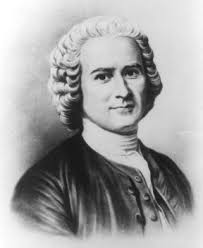

Where are the French Encyclopedists—the men of deep learning and brilliant genius, of moving eloquence, caustic wit, and untiring energy, who banded themselves together with a vow to exterminate Christ and Christianity? Where is the eloquent Rosseau, the witty Voltaire, the ingenious Helvetius, the sophistical Hume, the scoffing D’Alembert, and the ribaldist Paine? Their names have rotted from the earth, and their works follow them. And where is the Savior, whom they sought to annihilate? Enthroned in glory, robed in majesty, and exalted a Prince and a Savior, encircled, worshiped, and adored by countless myriads of holy beings, the crown of Deity on His head, and the scepter of universal government in His hand, from whose tribunal they have passed, tried, sentenced, and condemned, while He yet lives, "to guard His Church and crush His foes." - Octavius Winslow, Morning Thoughts for November 29
Tuesday, November 30, 2010
The master-work of Jehovah
From Morning Thoughts by Octavius Winslow:
NOVEMBER 29.
"But I certify you, brethren, that the gospel which was preached of me is not after man. For I neither received it of men, neither was I taught it, but by the revelation of Jesus Christ." Galatians 1:11, 12
THE great and distinctive truth thus so broadly, emphatically, and impressively stated is the divinity of the gospel—a truth, in the firm and practical belief of which the Church of God needs to be established. The gospel is the master-work of Jehovah, presenting the greatest display of His manifold wisdom, and the most costly exhibition of the riches of His grace. In constructing it He would seem to have summoned to His aid all the resources of His own infinity; His fathomless mind, His boundless love, His illimitable grace, His infinite power, His spotless holiness—all contributed their glory, and conspired to present it to the universe as the most consummate piece of Divine workmanship. It carries with it its own evidence. The revelations it makes, the facts it records, the doctrines it propounds, the effects is produces, speak it to be no "cunningly devised fable," of human invention and fraud, but what it truly is, the "revelation of Jesus Christ," the "glorious gospel of the blessed God." What but a heart of infinite love could have conceived the desire of saving sinners? And by what but an infinite mind could the expedient have been devised of saving them in such a way—the incarnation, obedience, and death of His own beloved Son? Salvation from first to last is of the Lord.
NOVEMBER 29.
"But I certify you, brethren, that the gospel which was preached of me is not after man. For I neither received it of men, neither was I taught it, but by the revelation of Jesus Christ." Galatians 1:11, 12
THE great and distinctive truth thus so broadly, emphatically, and impressively stated is the divinity of the gospel—a truth, in the firm and practical belief of which the Church of God needs to be established. The gospel is the master-work of Jehovah, presenting the greatest display of His manifold wisdom, and the most costly exhibition of the riches of His grace. In constructing it He would seem to have summoned to His aid all the resources of His own infinity; His fathomless mind, His boundless love, His illimitable grace, His infinite power, His spotless holiness—all contributed their glory, and conspired to present it to the universe as the most consummate piece of Divine workmanship. It carries with it its own evidence. The revelations it makes, the facts it records, the doctrines it propounds, the effects is produces, speak it to be no "cunningly devised fable," of human invention and fraud, but what it truly is, the "revelation of Jesus Christ," the "glorious gospel of the blessed God." What but a heart of infinite love could have conceived the desire of saving sinners? And by what but an infinite mind could the expedient have been devised of saving them in such a way—the incarnation, obedience, and death of His own beloved Son? Salvation from first to last is of the Lord.
Sunday, November 14, 2010
Spurious humility
"Avoid a spurious humility. True humility consists not in denying the work of the Holy Spirit in our hearts, in under-rating the grace of God in our souls, in standing afar off from our heavenly Father, and in walking at a distance from Christ, always doubting the efficacy of His blood, the freeness of His salvation, the willingness of His heart, and the greatness of His power to save. Oh no! this is not the humility that God delights to look at, but is a false, a counterfeit humility, obnoxious in His sight. But to "draw near with a true heart, in full assurance of faith," in lowly dependence upon His blood and righteousness; to accept of salvation as the gift of His grace; to believe the promise because He has spoken it; gratefully and humbly to acknowledge our calling, our adoption, and our acceptance, and to live in the holy, transforming influence of this exalted state, giving to a Triune God all the praise and glory; this is the humility which is most pleasing to God, and is the true product of the Holy Spirit." - Octavius Winslow
Friday, November 12, 2010
Sin, holiness, the cross
From Octavius Winslow's Morning Thoughts for November 11, 2010:
"But God forbid that I should glory, save in the cross of our Lord Jesus Christ, by whom the world is crucified unto me, and I unto the world." Galatians 6:14
CONFORMITY to the death of Christ can only be obtained by close, individual, realizing views of the cross. It is in the cross sin is seen in its exceeding sinfulness. It is in the cross the holiness of God shines with such ineffable luster. This is the sun that throws its light upon these two great objects—the holiness of God, the sinfulness of the sinner. Veil this sun, remove the cross, blot out the Atonement, and all our knowledge of holiness and sin vanishes into distant and shadowy views.
"But God forbid that I should glory, save in the cross of our Lord Jesus Christ, by whom the world is crucified unto me, and I unto the world." Galatians 6:14
CONFORMITY to the death of Christ can only be obtained by close, individual, realizing views of the cross. It is in the cross sin is seen in its exceeding sinfulness. It is in the cross the holiness of God shines with such ineffable luster. This is the sun that throws its light upon these two great objects—the holiness of God, the sinfulness of the sinner. Veil this sun, remove the cross, blot out the Atonement, and all our knowledge of holiness and sin vanishes into distant and shadowy views.
Wednesday, October 27, 2010
Who would ...
"Oh who, once having experienced the truth, would wish to escape this painful and humiliating process? who would refuse to drink the wormwood and the gall, if only along this path he could reach the sunlight spot where the smiles of a sin-pardoning God fill the heart with joy and gladness? Who would not bare his bosom to the stroke, when the hand that plucks the dart and heals the wound is the hand through whose palm the rough nail was driven—when "wounded for our transgressions, and bruised for our iniquities"? Who would not endure the uneasiness of sin, but to feel the rest that Jesus gives to the weary? and who would not experience the mourning for transgression, but to know the comfort which flows from the loving heart of Christ? Again the question is put—has the Spirit of God revealed to you the inward plague, has He brought you just as you are to Jesus, to take your stand upon the doctrine of His unmerited, unpurchased mercy—asking for pardon as a beggar, praying for your discharge as a bankrupt, and beseeching Him to take you as a homeless wanderer into the asylum of His loving and parental heart?" - Octavius Winslow, emphasis mine
Friday, October 15, 2010
Winslow on spiritual declension

In his devotional, Morning Thoughts, in the writing for October 15th Octavius Winslow describes what spiritual declension looks like:
The loss of spiritual enjoyment, not of a spiritual perception, of the loveliness and harmony of the truth shall be the symptom that betrays the true condition of the soul. The judgment shall lose none of its light, but the heart much of its fervor; the truths of revelation, especially the doctrines of grace, shall occupy the same prominent position as to their value and beauty, and yet the influence of these truths may be scarcely felt. The Word of God shall be assented to; but as the instrument of sanctification, of abasement, of nourishment, the believer may be an almost utter stranger to it; yes, he must necessarily be so, while this process of secret declension is going forward in his soul.
This incipient state of declension may not involve any lowering of the standard of holiness, and yet there shall be no ascending of the heart, no reaching forth of the mind, towards a practical conformity to that standard.
Winslow points out that one may perceive proper doctrine, even the doctrines of grace, and assent to every word of the Word, and yet may be declining in his spiritual enjoyment of God. One may maintain a holy life with no affection for our Saviour. Hence, the common call for us to have both light and heat in our Christianity is one to be considered again today; it calls for a Christ-like mind and corresponding spiritual affections.
Subscribe to:
Posts (Atom)