D. M. Lloyd-Jones on sin:
"...it seems to me that one of the main problems in connection with evangelism, especially today, is our failure to realize that sin primarily is disobedience. Sin is not just that which I do that is wrong, and which makes me feel miserable and unhappy; sin is not just that thing which gets me down, and which I would like to overcome. It is all that, but, my friends, that is not the first thing to say about sin; indeed, that is not the most important thing to say about it...What is sin? Sin is the transgression of the law. Primarily, it is rebellion against God."
(Lloyd-Jones, David Martyn. Romans: An Exposition of Chapter 1 ; the Gospel of God. Edinburgh: Banner of Truth Trust, 1985. Print. 138)
Showing posts with label Romans. Show all posts
Showing posts with label Romans. Show all posts
Wednesday, January 18, 2012


Sunday, December 12, 2010
Romans 1:2
From David Martyn Lloyd-Jones' exposition of Romans 1, The Gospel of God; specifically Romans 1:2.
Why was the gospel hidden?
Why does Paul appeal to the Old Testament?
Why was the gospel hidden?
- To reveal the depth of our sin
- To show mankind cannot save himself
- To show God’s lordship and sovereignty
Why does Paul appeal to the Old Testament?
- To show the gospel was not something strange and new
- To show the Bible as complete, authoritative, unified, essential
- To show the New never contradicts the Old
- To show the New fulfills the Old
- To show salvation is for the world.
Thursday, September 9, 2010
Superabounding grace!
Romans 5:20,21
ESV - Now the law came in to increase the trespass, but where sin increased, grace abounded all the more, so that, as sin reigned in death, grace also might reign through righteousness leading to eternal life through Jesus Christ our Lord.
From John Murray's commentary on Romans:
ESV - Now the law came in to increase the trespass, but where sin increased, grace abounded all the more, so that, as sin reigned in death, grace also might reign through righteousness leading to eternal life through Jesus Christ our Lord.
From John Murray's commentary on Romans:
The apostle construes the multiplying of trespass which the giving of the law promoted as magnifying and demonstrating the superabounding riches of divine grace. The more transgression is multiplied and aggravated the greater is the grace that abounds unto justification and the more the lustre of that grace is made manifest. The surpassing efficacy and glory of God's grace are stressed by the superlative, "superabounded".
Saturday, August 28, 2010
Sufferings
Romans 8:16,17
The Spirit himself bears witness with our spirit that we are children of God, and if children, then heirs—heirs of God and fellow heirs with Christ, provided we suffer with him in order that we may also be glorified with him.
The Spirit himself bears witness with our spirit that we are children of God, and if children, then heirs—heirs of God and fellow heirs with Christ, provided we suffer with him in order that we may also be glorified with him.
"Believers do not contribute to the accomplishment of expiation, propitiation, reconciliation, and redemption. Nowhere are their sufferings represented as having such virtue or efficacy. The Lord laid his people's iniquities upon Christ alone and in him alone did God reconcile the world to himself. Christ alone redeemed us by his blood. Nevertheless there are other aspects from which the sufferings of the Children of God are to be classified with the sufferings of Christ himself. They partake of the sufferings which Christ endured and they are regarded as filling up the total quota of sufferings requisite to the consummation of redemption and the glorification of the whole body of Christ (cf. Col. 1:24). Again union and communion with Christ are the explanation and validation of this participation." John Murray in The Epistle to the Romans, Volume II
Saturday, August 7, 2010
 Romans 5:18-21
18 Therefore, as one trespass led to condemnation for all men, so one act of righteousness leads to justification and life for all men. 19 For as by the one man's disobedience the many were made sinners, so by the one man's obedience the many will be made righteous. 20 Now the law came in to increase the trespass, but where sin increased, grace abounded all the more, 21 so that, as sin reigned in death, grace also might reign through righteousness leading to eternal life through Jesus Christ our Lord.
"With Adam is bound up the entrance of sin into the world and the reign of sin, condemnation, and death. With Christ is bound up the entrance of righteousness and the reign of grace, righteousness, justification, life. These two heads of humanity and the two parallel yet opposing complexes bound up with them are the pivots on which the history of humanity turns. God's government of the race can be interpreted only in terms of these two headships and of the respective complexes which the heads set in operation. These are the pivots of redemptive revelation, the first as making redemption necessary, the second as accomplishing and securing redemption." (Murray, John. The Epistle to the Romans: the English Text with Introduction, Exposition and Notes. Grand Rapids: Eerdmans, 1968. p207)
Wednesday, July 28, 2010
Antithetical Complexes
Romans 5:12-21
12 Therefore, just as sin came into the world through one man, and death through sin, and so death spread to all men because all sinned— 13 for sin indeed was in the world before the law was given, but sin is not counted where there is no law. 14 Yet death reigned from Adam to Moses, even over those whose sinning was not like the transgression of Adam, who was a type of the one who was to come.
15 But the free gift is not like the trespass. For if many died through one man's trespass, much more have the grace of God and the free gift by the grace of that one man Jesus Christ abounded for many. 16 And the free gift is not like the result of that one man's sin. For the judgment following one trespass brought condemnation, but the free gift following many trespasses brought justification. 17 For if, because of one man's trespass, death reigned through that one man, much more will those who receive the abundance of grace and the free gift of righteousness reign in life through the one man Jesus Christ.
18 Therefore, as one trespass led to condemnation for all men, so one act of righteousness leads to justification and life for all men. 19 For as by the one man's disobedience the many were made sinners, so by the one man's obedience the many will be made righteous. 20 Now the law came in to increase the trespass, but where sin increased, grace abounded all the more, 21 so that, as sin reigned in death, grace also might reign through righteousness leading to eternal life through Jesus Christ our Lord.
John Murray, in his commentary on Romans, discusses this passage:
"We cannot grasps the truths of world-wide significance set forth in this passage unless we recognize that two antithetical complexes are contrasted. The first is the complex of sin-condemnation-death and the second is that of righteousness-justification-life. These are invariable combinations. Sin sets in the operation the inevitable consequences of condemnation, and death, righteousness the consequents of justification and life, and, as is obvious, these are antithetical at each point of the parallel."
12 Therefore, just as sin came into the world through one man, and death through sin, and so death spread to all men because all sinned— 13 for sin indeed was in the world before the law was given, but sin is not counted where there is no law. 14 Yet death reigned from Adam to Moses, even over those whose sinning was not like the transgression of Adam, who was a type of the one who was to come.
15 But the free gift is not like the trespass. For if many died through one man's trespass, much more have the grace of God and the free gift by the grace of that one man Jesus Christ abounded for many. 16 And the free gift is not like the result of that one man's sin. For the judgment following one trespass brought condemnation, but the free gift following many trespasses brought justification. 17 For if, because of one man's trespass, death reigned through that one man, much more will those who receive the abundance of grace and the free gift of righteousness reign in life through the one man Jesus Christ.
18 Therefore, as one trespass led to condemnation for all men, so one act of righteousness leads to justification and life for all men. 19 For as by the one man's disobedience the many were made sinners, so by the one man's obedience the many will be made righteous. 20 Now the law came in to increase the trespass, but where sin increased, grace abounded all the more, 21 so that, as sin reigned in death, grace also might reign through righteousness leading to eternal life through Jesus Christ our Lord.
John Murray, in his commentary on Romans, discusses this passage:
"We cannot grasps the truths of world-wide significance set forth in this passage unless we recognize that two antithetical complexes are contrasted. The first is the complex of sin-condemnation-death and the second is that of righteousness-justification-life. These are invariable combinations. Sin sets in the operation the inevitable consequences of condemnation, and death, righteousness the consequents of justification and life, and, as is obvious, these are antithetical at each point of the parallel."
Wednesday, July 7, 2010
Joy in tribulations
Romans 5:1-5
5:1 Therefore, since we have been justified by faith, we have peace with God through our Lord Jesus Christ. 2 Through him we have also obtained access by faith into this grace in which we stand, and we rejoice in hope of the glory of God. 3 More than that, we rejoice in our sufferings, knowing that suffering produces endurance, 4 and endurance produces character, and character produces hope, 5 and hope does not put us to shame, because God's love has been poured into our hearts through the Holy Spirit who has been given to us.
In considering the progression of the verses above, John Murray, in his commentary on Romans, indicates that the process begins with tribulation-we rejoice in our sufferings-and terminates in hope. However, we see in verse 2 that preceding the even the tribulations is a glorying in hope. So, "He [Paul] has described a circle, beginning with hope and therefore ending with hope.This drives home the lesson that the glorying in tribulations is not something disassociated from rejoicing in hope of the glory of God; it is not even coordinate or complimentary. Glorying in tribulations is subordinate. We glory in tribulations because they have an eschatological orientation-they subserve the interests of hope." We as Christians are not masochist; tribulations do not terminate on themselves. Our joy in trials and difficulties is grounded in hope that has its fulfillment in the future; our trials are to be rejoiced in because they terminate on God. We will be with Him. Forever.
Monday, July 5, 2010
What, will these hands ne'er be clean?
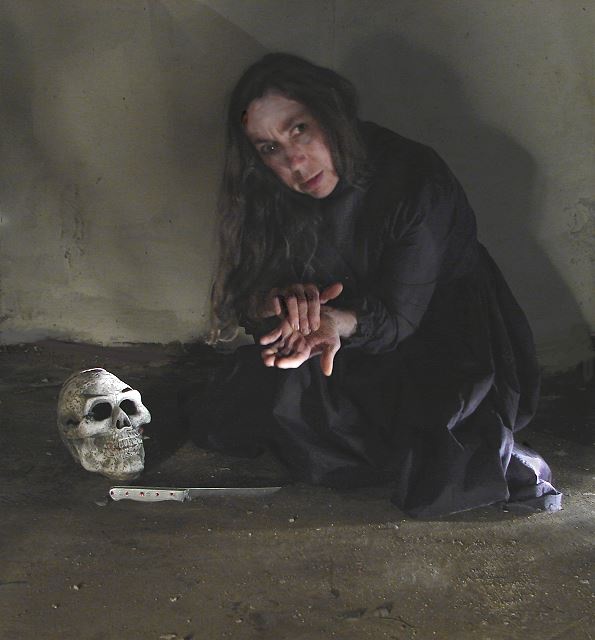
From Shakespeare's play Macbeth:
ACT V
SCENE I. Dunsinane. Ante-room in the castle.
Enter a Doctor of Physic and a Waiting-Gentlewoman
Doctor
I have two nights watched with you, but can perceiveGentlewoman
no truth in your report. When was it she last walked?
Since his majesty went into the field, I have seenDoctor
her rise from her bed, throw her night-gown upon
her, unlock her closet, take forth paper, fold it,
write upon't, read it, afterwards seal it, and again
return to bed; yet all this while in a most fast sleep.
A great perturbation in nature, to receive at onceGentlewoman
the benefit of sleep, and do the effects of
watching! In this slumbery agitation, besides her
walking and other actual performances, what, at any
time, have you heard her say?
That, sir, which I will not report after her.Doctor
You may to me: and 'tis most meet you should.Gentlewoman
Neither to you nor any one; having no witness toEnter LADY MACBETH, with a taper
confirm my speech.
Lo you, here she comes! This is her very guise;Doctor
and, upon my life, fast asleep. Observe her; stand close.
How came she by that light?Gentlewoman
Why, it stood by her: she has light by herDoctor
continually; 'tis her command.
You see, her eyes are open.Gentlewoman
Ay, but their sense is shut.Doctor
What is it she does now? Look, how she rubs her hands.Gentlewoman
It is an accustomed action with her, to seem thusLADY MACBETH
washing her hands: I have known her continue in
this a quarter of an hour.
Yet here's a spot.Doctor
Hark! she speaks: I will set down what comes fromLADY MACBETH
her, to satisfy my remembrance the more strongly.
Out, damned spot! out, I say!--One: two: why,Doctor
then, 'tis time to do't.--Hell is murky!--Fie, my
lord, fie! a soldier, and afeard? What need we
fear who knows it, when none can call our power to
account?--Yet who would have thought the old man
to have had so much blood in him.
Do you mark that?LADY MACBETH
The thane of Fife had a wife: where is she now?--Doctor
What, will these hands ne'er be clean?--No more o'
that, my lord, no more o' that: you mar all with
this starting.
Go to, go to; you have known what you should not.Gentlewoman
She has spoke what she should not, I am sure ofLADY MACBETH
that: heaven knows what she has known.
Here's the smell of the blood still: all theDoctor
perfumes of Arabia will not sweeten this little
hand. Oh, oh, oh!
What a sigh is there! The heart is sorely charged.Gentlewoman
I would not have such a heart in my bosom for theDoctor
dignity of the whole body.
Well, well, well,--Gentlewoman
Pray God it be, sir.Doctor
This disease is beyond my practise: yet I have knownLADY MACBETH
those which have walked in their sleep who have died
holily in their beds.
Wash your hands, put on your nightgown; look not soDoctor
pale.--I tell you yet again, Banquo's buried; he
cannot come out on's grave.
Even so?LADY MACBETH
To bed, to bed! there's knocking at the gate:Exit
come, come, come, come, give me your hand. What's
done cannot be undone.--To bed, to bed, to bed!
Doctor
Will she go now to bed?Gentlewoman
Directly.Doctor
Foul whisperings are abroad: unnatural deedsGentlewoman
Do breed unnatural troubles: infected minds
To their deaf pillows will discharge their secrets:
More needs she the divine than the physician.
God, God forgive us all! Look after her;
Remove from her the means of all annoyance,
And still keep eyes upon her. So, good night:
My mind she has mated, and amazed my sight.
I think, but dare not speak.
Good night, good doctor.Exeunt
In this scene, Lady Macbeth's guilt for her participation in the killing of the king, as well as her knowledge of other murders resulting from her husband's ascent to the throne of Scotland, are causing her to have hallucinations. The famous line "Out, damned spot! out, I say!" is in reference to the blood she dreams is on her hands from helping murder her sovereign. To her, the blood, which no amount of washing can remove, is a sign of the gnawing, haunting guilt that plagues her. For the queen of Scotland, blood represents her guilt and sinfulness.
Contrarily, for the Christian blood is a sure sign of our righteousness and our good standing with our Sovereign. Romans 5:9 states, "Since, therefore, we have now been justified by his blood, much more shall we be saved by him from the wrath of God." The blood of Jesus is evidence that our guilt has been removed and our consciences are cleared. Unlike Lady Macbeth, the Christians only hope is in the fact that the blood cannot be removed.
1. What can wash away my sin?
Nothing but the blood of Jesus.
What can make me whole again?
Nothing but the blood of Jesus.
Refrain:
O precious is the flow
that makes me white as snow;
no other fount I know;
nothing but the blood of Jesus.
2. For my pardon this I see:
nothing but the blood of Jesus.
For my cleansing this my plea:
nothing but the blood of Jesus.
(Refrain)
3. Nothing can for sin atone:
nothing but the blood of Jesus.
Naught of good that I have done:
nothing but the blood of Jesus.
(Refrain)
4. This is all my hope and peace:
nothing but the blood of Jesus.
This is all my righteousness:
nothing but the blood of Jesus.
(Refrain)
Saturday, July 3, 2010
Abraham's faith and our faith
Romans 4:22-25
22 That is why his faith was “counted to him as righteousness.” 23 But the words “it was counted to him” were not written for his sake alone, 24 but for ours also. It will be counted to us who believe in him who raised from the dead Jesus our Lord, 25 who was delivered up for our trespasses and raised for our justification.
From John Murray's commentary on Romans, we read "If we are to be justified by faith, obviously the circumstances of our faith cannot be identical to Abraham's. We are not now in the same historical context and our faith cannot be exemplified in the same ways ... It is precisely in relation to these considerations that verses 24 and 25 are significant." (153)
Murray proceeds to clarify by comparison the faith of Abraham and our faith. He delivers 3 points of comparison.
- It is God who raised Christ from the dead therefore both our faith as well as Abraham's is placed on God.
- Abraham's faith was focused on a God who quickens the dead (vs. 17) and our faith is in God who raised Christ from the dead. Thus, both our faith and Abraham's centers on an omnipotent, death-defying God.
- Abraham's faith was concerned with a promise. Our faith rests on Christ who was the fulfillment of promise. Both the patriarch's faith and our faith is centered on Christ. (153)
Sunday, June 27, 2010
Faith and works in Romans 3
Romans 3:327-31
27 Then what becomes of our boasting? It is excluded. By what kind of law? By a law of works? No, but by the law of faith. 28 For we hold that one is justified by faith apart from works of the law. 29 Or is God the God of Jews only? Is he not the God of Gentiles also? Yes, of Gentiles also, 30 since God is one—who will justify the circumcised by faith and the uncircumcised through faith. 31 Do we then overthrow the law by this faith? By no means! On the contrary, we uphold the law.
John Murray, in his commentary on Romans (Murray, John. The Epistle to the Romans: the English Text with Introduction, Exposition and Notes. Grand Rapids: Eerdmans, 1968.) discusses the relationship between faith and works of the law:
27 Then what becomes of our boasting? It is excluded. By what kind of law? By a law of works? No, but by the law of faith. 28 For we hold that one is justified by faith apart from works of the law. 29 Or is God the God of Jews only? Is he not the God of Gentiles also? Yes, of Gentiles also, 30 since God is one—who will justify the circumcised by faith and the uncircumcised through faith. 31 Do we then overthrow the law by this faith? By no means! On the contrary, we uphold the law.
John Murray, in his commentary on Romans (Murray, John. The Epistle to the Romans: the English Text with Introduction, Exposition and Notes. Grand Rapids: Eerdmans, 1968.) discusses the relationship between faith and works of the law:
We are required to ask how the principle of faith is so rigidly exclusive of and antithetical to works of law in the matter of justification. The only answer is the specific quality of faith as opposed to that of works. Justification of works always finds its ground in that which the person is and does; it is always oriented to that consideration of virtue attaching to the person justified. The specific quality of faith is trust and commitment to another; it is essentially extraspective and in that respect is the diametric opposite of works. Faith is self-renouncing; works are self-congratulatory. Faith looks to what God does; works have respect to what we are. It is this antithesis of principle that enables the apostle to base the complete exclusion of works upon the principle of faith ... It follows therefore that "by faith alone" is implicit in the apostle's argument. Luther added nothing to the sense of the passage when he said "by faith alone". (123)
Wednesday, June 23, 2010
Murray on religious institutions
Romans 3:1-2
3:1 Then what advantage has the Jew? Or what is the value of circumcision? 2 Much in every way. To begin with, the Jews were entrusted with the oracles of God.
In his commentary on Romans(Murray, John. The Epistle to the Romans: the English Text with Introduction, Exposition and Notes. Grand Rapids: Eerdmans, 1968.), John Murray makes an application to modern thinking on religious institutions that is based on Paul's comments on an ancient institution; namely, circumcision.
3:1 Then what advantage has the Jew? Or what is the value of circumcision? 2 Much in every way. To begin with, the Jews were entrusted with the oracles of God.
In his commentary on Romans(Murray, John. The Epistle to the Romans: the English Text with Introduction, Exposition and Notes. Grand Rapids: Eerdmans, 1968.), John Murray makes an application to modern thinking on religious institutions that is based on Paul's comments on an ancient institution; namely, circumcision.
The direction of the apostle's thought here is relevant as rebuke to much that is current in the attitude of the present day, namely, neglect of, if not contempt for, institutions which God has established in the church, on the plausible plea that in many cases those who observe these institutions do not prove faithful to their intent and purpose and that many who are indifferent and perhaps hostile to these institutions exhibit more of the evangelical faith and fervor which ought to commend these institutions. The same answer must be given and given with even greater emphasis. For if Paul could say with reference to the advantage and profit of an institution that had been discontinued as to its observance "Much every way", how much more may we esteem the institutions that are permanent in the church of Christ and which regulate its life and devotion until Christ will come again. (92)
Friday, June 18, 2010
Murray on justification and works
In his commentary on Romans, John Murray addresses justification and works, not for the first time nor the last I'm sure, when considering Romans 2:12-16 which reads as follows;Murray writes, "Believers are justified by faith alone and they are saved by grace alone. But two qualifications need to be added to these propositions. (a) They are never justified by faith that is alone. (b) In salvation we must not so emphasize grace that we overlook the salvation itself. The concept of salvation involves what we are saved to as well as what we are saved from. We are saved to holiness and good works (cf. Eph. 2:10). And holiness manifests itself in good works." (79)
12 For all who have sinned without the law will also perish without the law, and all who have sinned under the law will be judged by the law. 13 For it is not the hearers of the law who are righteous before God, but the doers of the law who will be justified. 14 For when Gentiles, who do not have the law, by nature do what the law requires, they are a law to themselves, even though they do not have the law. 15 They show that the work of the law is written on their hearts, while their conscience also bears witness, and their conflicting thoughts accuse or even excuse them 16 on that day when, according to my gospel, God judges the secrets of men by Christ Jesus.
Saturday, June 12, 2010
Provision for escape
Romans 1:17, 18
For in it the righteousness of God is revealed from faith for faith, as it is written, “The righteous shall live by faith." For the wrath of God is revealed from heaven against all ungodliness and unrighteousness of men, who by their unrighteousness suppress the truth.
For in it the righteousness of God is revealed from faith for faith, as it is written, “The righteous shall live by faith." For the wrath of God is revealed from heaven against all ungodliness and unrighteousness of men, who by their unrighteousness suppress the truth.
"The wrath of God" stands in obvious antithesis to the "righteousness of God" in verse 17. This fact of antithesis shoes unmistakeably, if any confirmation were needed, that "the righteousness of God" (vs. 17) is not the attribute of justice but the righteousness provided in the gospel to meet the need of which that wrath of God is the manifestation. The justice of God being retributive in reference to sin would not be the provision for escape from wrath. (Murray, John. The Epistle to the Romans: the English Text with Introduction, Exposition and Notes. Grand Rapids: Eerdmans, 1968. Print. 35)
Monday, June 7, 2010
Romans
In my daily Bible reading this year, I have opted to read commentaries along with the particular portion of Scripture I am reading. Having picked up John Murray's commentary on Romans (Murray, John. The Epistle to the Romans: the English Text with Introduction, Exposition and Notes. Grand Rapids: Eerdmans, 1968. Print.), I have decided to take the plunge into Romans. This will be a long endeavour; the commentary is over 600 pages. But, it will clearly be a valuable journey.
I have enjoyed reading articles by John Murray and recently I was edified by reading his classic book on the order of salvation; Redemption Accomplished and Applied. His introduction in this commentary on Romans suggests I will thoroughly enjoy and profit from his writing again.
From the Introduction:
I have enjoyed reading articles by John Murray and recently I was edified by reading his classic book on the order of salvation; Redemption Accomplished and Applied. His introduction in this commentary on Romans suggests I will thoroughly enjoy and profit from his writing again.
From the Introduction:
"Where faith is it seeks the fellowship of the saints." (xvii)
"The gospel as the power of God unto salvation is meaningless apart from sin, condemnation, misery, and death." (xxiii)
"It is upon that degradation [sin and depravity of humans] that the righteousness of God supervenes, and the glory of the gospel is that in the gospel is made manifest a righteousness of God which meets all the exigencies of our sin at the lowest depths of iniquity and misery." (xxiii)
"To be subject to the wrath of God is the epitome of human misery." (xxiii)
"To question the reality of wrath as an "attitude of God towards us" and construe it merely as "some process or effect in the realm of objective facts" is to miss the meaning of God's holiness as he reacts against that which is the contradiction of himself. God's righteousness revealed in the gospel is the provision of his grace to meet the exigency of his wrath. And nothing discloses its glory and efficacy more than this." (xxiii-xxiv)
" And human righteousness is the essence of the religion of this world in contradiction to the gospel of God." (xxiv)
"Only a God-righteousness can measure up to the desperateness of our need and make the power of the gospel the power of God unto salvation." (xxiv)
"Here [3:21-26] it is made clear that this righteousness [God-righteousness] comes through the redemption which is in Christ Jesus and the propitiation which is in his blood. Justification with God is that which is that which this righteousness secures and propitiation is God's own provision to show forth his justice that he may be just and the justifier of the ungodly." (xxiv)
"Furthermore, by union with Christ we have come under the reign of grace and sin can no longer exercise the dominion." (xxv)
This [the reign of grace] is the basis and assurance of sanctification. Christ died for us-this is our justification. But if he died for us, we also died with him-this is the guarantee of sanctification." (xxv)
Subscribe to:
Posts (Atom)