"Human beings are only bearable when the last defenses of their egos are down; when they stand, helpless and humbled, before the awful circumstances of their being. It is only thus that the point of the cross becomes clear, and the point of the cross is the point of life." - Malcom Muggeridge in Jesus Rediscovered
We daily, hourly, minute-by-minute need the point of the cross to become clear in our life. Let me restate that: I need a moment by moment clarity of the purpose of the cross and the person on the cross. Not just I want it or would prefer it; I need it.
Because, as Muggeridge puts it, it is "the point of life." Without the cross, life is pointless. And not just pointless in an over-arching sense, but pointless in an instantaneous second by second sense; completely pointless.
The issue that causes my gargantuan ego problems is that this requires a lifetime, a yearly, a daily and hourly, humbling so I can see life, Jesus Christ and Him crucified, clearly. And in a life like that, there is faith, hope, and love.
Showing posts with label Malcolm Muggerdige. Show all posts
Showing posts with label Malcolm Muggerdige. Show all posts
Sunday, September 12, 2010


Wednesday, September 8, 2010
Pretenses Relinquished

"The Way begins where for Christ himself its mortal part ended—at the cross. There alone, with all our earthly defenses down and our earthly pretensions relinquished, we can confront the true circumstances of our being; there alone grasp the triviality of these seemingly so majestic achievements of ours, like going to the moon, unraveling our genes, fitting one another with each other's hearts, livers and kidneys. There, contemplating God in the likeness of man, we may understand how foolish and inept is man when he sees himself in the likeness of God." Malcolm Muggerdige in Jesus Rediscovered
Sunday, September 5, 2010
Insanely Optimistic

"It is a curious fact that today, as I have found, one is called a pessimist if one ventures to express a certain contempt for the things of this world, and dares to entertain the truly extraordinary hopes about our human destiny which buoyed up the first Christians when, in earthly terms, their master had gone from them and their cause was lost. What a weird reversal, as I should have thought, of common sense! What a preposterous distortion of language! How, I ask myself, can it be pessimistic to call in question the transitory satisfactions available in our mortal existence, and to contrast them with the enduring ones offered us in the Gospels and Epistles? I wonder whether, in the history of all the civilizations that have ever been, a more insanely optimistic notion has ever been entertained than that you and I, mortal, puny creatures, may yet aspire, with God's grace and Christ's help, to be reborn into what St Paul calls the glorious liberty of the children of God. Or if there was ever a more abysmally pessimistic one than that we, who reach out with our minds and our aspirations to the stars and beyond, should be able so to arrange our lives, so to eat and drink and fornicate and learn and frolic, that our brief span in this world fulfills all our hopes and desires." - Malcolm Muggeridge in Jesus Rediscovered
Thursday, September 2, 2010
I can flee no farther
"However far and fast I've run, still over my shoulder I'd catch a glimpse of You on the horizon, and then run faster and farther than ever, thinking triumphantly: Now I have escaped. But no, there You were, coming after me. Very well, I'd decide, if I can't get away by running, I'll shut my eyes and ears and not see or hear You. No good ! one sees and hears You, not with the eyes and ears, but inwardly, with the soul, whose faculties never can be quite put out however gorged, stupefied and ego-inflated we may become. Now I can flee no farther; I fall. Mercy!" - Malcolm Muggeridge, from Jesus Rediscovered

Thursday, August 26, 2010
Muggeridge on the Incarnation -The man and his story are inexhaustible
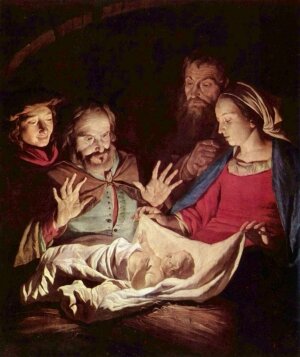
In the exposition and portrayal of it, literally billions of words, oceans of paint, acres of canvas, mountains of stone and marble, have been expended, not to mention, in recent times, miles of film. Is there, then, anything left to say? I ask myself rather disconsolately, and decide that there is—not because of me, but because of him. The man and his story are inexhaustible, and continue to attract the minds and the imaginations of the pious and the impious, of believers and unbelievers, alike; mine among them. -Malcolm Muggeridge in Jesus Rediscovered, emphasis mine

Tuesday, August 24, 2010
Look ... and despair?
 OZYMANDIAS
I met a traveller from an antique land
Who said: Two vast and trunkless legs of stone
Stand in the desert. Near them, on the sand,
Half sunk, a shattered visage lies, whose frown
And wrinkled lip, and sneer of cold command
Tell that its sculptor well those passions read
Which yet survive, stamped on these lifeless things,
The hand that mocked them and the heart that fed.
And on the pedestal these words appear:
"My name is Ozymandias, king of kings:
Look on my works, ye Mighty, and despair!"
Nothing beside remains. Round the decay
Of that colossal wreck, boundless and bare
The lone and level sands stretch far away.
- Percy Bysshe Shelley
"What, then, does the Crucifixion signify in an age like ours? I see it in the first place as a sublime mockery of all earthly authority and power. The crown of thorns, the purple robe, the ironical title 'King of the Jews,' were intended to mock or parody Christ's pretensions to be the Messiah; in fact, they rather hold up to ridicule and contempt all crowns, all robes, all kings that ever were. It was a sick joke that back-fired. No one it seems to me, who has fully grasped the Crucifixion can ever again take seriously any expression or instrument of worldly power, however venerable, glittering or seemingly formidable." Malcolm Muggeridge, Jesus Rediscovered
Sunday, August 22, 2010
Jesus of good causes

I'm not against good causes per se; but they don't terminate on themselves. There is something bigger and more important, more integral and primary. That is, there is Jesus Christ and him crucified.
From Jesus Rediscovered by Malcolm Muggeridge:
In any case, I was generally uneasy, not just about Quakers, but about this whole concept of a Jesus of good causes. I would catch a glimpse of a cross, not necessarily a crucifix; maybe two pieces of wood accidentally nailed together, on a telegraph pole for instance and suddenly my heart would stand still. In an instinctive, intuitive way I understood that something more important, more tumultuous, more passionate, was at issue than our good causes, however admirable they might be.
Saturday, August 21, 2010
Hipster Jesus

I am currently typing this blog beside a beautiful lake in northern Idaho. My family and I are visiting my dad for a few days. This visit will pretty much finish off the summer vacation. With the sun setting over the mountains, following a day filled with hiking, fishing, swimming, and water tubing, I briefly pause before bed to share a quote for the morning's blog post.
The quote comes from the book Jesus Rediscovered by Malcolm Muggeridge. Here is a brief bio of Muggeridge:
Malcolm Muggeridge was born in 1903. His father was a member of the House of Commons and Muggeridge later described his upbringing as "socialist".
In 1924 Muggeridge left Cambridge University and worked as a teacher in India and Egypt. He also contributed articles for various newspapers including the Evening Standard and the Daily Telegraph.
In 1932 Muggeridge became a correspondent for the Manchester Guardian in the Soviet Union. He witnessed the Ukranian famine and wrote vivid accounts of this disaster. Muggeridge then returned to India where he became assistant editor for the Calcutta Statesman. He also published the book, The Earnest Atheist (1936).
On the outbreak of the Second World War, Muggeridge joined the Army Intelligence Corps and served in Mozambique, Italy, and France. He also worked for MI5 during this period.
After the war Muggeridge became a correspondent for the Daily Telegraph in Washington (1946-52). This was followed by a spell as editor of Punch Magazine (1953-57). He also worked as a television reporter for Panorama (1953-60). He also had two interview programmes: Appointment With (1960-61) and Let Me Speak (1964-65).
In later life Muggeridge became very religious and this is reflected in the books he published: Jesus Rediscovered (1969), Something Beautiful For God (1971), Chronicles of Wasted Time (1973), Jesus: The Man Who Lives (1975), Christ and the Media (1977), The End of Christendom (1980), A Third Testament (1983) and Confessions of a 20th Century Pilgrim (1988).
Malcolm Muggeridge died on 14th November, 1990.
In his book, Jesus Rediscovered, Muggerdige provides a great quote that is as applicable today as it was when it was written:
Each generation of Christians inevitably seeks to fashion its own Christ; from the austere figures carved in wood of the early Middle Ages, through the ebullient Renaissance Christs, to the weird efforts of our own time, sometimes clerically sponsored, to devise a Hipster Saviour.
It seems we will always reflect this famous quote by Rousseau: "God created man in his own image. And man, being a gentleman, returned the favor."
Subscribe to:
Posts (Atom)