
Showing posts with label The Future of Justification. Show all posts
Showing posts with label The Future of Justification. Show all posts
Saturday, January 25, 2014
Righteousness of God


Sunday, December 27, 2009
Our good works
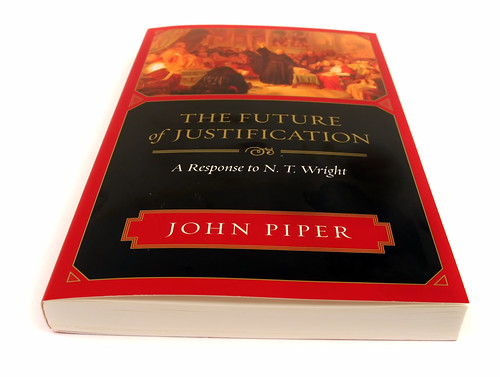 Photo by Tony Reinke from www.spurgeon.wordpress.com
From The Justification of God by John Piper (Piper, John. The Future of Justification A Response to N. T. Wright. New York: Crossway Books, 2007)
A few quotes from the Conclusion of Piper's work on justification in regards to "THE PLACE OF OUR GOOD WORKS IN GOD'S PURPOSES" (184).
Our relationship with God is with One who has become for us an omnipotent Father committed to working all things together for our everlasting enjoyment of him. This relationship was established at the point of our justification when God removed his judicial wrath from us, and imputed the obedience of his Son to us, and counted us as righteous in Christ, and forgave all our sins because he had punished them in the death of Jesus. (185)
All the benefits of Christ—all the blessings that flow from God being for us and not against us—rest on the redeeming work of Christ as our Substitute. If God is for us, who can be against us? With this confidence—that God is our omnipotent Father and is committed to working all things together for our everlasting joy in him—we will love others. God has so designed and ordered things that invisible faith, which embraces Christ as infinitely worthy, gives rise to acts of love that make the worth of Christ visible. Thus our sacrifices of love do not have any hand in establishing the fact that God is completely for us, now and forever. It’s the reverse: the fact that God is for us establishes our sacrifices of love. If he were not totally for us, we would not persevere in faith and would not therefore be able to make sacrifices of love. (185)
Our mind-set toward our own good works must always be: These works depend on God being totally for us. That’s what the blood and righteousness of Christ have secured and guaranteed forever. Therefore, we must resist every tendency to think of our works as establishing or securing the fact that God is for us forever. It is always the other way around. Because he is for us, he sustains our faith. And through that faith-sustaining work, the Holy Spirit bears the fruit of love. (186)
Saturday, December 26, 2009
Our plight, a question, an answer
From The Justification of God by John Piper (Piper, John. The Future of Justification A Response to N. T. Wright. New York: Crossway Books, 2007)
Our plight:
The question:
Piper's answer:
Our plight:
Thus the moral righteousness he requires of us is the same—that we unwaveringly love and uphold the glory of God. He does not demand that we glorify him part of the time or that we glorify him with pretty good zeal. His demand is unwavering and complete allegiance of heart, soul, mind, and strength. But we have all failed. That is our unrighteousness. “The wrath of God is revealed from heaven against all ungodliness and unrighteousness of men . . . they did not glorify him as God . . . and [they] exchanged the glory of the immortal God” (Rom. 1:18, 21, 23, author’s translation). This is why we are on trial in God’s law-court. We have exchanged the glory of God for images and failed to glorify and thank him but have dishonored God by breaking the law (Rom. 2:23) and caused his name to be blasphemed among the nations (Rom. 2:24). So none of us is righteous, not even one (Rom. 3:10). That is the charge against every member of the human race. (164-5)
The question:
The question, then, that we posed earlier is: When the Judge finds in our favor, does he count us as having the required God-glorifying moral righteousness—an unwavering allegiance in heart and mind and behavior? And does this counting us as righteous happen because we meet this requirement for perfect God-glorifying allegiance in our own heart and mind and behavior, or because God’s righteousness is counted as ours in Christ? (165)
Piper's answer:
Yes, the latter is what I believe happens in justification. God counts us as having his righteousness in Christ because we are united to Christ by faith alone. That is, we are counted as perfectly honoring and displaying the glory of God, which is the essence of God’s righteousness, and which is also a perfect fulfilling of the law. This is what God imputes to us and counts us as having because we are in Christ who perfectly honored God in his sinless life. It is not nonsense. It is true and precious beyond words. (165)
Wednesday, December 23, 2009
Piper on God's Righteouseness

From The Future of Justification (Piper, John. The Future of Justification A Response to N. T. Wright. New York: Crossway Books, 2007).
Piper is discussing how God's righteousness should be defined. He begins with a 'simple' definition: "The simple way is to say that God’s righteousness consists in his unswerving commitment to do what is right." (63)
Piper, however, recognizes that this definition, though true, may not be satisfying.
"It is not very satisfying simply to say that God’s righteousness is his commitment to do what is right, because it leaves the term “right” undefined. We don’t feel like we have gained very much in defining “righteousness” if we use the word “right” to define it." (63)
And this definition, according to Piper, may not be ultimately satisfying because it leads one to questions such as these: “How does God decide what is right? Who tells God what is right? Is there a book of laws or rules that God has to obey?” ((63) The answer to these questions is where Piper is heading, "Answering those questions gets at the deeper meaning of righteousness. What is the “right” to which God is unswervingly committed?" (64)
And the following is the conclusion, written as only Piper can write it, to the investigation into God's righteousness:
The answer is that there is no book of laws or rules that God consults to know what is right. He wrote the book. What we find therefore in the Old Testament and in Paul is that God defines “right” in terms of himself. There is no other standard to consult than his own infinitely worthy being. Thus, what is right, most ultimately, is what upholds the value and honor of God—what esteems and honors God’s glory.
The reasoning goes like this: The ultimate value in the universe is God—the whole panorama of all his perfections. Another name for this is God’s holiness (viewed as the intrinsic and infinite worth of his perfect beauty) or God’s glory (viewed as the out-streaming manifestation of that beauty). Therefore, “right” must be ultimately defined in relation to this ultimate value, the holiness or the glory of God—this is the highest standard for “right” in the universe. Therefore, what is right is what upholds in proper proportion the value of what is infinitely valuable, namely, God. “Right” actions are those that flow from a proper esteem for God’s glory and that uphold his glory as the most valuable reality there is. This means that the essence of the righteousness of God is his unwavering faithfulness to uphold the glory of his name. And human righteousness is the same: the unwavering faithfulness to uphold the glory of God. (64)
Tuesday, December 22, 2009
Caution from Piper in The Future of Justification
In CHAPTER ONE of the book The Future of Justification (Piper, John. The Future of Justification A Response to N. T. Wright. New York: Crossway Books, 2007), author John Piper provides a caution for the reader which he states:
Piper goes on to explain three ways in which biblical theology, in contrast to systematic theology, might be distorted.
Most scholars are aware that methods and categories of thought taken from historical and systematic theology may control and distort the way one reads the Bible. But we don’t hear as often the caution that the methods and categories of biblical theology can do the same. Neither systematic nor biblical theology must distort our exegesis. But both can. (33)
Piper goes on to explain three ways in which biblical theology, in contrast to systematic theology, might be distorted.
- Misunderstanding the Sources
- Assuming Agreement with a Source When There Is No Agreement
- Misapplying the Meaning of a Source
First, the interpreter may misunderstand the first-century idea. It is remarkable how frequently there is the tacit assumption that we can be more confident about how we interpret secondary first-century sources than we are of how we interpret the New Testament writers themselves. But it seems to me that there is a prima facie case for thinking that our interpretations of extra-biblical literature are more tenuous than our interpretations of the New Testament. In general, this literature has been less studied than the Bible and does not come with a contextual awareness matching what most scholars bring to the Bible. Moreover, the Scripture comes with the added hope that there is coherency because of divine inspiration and that the Holy Spirit will illumine Scripture through humble efforts to know God’s mind for the sake of the glory of Christ. (34-5)
A second reason why an external first-century idea may distort or silence what the New Testament teaches is that while it may accurately reflect certain first-century documents, nevertheless it may reflect only one among many first-century views. Whether a New Testament writer embraced the particular way of thinking that a scholar has found in the first century is not obvious from the mere existence of that way of thinking. (35-6)
A third reason why external first-century ideas may distort or silence what the New Testament teaches is that while the New Testament writer may embrace the external idea in general, a scholar may misapply it to the biblical text. (36)
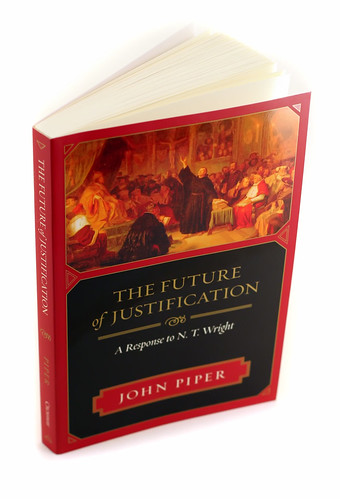
Photo by Tony Reinke as seen at www.spurgeon.wordpress.com
Subscribe to:
Posts (Atom)