Showing posts with label books. Show all posts
Showing posts with label books. Show all posts
Monday, January 4, 2021
Violence!
The ESV renders Matthew 11:12 as such: From the days of John the Baptist until now the kingdom of heaven has suffered violence, and the violent take it by force. However, it also suggest another rendering which would be: From the days of John the Baptist until now the kingdom of heaven has been coming violently, and the violent take it by force.
I have always found this verse intriguing and have often wondered what it meant. In Jesus and the Kingdom, George Ladd addresses this verse and attempts to explain it. After discussing 5 of the most popular explanations and their implicit faults, he goes on to suggest the meaning he thinks best suits the verse in light of the context of the verse and with others verses about the kingdom of heaven in mind.
For various reasons, Ladd believes the 'coming violently' rendering is the most reasonable and thus he describes what the verse would mean:"Jesus taught that because God had acted, because the dynamic power of his kingdom has invaded the world, men are to respond with a radical reaction."(159) These reactions were suggested in other demands of Jesus: if your hand causes you to sin then cut it off, if your eye causes you to sin then pluck it out, if one does not hate his family he cannot be my disciple, He came not to bring peace but a sword, a man should be willing to surrendered everything he has to enter the kingdom.
Ladd does not suggest that these verse are to be taken literally but he believes they indicate the manner in which we appropriate God's kingdom. "The presence of the kingdom demands radical, violent conduct. Men cannot passively await the coming of the eschatalogical Kingdom as the apocalyptists taught. On the contrary, the Kingdom has come to them, and they are actively, aggressively, forcefully to seize it." (160)
Keep in mind the definition of violent: involving extreme(the greatest degree) force(anything that is able to make a change). This is important because though I believe God's kingdom has inflicted harm on the kingdom of darkness I do not think this is a call to physical violence. In the context of this verse Jesus has explained to John's disciples that the the kingdom of heaven has not come in the social-political-physical sense that John thought it would. Jesus was not going to conquer Rome. But he made it clear that the kingdom had come with violence and it required a similar response from those wishing to be a part of it.
This seems like a reasonable approach to this verse and I'm going with it until I am persuaded otherwise. What do you think?


Tuesday, January 5, 2016
A year of reading - 2015


At the beginning, or sometimes the end, of the past few years I have made a habit of blogging about the reading I did in the previous year (2014, 2013, 2012, 2011, 2010, 2009) . I have done this for several reasons.
First, it is a means of holding myself accountable. I value reading and intend to make it an integral part of my life. By making my reading life public, I can allow people a glimpse into one of the disciplines of my life.
Second, I hope for my reading history to be an encouragement to others. Though I know many others who read much more than I do, nevertheless, my year-long record of reading often surprises people in terms of what is possible if reading is a priority. I have a full-time job and five kids heavily involved in extra-curricular activities. A very small portion of my reading occurs at work; though, I think I should read more at work and I hope to do so in 2016. I think that if I can share some of my successes with reading, that other busy people will be encouraged to read more. And that, in my estimation, would be a good thing.
Third, to give glory to God. It is by grace that we read, desire to read, learn from our reading. The fact that my life allows me time to read, and that I have the faculties to do so, are nothing more than gifts from God to a person who has done nothing to deserve such favour.
So, here is a list of all the books I read, or re-read, this year:
- The ESV Bible by God via Various Authors
- The Pastor and Counselling by Jeremy Pierre and Deepak Reju
- Pleased to Dwell by Peter Mead
- The Incarnation of God by John C. Clark and Marcus Peter Johnson
- Malachi: A New Translation with Introduction and Commentary by Andrew E. Hill
- Tough Questions about God and His Actions in the Old Testament by Walter C. Kaiser Jr.
- The Final Days of Jesus by Andreas Kostenberger
- Future Grace by John Piper
- Soul-Depths and Soul-Heights by Octavius Winslow
- The Gospel by Ray Ortlund
- The Joy Project by Tony Reinke
- The Church by Mark Dever
- Ordinary by Michael Horton
- Understanding Prophecy by A. Bandy and B. Merkle
- Malachi: A Study Guide Commentary by Charles D. Isbell
- Prayer by Timothy Keller
- The Compelling Community by Mark Dever and Jamie Dunlop
- 40 Questions about Baptism and the Lord's Supper by John S. Hammett
- The Son of God and the New Creation by Graeme Goldsworthy
- Rejoicing in Christ by Michael Reeves
- Text-Driven Preaching by eds. Akin, Alan, Mathews
- Preaching? By Alec Moyter
- Is God Anti-Gay? By Sam Allberry
- God and the Gay Christian? Ed. Albert Mohler
- Compassion Without Compromise by Adam T. Barr and Ron Citlau
- What Does the Bible Really Teach about Homosexuality? by Kevin DeYoung
- The Prodigal Church by Jared C. Wilson
- Interpreting the Prophetic Books by Gary V. Smith
- Footprints by Lindsay Reynolds
- Blood Work by Anthony Carter
- Preaching with Accuracy by Randal E. Pelton
- Cymbeline by William Shakespeare
- The Meaning of Marriage by Timothy Keller
- Jesus in the Present Tense by Warren W. Wiersbe
- From Heaven He Came and Sought Her eds David and Jonathan Gibson
- The Pilgrim's Progress by John Bunyan
- The Heart is a Lonely Hunter by Carson McCullers
- A Midsummer Night's Dream by William Shakespeare
- Preaching to a Post-Everything World by Zack Eswine
- Jesus' Blood and Righteousness by Brian Vicker
- Changing Places by David Lodge
- Know the Heretics by Justin Holcomb
- All for Jesus by Robert L. Niklaus et. al.
A list of books that I’ve read doesn’t tell you much about the books themselves. Be watching in the near future for a post on my favourite books of 2015 for some more detailed info on a few I considered the best.
Increasing your reading will not happen by accident. You will need to be purposeful about it. But there are some simple tips and techniques which can help you. Here are a few that have been helpful to me:
- Always have a book with you. This is easy in the digital age.
- Have a specific goal in mind. If you aim at nothing, you’ll hit it every time.
- Redeem wasted minutes throughout the day. There are many 10-15 minute blocks of usable time throughout the day in which reading would be a great activity.
- Keep a record of everything that you read. This will encourage you!
- Limit your entertainment intake. More screens usually equates to less books read.
- Get recommendations by people you trust. Reading great books is easier than reading lousy ones.
- Read to glorify God. Because God.
- Read several books at once or only one at a time. I’ve found that either of these may be helpful.
- Read a book on why reading is so important. Two birds with one stone.
- Read books around a theme that interests you. I am in a “books about preaching” phase and my excitement about preaching encourages me to read more.
Saturday, November 14, 2015
Book Review - Tough Questions about God and His Actions in the Old Testament

Author Walter C. Kaiser Jr. takes up “the most challenging issues that seem to cast the longest shadow on God’s character and his actions” and thereby “openly and honestly face these charges … and answer them with valid responses from the same biblical texts that are the basis for these challenges.”
The first three chapters deal mainly with God’s character. Is God merciful or wrathful, peaceful or warlike, truthful or deceptive? These chapters were the strength of the book for me. These issues cause problems for many people and I thought the author answered thoroughly and helpfully.
Chapters five, seven, eight, and ten seem to target questions more likely to arise from inside the church. These chapters deal with the questions that surround the contrast between grace and law, open theism and meticulous sovereignty, the omniscience of God, and the food restriction laws of the Old Testament. These chapters were not as appealing to me as others but that likely reflects the lessened interest I had for these topics.
Chapters four, six, and nine were in my estimation geared towards questions non-Christians would be very opinionated about and for which Christians have not armed themselves with very good answers. Of the three, Kaisers chapter on monogamy versus polygamy is significantly superior. I found this chapter very informative and helpful in addressing my own lack of knowledge on this issue. In fact, this chapter alone makes the book worth acquiring.
One critique of the book is that, at times, the author seemed to give a thorough survey of the question while only delivering a brief answer. Dealing with ten difficult topics could lead to an overly long book, but I felt some of the questions did not get as full an answer as I would have liked.
This small complaint aside, I think this book is worth getting one’s hands on particularly if the reader, or someone the reader knows, is struggling with these questions. There are solid answers available, but they need to be sought out in places such as Tough Questions about God and His Actions in the Old Testament.
Wednesday, November 11, 2015
Book Review – The First Days of Jesus: The Story of the Incarnation

Generally speaking prequels, at least when it comes to
movies, receive mixed reviews at best. They often lack the appeal that the
original movies from which they spawned command. However, The First Days of Jesus, sort of a prequel to The Final Days of Jesus, matches the accomplishments of its
predecessor.
The authors, Andreas Kostenberger and Alexander Stewart,
describe The First Days of Jesus as “a
guidebook for reading and encountering the Gospel infancy narratives” which “will
examine a section of the biblical text with an eye toward proper understanding
and application.” As to these proposed aims of the book, I consider it a
success.
This work did indeed help me encounter and engage with
Scripture’s account of Jesus’ birth. The author’s efforts to help this reader properly
understand the text were also successful. I learned new information around the
narratives as well as, with the author’s help, dispel cultural myths and
mistakes about the historical event. I feel I have a much better command of the
passages under consideration.
Additionally, the authors endeavour to approach the biblical
text in a manner that is “biblical, exegetical, historical, and devotional. The
biblical-ness of their approach is evident as they connect the birth stories to
both Old Testament prophecies as well as future events not yet fulfilled. They
examine and exegete the texts with care and precision appropriate for the broad
audience that this book would appeal to. By explaining how these texts fit into
their historical context, I was helped immensely. It is easy to read these
stories through 21st century lenses which obscures and confuses what
really happened.
The devotional aspect of this book similarly appealed to me.
By devotional, the authors mean that their intention is to “discuss the
scriptures in such a way that you, the reader, will be drawn closer to God. I
can avouch that the book did have this desired effect on me. A clearer, more
accurate understanding of the bible will have this effect; the authors enhance
the devotional character of this book through their intentional writing to this
end.
Of the first book about Jesus’ last days I wrote, “This book
will be valuable for all Christians as well as non-believers interested in the
last days of Christ on earth. Its simplicity enhances the beauty and wonder of
the story.” I can reiterate these sentiments and apply them infancy narratives
covered in The First Days of Jesus. I
recommend this book!
Wednesday, July 29, 2015
Packer on petitioning God via Keller
 In the 14th chapter of Keller's book Prayer, the author addresses the question "How should we ask?" Keller has already considered the danger of asking God for things wrongly, as well as looking at the pitfall of being too timid to ask God for things. Keller proceeds by looking at the 98th question of the Westminster Shorter Catechism which is as follows:
Q. 98. What is prayer?
A. Prayer is an offering up of our desires unto God, for things agreeable to his will, in the name of Christ, with confession of our sins, and thankful acknowledgement of his mercies.Keller notes that the catechism's answer indicates that we should ask God to fulfill desires, even though we may be plagued with sinful or well-intentioned but mistaken desires. Keller then looks to J. I. Packer for wisdom on how to proceed with asking God for things in light of the dangers brought to light in the catechism.
First, Keller argues that we should embed "theological reasoning in all our prayers." He quotes Packer, "we should lay before God, as part of our prayer, the reasons why we think that what we ask for is the best thing" and "why what we have asked for seems to us to be for the best, in light of what we know God;s own goals to be." This is a very helpful suggestion. This embedding of theological reasoning will be a safeguard if we find ourselves with desires that don't align with God.
Second, Keller informs us of Packer's instruction to tell God in our prayers "that if he wills something different we know it will be better and it is that (rather than the best we could think of) that we really want him to do." This, again, is very helpful for maintaining a reverent attitude while we petition God for our desires. Quoting Packer, Keller writes, "We must ask ourselves "what we ourselves might need to do to implement answers to our prayers."" Keller continues, "To some degree, the answers to many of our petitions would be facilitated by changes in us, but we usually do not take time to consider this as we pray." This final insight impacted me the most; I don't think I even consider this approach.
Asking God for things in prayer is not only a privilege, it's a command. But we petition God best when we do it intelligently, reverently, and with self-reflection.
Tuesday, July 21, 2015
Awe and intimacy in forgiveness

In the thirteenth chapter, Keller perhaps discusses the area of Christianity where the experiencing of the intimacy and awe of God comes into play and does so with a whole whack of tension. This area is the area of forgiveness of sins. The experiencing of intimacy is profoundly experienced in the free forgiveness of our sins. But the experiencing of the awe of God is also experienced when we contemplate the infinite cost this free forgiveness required.
Keller desires to keep this biblically informed tension in the forefront in this chapter. He writes,
Only against the background of the Old Testament, and the great mystery of how God could fulfill his covenant with us, can we see the freeness of forgiveness and its astounding cost. It means that no sin can now bring us into condemnation, because of Christ's atoning sacrifice. It also means that sin is so serious and grievous to God that Jesus had to die. We must recognize both of these aspects of God's grace or we will lapse into one or the other of two fatal errors. Either we will think forgiveness is easy for God to give, or we will doubt the reality and thoroughness of our pardon. (207)Forgiveness is a beautiful thing. Even in earthly relationships, one would be hard pressed to find a sweeter, more intimate and affecting idea than forgiveness. And yet, when forgiveness comes from the infinite and perfectly holy Creator of the universe, and the cost of his infinite and perfectly holy Son, the glory of forgiveness starts to be seen in its massively majestic splendour. Keller continues,
All those who are in Christ must and will be forgiven Why? He has taken the punishment and paid the debt for all their sins. It would be unjust of God--and unfaithful to his covenant with us to receive two payments on the same debt, so it would be unjust for him not to forgive us. This profound assurance and security transforms repentance from being a means of atoning for sin into a means of honoring God and realigning our lives with him. (209)The debt-paying sacrifice of our glorious Saviour assures our forgiveness which also assures the almost unbelievable reality of an intimate relationship with God! And the awe-inducing reality of what this actually cost, and what Christ actually did to secure this blessing, should leave us in a state of reverence beyond normal experience. Such is the nature of grace; forgiveness that is free and infinitely costly.
Monday, July 6, 2015
Book Review – 40 Questions About Baptism and the Lord’s Supper
The first 40
Questions book I read pertained to the Law and how Christians should understand
it. I found it very helpful. This book by John S. Hammett is equally beneficial
and useful. The strengths of this book which shape its helpfulness are the form
it employs, the style of its writing, the tone of the author, and the content
of its answers.
 The form of the book shapes its usefulness for laypeople and
clergy alike. The book is, as the title suggests, a compilation of questions
and answers in regards to the sacraments, or ordinances, of baptism and the
Lord’s Supper. This format makes it very easy for the inquisitive to quickly
find an answer to questions they may have. In fact, Hammett’s book deals with
every question I had in regards to these topics; I cannot think of anything it
does not deal with that is relevant to me. The books divisions also aid the
reader. The book is divided into general questions, questions about baptism,
questions about the Lord’s Supper, and concluding questions. The sections on
each of the sacraments is further divided into introductory questions,
denominational views, theological issues, and practical aspects. The very
structure of this book bolsters its helpfulness.
The form of the book shapes its usefulness for laypeople and
clergy alike. The book is, as the title suggests, a compilation of questions
and answers in regards to the sacraments, or ordinances, of baptism and the
Lord’s Supper. This format makes it very easy for the inquisitive to quickly
find an answer to questions they may have. In fact, Hammett’s book deals with
every question I had in regards to these topics; I cannot think of anything it
does not deal with that is relevant to me. The books divisions also aid the
reader. The book is divided into general questions, questions about baptism,
questions about the Lord’s Supper, and concluding questions. The sections on
each of the sacraments is further divided into introductory questions,
denominational views, theological issues, and practical aspects. The very
structure of this book bolsters its helpfulness.
The style of the writing greatly enhances its value to the
reader looking for answers about these two issues. How many millions of words
have been written about baptism and the Lord’s Supper? One could spend a
lifetime reading about them. But Hammett’s writing is concise and clear. He is
easy to follow and his answers are succinct. The reader will not get bogged
down in this book, particularly when the option of just reading the answers to
the questions one is concerned with is an option.
I appreciated the author’s irenic tone while dealing with
the alternative views on many issues. Though the author clearly states his own
opinion, he fairly represents other perspectives and presents them without
negativity. He does not hesitate to state his disagreement, but he does so
winsomely. This approach makes the book easy to read and helps the reader see
other viewpoints which adds to the value of this book.
Finally, the actual of content of the answers is the main
benefit of this book. Though I have read several books and many articles on
these two controversial topics, this one book has helped me more than those
combined. In particular, Hammett addresses historical topics throughout the
book and I found these discussions very enlightening. I will add, the chapter
entitled What Can You Do to Improve Your Worship through the Lord’s Supper? is
worth the price of the book alone. Though one might not agree with all of the
author’s answers, their helpfulness cannot be questioned.
40 Questions About
Baptism and the Lord’s Supper by John S. Hammett is another book in the 40 Questions series that helpfully
deals with issues of great importance to the church. It is particularly helpful
because of its question and answer format, its clear and concise writing, its
irenic tone, and the actual answers the author provides. I recommend this book
as a valuable resource for the church and her people.
Thursday, June 25, 2015
Book Review - The Son of God and the New Creation
If Graeme Goldsworthy’s The
Son of God and the New Creation is indicative of what readers can expect
from the new Crossway series Short
Studies in Biblical Theology, then I suggest the books are going to be a
tremendous gift to the church and her people. This first volume from the series
delivers an edifying and intriguing look at a central theme of the Bible in a refreshingly
accessible manner.
 The renaissance of biblical theology over the past decade
has surely been a positive thing. Even as a layperson, I am aware of the
increasing number of books in this genre that have been and are being
published. I have even read a few of them myself. The Short Studies in Biblical Theology promises more biblical theology
in the coming years. Series editors Dane C. Ortlund and Miles V. Van Pelt
intend for these books to “magnify the Savior and to build up his church.” The
Son of God and the New Creation thoroughly accomplishes both of these goals.
The renaissance of biblical theology over the past decade
has surely been a positive thing. Even as a layperson, I am aware of the
increasing number of books in this genre that have been and are being
published. I have even read a few of them myself. The Short Studies in Biblical Theology promises more biblical theology
in the coming years. Series editors Dane C. Ortlund and Miles V. Van Pelt
intend for these books to “magnify the Savior and to build up his church.” The
Son of God and the New Creation thoroughly accomplishes both of these goals.
In this volume the author, Goldsworthy, traces the theme of
“Son of God” through the Bible and considers how God’s Son connects to the new
creation. The study follows an outline which is clearly laid out in the first
chapter. This volume will begin not in the Old Testament, but rather in the New
Testament. Goldsworthy writes: “Since we begin our Christian journey by coming
to faith in the person and work of Jesus, it makes sense to begin with him.”
From there the author wants to identify how the New Testament authors relate
this theme to the Old Testament which sets up a survey of the theme in the Old
Testament itself. The author finishes with a consideration of New Testament
application. Though the author recognizes that this method is not “the only way
a biblical-theological investigation can be carried out,” I found it very helpful
as well as easy to follow.
I found that the theme in question and how the author
conveyed his research both exalting to Jesus and edifying to me. With clear
explanations and concise writing, Goldsworthy explains and expounds the theme
“Son of God” and in doing so paints a picture of a glorious Saviour. In
following this golden thread through the New and Old Testament, I found myself
not only educated, but also enraptured; what a wonderful Saviour this God-man
is. As has been my experience, following different thematic concepts through
all of Scripture leads to some edifying discoveries. For instance,
Goldsworthy’s study conveyed to me the surprising emphasis the Bible places on
an actual location when dealing with God’s work in creation. In fact, the
author suggests God’s redemptive plan can be explained simply: “God’s people in
God’s place under God’s rule.” It was only through this investigation of the
“Son of God” in Scripture that I became aware of this important detail. So, I
found in this book, as I have found in other biblical theologies, a very
helpful and God-honouring teaching.
The series in general, and this book in particular, are
intended to build up the church. The Son
of God and the New Creation will build up the church, even the
less-than-intellectual types as well as the I-have-an-aversion-to-reading
types. Before getting this book in my hands, if you asked me to picture a book
on biblical theology I would have envisioned a massive tome of at least 700
pages. The works on biblical theology that I have read are exactly that; large
books that trace a theme through every book of the Bible, beginning in Genesis
and ending in Revelation. They were incredibly impactful books that I am very
grateful to have read. But they are not for everyone. The length alone would
eliminate most people. That is where a book like the one in consideration
succeeds; it is accessible to every level of reader and it will be helpful to
every level of reader. In my opinion, putting biblical theology within the
reach of the average church member is a significant contribution to the body of
Christ.
With the aim of writing a biblical-theological study of the
“Son of God” that is edifying to the church and exalting to the church’s
Saviour, I can say with conviction that The
Son of God and the New Creation is a brilliant success. I recommend this
book and am looking forward to the next in the series.
A copy of this book was given to me from the publisher for
the purpose of review.
Sunday, May 31, 2015
175 Tweetable Quotes from The Prodigal Church by Jared Wilson
 So, yeah, this sort of got out of hand. I got started and it was a slippery slope sort of deal.
Nevertheless, I really found The Prodigal Church by Jared C. Wilson very helpful and informative. I like doing these "so-many Tweetable Quote" posts as a way to review a book. These posts also end being a resource for use in the future. And the issues Wilson raises in this book are worth pondering and re-pondering and re-re-pondering. So I hope you also find this helpful.
I am a pretty weak typist, and so there could be some errors; I'm also not great at pronouncing my words and since I used Dragon Dictation to do some of this work there may be more errors. I tried to catch them, but if they still exist than the fault is all mine. Enjoy.
- “…guilt can be a powerful motivator…But guilt is not a very enduring motivator.” (9)
- “This is not an argument for a more traditional church so much as it is an argument for a more biblical one.” (18)
- “…I invested in the attractional church because I shared its heart for the lost. I still have not rejected its primary aims.” (20)
- “How we “do church” shapes the way people see God and his Son and his ways in the world.” (21)
- “If we give either legalism or license an inch, they will take a mile.” (23)
- “What if the way we communicate Jesus actually works against people trusting him?” (24)
- “‘What if what we’re doing isn’t really what we’re supposed to be doing?’ We should ask that. All of us.” (24)
- “A definition of attractional…a way of ministry that derives from the primary purpose of making Christianity appealing.” (25)
- “…too often the message of Christ’s death has become assumed, the thing you build up to rather than focus on.” (27)
- “To hear a lengthy appeal to our abilities, culminating in an appeal to our utter inability, can cause spiritual whiplash.” (27)
- “…the idea that the attractional church is having its doors beaten down by lost people is a myth.” (35)
- “…the kind of growth the attractional church experiences the most of is in reality the kind of growth they often claim they don’t want… ‘transfer growth.’” (35)
- “The family has not been won to a church. They’ve been won to a menu of attractive goods and services.” (36)
- “God will use anything to bring people to him. But just because he is no snob, that doesn’t mean ‘anything’ is normative for our use.” (38)
- “The ends don’t justify the means.” (38)
- “It is a customary mantra of ministry that healthy things grow. And yet sometimes healthy things shrink.” (40)
- “‘Healthy things grow’ sounds right. But cancer grows too.” (40)
- “So it’s possible to look big, to look successful, and to not actually be big or successful in the ways that matter.” (40)
- “Sometimes unhealthy things grow.” (41)
- “It would see, actually, that for some churches, bigger inadvertently becomes the point …” (41)
- “”…in the attractional model, all too often members are not contributing to the life of their church body but to the church’s programming…” (45)
- “Shouldn’t we measure our models against the means and methods found in the Scriptures?” (46)
- The Bible is frustratingly vague on ‘how to do church.’” (47)”
- “…as we seek to do the good work of missionary contextualization, we have to make sure that we have not crossed lines into cultural accommodation…” (48)
- “Beneath the exercise of liberty in methodology is always a functional ideology driving our decisions.” (48)
- “A ‘functional ideology’ is the belief…in a church that…drives the methods and practices of the church.” (49)
- “In short, just because we think we can do something doesn’t mean we should.” (49)
- “I think the evangelical church in the West is particularly susceptible to two primary ideologies…pragmatism and consumerism.” (49)
- “…I think the attractional model is fundamentally built on these functional ideologies…pragmatism and consumerism.” (49)
- “We need to be careful, however, not to confuse pragmatism with simply being practical.” (50)
- “I would suggest that pragmatism runs counter to the functional ideology of Scripture.” (50)
- “It [pragmatism] assumes a method’s value is based on the demonstration of our desired results.” (50)
- “Those verses are instead a reminder that we can do our work but we cannot do God’s. Nor is his work contingent upon ours.” (51)
- “The sower [in Luke 8:5-8] appears to be scattering the seed somewhat indiscriminately.” (51)
- “In the pragmatic way of thinking, faithful church ministry always results in growth. And it does! But not always in the ways we expect and desire.” (52)
- “Pragmatism has a utilitarian ethos to it. It is by nature unspiritual.” (52)
- “Pragmatism is anti-gospel because it treats evangelism as a kind of pyramid scheme…” (53)
- “Pragmatism reasons that God’s ability to use anything means our freedom to use everything.” (53)
- “The way the church wins its people shapes its people.” (54)
- “…the most effective way to turn your church into a collection of consumers and customers is to treat them like that’s what they are.” (54)
- “But in my dad’s mind-in the world of logic and realism and fairness-the customer is sometimes pretty stupid.” (56)
- “No human’s desires are value-neutral.” (56)
- “We can and should address some felt needs, but not all felt needs are created equal.” (56)
- “…the attractional church model necessarily gives rise to competition among churches…” (57)
- “…the target audience of the ‘worship experience’ is not any mortal in the congregation. The target audience is God himself.” (58)
- “The purpose of the worship service is not what we get out of it but the God who has drawn us into it.” (59)
- “…the functional ideologies…of pragmatism and consumerism are disastrous, because they make the individual person the center of the religious universe.” (60)
- “The worship service, biblically, is never seen…as a place where individuals go to enjoy a particular experience nor as the central place of evangelism.” (62)
- “The worship service, biblically, is a gathering of Christians to enjoy God in communion with him and each other.” (62)
- “The attractional church follows a trajectory away from what makes the church the church.” (63)
- “The worship service must be conducted with the unbeliever in mind, but it doesn’t need to be conducted with the unbeliever in focus.” (63)
- “…in the biblical picture of the earliest church, we don’t get any indication that the worship gathering is meant to be an event oriented around the unbeliever’s presence.” (63)
- “…designing your service specifically for the [unbeliever] is neither biblical nor wise.” (65)
- “What the Bible seems to express is that unbelievers in the service are best served not by having their tastes catered to…” (66)
- “What you win them with is what you win them to.” (66)
- “What we do in church shapes us. It doesn’t just inform us or entertain us. It makes us who we are.” (67)
- “The worship service…doesn’t just cater to certain tastes; it develops certain tastes.” (67)
- “We will eventually become conformed to the pattern of our behaviors.” (67)
- “Habits come from character, but it works the other way too-character is shaped by habits.” (67)
- “The Bible’s ‘functional ideology’…is that ‘what works’ is the Holy Spirit through the message of the gospel of Jesus.” (70)
- “…neither the Spirit nor the gospel needs help from our production values.” (70)
- “The wider evangelical church is suffering terribly from theological bankruptcy.” (74)
- “We [evangelicals] have tended to favor the practical half truth rather than the impractical (allegedly) whole truth.” (74)
- “Our shepherds are increasingly hired for their…laboring in the increase in attendance rather than the increase of gospel proclamation.” (75)
- “The dilution of understanding of worship is a direct result of the dilution of theology in the church.” (75)
- “Fortune-Cookie preaching will make brittle, hollow, syrupy Christians.” (77)
- “We fill our buildings with scores and scores of people, but we’ve reduced the basic message to fit the size of an individualistic faith.” (77)
- “The typical application message tends to overemphasize our good works while a good proclamation message will emphasize God’s finished work.” (82)
- “The essential difference between applicational preaching and proclamational preaching ultimately depends on how much the preacher wishes to make of Jesus.” (83)
- “The applicational preacher either presupposes the gospel or relegates it to the conclusion of his message.” (83)
- “…just because you dress casually, play edgy music, and talk a lot about grace, it doesn’t mean you aren’t a legalist.” (84)
- “…it’s my belief that the self-professed ‘culturally relevant’ churches are the chief proponents of legalism in Christianity today.” (84)
- “But ‘do’ isn’t any less law-minded than ‘don’t.’” (84)
- “The gospel isn’t ‘don’t,’ but it also isn’t ‘do’; both are merely religion.” (84)
- “They [unbelievers] don’t need the church to act like good people, really; they need the church to point to Jesus as the only truly good person.” (84)
- “”Pharisaical legalism was just self-help without the cool clothes.” (84)
- “…we must never teach the practical points as the main points.” (85)
- “The [good] news is so much better than the instructions! It is better because the news actually saves us.” (86)
- “But what will really save the lost world? Let me tell you: none of our complaints against it.” (87)
- “It is possible, actually, that all of our emphasis on the practical has only served to make things impossible.” (87)
- “Preaching even a ‘positive’ practical message with no gospel-centrality amounts to preaching the law,” (88)
- “…when we preach ‘how to’ law sermons instead of the gospel, we may end up with a bunch of well-behaved spiritual corpses.” (89)
- “,,,what the Christian church needs today in its imperfect fumbling back to the beauty of gospel-centrality is a stubborn unmuddling of law and grace.” (90)
- “It seemed as though authenticity was a style we were going for, which is, surely, the exact opposite of authenticity.” (93)
- “…emotionalism is dangerous.” (94)
- “The danger in this [emotionalism] is that we end up craving the emotions associated with emotional worship, not necessarily the spirit of worship itself.” (94)
- “It’s not the charismata that are offensive to me; it is the complete lunacy that claims Spiritual authenticity.” (95)
- “We are in very real danger of divorcing our styles and preferences from our object.” (95)
- “Worship must really be worship, which is to say worship of God, the triune God.” (96)
- “The problem in these emotionalistic, faddish, trendy times is that worship becomes more about us than God.” (96)
- “The danger we face when we worship is coming into the experience assuming we are summoning God.” (97)
- “If you worship God in a less-than-clear or in a doctrine-less sense, you end up worshipping another god.” (99)
- “When we divorce theology from worship…we compromise our worship. It may look great but it is hollow and shallow.” (99)
- “The center of worship is the perfect and eternal God…not the achievements of the created.” (99)
- “Self-celebratory worship music is the result of self-celebratory teaching and discipleship.” (100)
- “Worship is a way of life, a quality of the believing heart.” (100)
- “Modern church worship is characterized by an exaltation of the self, but authentic worship is marked by an emptying of ourselves.” (101)
- “Authentic worship doesn’t just focus on the fullness of who God is, but it glories in the beauty of what God has done.” (102)
- “It [real worship] is basking in the warm glow of eternity.” (102)
- “The gospel is a blinding light interrupting our minding our own business on a lonely road.” (102)
- “When we gather, are gathering a watchers or as beholders?” (103)
- “When we gather…Are we gathering to see a performance or to see the passing by of the glory of God?” (103)
- “The gospel must be central because nothing else even comes close to filling the eternal gap.” (104)
- “The way the attractional church worships produces the kind of worshipper it gets.” (111)
- “I’m only saying that we should use these things after asking deeper questions about them than ‘Will this work?’” (112)
- “But the uncritical use of media and technology can stunt our church's spiritual growth, even if in the short-term it entertains and pleases the people.” (112)
- “The uncritical co-opting of the cultures need for media might actually feed inside the church the negative qualities they feed outside the church... ” (113)
- “All churches should be seeker sensitive in the best sense of the phrase…” (116)
- “At what point do we look at cultural trends not as things to mirror and copy but as things to challenge and subvert?” (116)
- “I am afraid many churches have moved from leveraging technology to merely co-opting whatever they think the world finds appealing or slick.” (116)
- “We cannot expect our people to grow in God's glory if we do not put God's glory for their faces.” (119)
- “We cannot settle for success. Our people need real glory, and only the gospel "of first importance" reveals it. ” (120)
- “In other words, the bigger and the attractional church becomes, the more programs and ministries it thinks it must offer.” (121)
- “The drive to provide an array of goods and services prevents a church from exercising missional nimbleness.” (122)
- “Churches passionate about simplicity will pursue a simple vision.” (128)
- “The attractional of church often reasons according to available resources, not according to actual spiritual value.” (128)
- “But it isn't more entrepreneurial visionaries we really need more cross-focused visionaries.” (131)
- “If the church is people, then the organizational machine and a local congregation should be considered expendable.” (132)
- “When an attractional church multiplies, the results more resemble franchises then church plants.” (133)
- “As the attractional church accumulates more complexity, it becomes more rigid, despite all its claims to innovation and cultural relevance.” (133)
- “… the simple church adopts an approach to church growth that is more reflective of farming, of cultivation.” (134)
- “… the simple church focuses simply on the long-term investments in growth and trusts the “Spirit produce growth in his time.” (134)
- “The simple church follows the direction not of the shifting winds of the culture but the surprising currents of the Spirit.” (134)
- “The simple churches mission waiting much more nimble than the attraction church. (134)
- “Similarly, the church needs to stick to what the Bible actually tells us to do, and what the Bible actually tells us to do is not very complicated.” (134)
- “Over programming create an illusion of fruitfulness just be busyness.” (134)
- “Here's a good test: take a look at a typical over-programmed church's calendar and see how many of the activities resemble things seen New Testament.” (136)
- “Always ask 'should we?' before you ask 'Can we?'” (137)
- “Somewhere between the poles of attachment to church programs and 'self-feeding' lies the real stuff of covenant community.” (143)
- “Systems may aid the discipleship process, but discipleship is not a system.” (144)
- “Underneath our felt needs is an entire industry of idols emerging from the foundation of sin and longing for glory.” (144)
- “Are we trusting our programs, or are we trusting God?” (145)
- “Whatever our programs, our churches' leaders need to take seriously the command of Christ – in as many ways as possible – to feed his sheep.” (145)
- “But if we want to Christ–exalting, Christ–loving, Christ–following people, we have to get more personal and go deeper.” (145)
- “Pragmatism, on the other hand, is the mind-set that says that whatever "works" can and should be used.” (147)
- “A pragmatic mind-set treats spiritual matters along the lines of mathematics.” (147)
- "We must remember that pastoral ministry, like Christianity itself, is not a matter of formulas but of faith.” (147)
- “Or maybe we've taken the biblical sheep metaphor a bit too far, and we're looking at how best to herd the sheep instead of how to best feed them.” (148)
- “But when all is said and done, we are not managers of spiritual enterprises: we are shepherds.” (148)
- “Jesus neither sulks nor sighs about us. He ministers to us willingly, eagerly. ” (149)
- “Therefore, personal presence is so important. And I'd say you're not really a pastor if you're not present. ” (149)
- “Only the Gospel goes deep enough to effect real hard change. Everything else is just behavior modification. ” (150)
- “But in order to reveal someone's functional ideology… we have to employ the only tool adequate for that job, and that is the gospel of Jesus…” (150)
- “The way we are typically programmed to measure the success of our ministries sets us up for hollow victory in desperate failure.” (151)
- “It is only to say that what we measure and how we measure shows where our confidence lies.” (151)
- “Clearly, accumulating numbers cannot be our primary measure of success.” (151)
- “… in the attractional church, growth in numbers is often seen just as a measure of success but as a justification for any methodology used to get them.” (151)
- “Biblical credibility is not found in big stats.” (152)
- “… We are responsible mainly for the care of the souls, not the accumulation of them. ” (152)
- “When we pastors cling to the gospel ourselves, it will shape us, giving us the mind and heart of Christ for our people.” (153)
- “The central idea of the church should be the Gospel.” (156)
- “Numbers don't account for everything. In some cases, they don't account for anything. ” (157)
- “What God will require of us is not ministry quantity but ministry quality.” (157)
- “...but in a church centered on the gospel, things like inspiration and good feelings are seen as byproducts of the experiences, not the aim of the experience. ” (158)
- “What is emphasized and valued the churches media correlates to what the church is measuring success.” (159)
- “The attractional church, which places a huge emphasis on numbers, science, and raw data, highly prices statistics.” (159)
- “The gospel-centered church highly prizes stories. Rather than prizing bigness, it prizes relationality. ” (159)
- “The gospel is not made more powerful by a dynamic preacher or a rockin' band… The gospel cannot be improved. ” (163)
- “You cannot program salvation.” (165)
- “The Spirit doesn't where the church’s wristwatch. You cannot control him." (166)
- “That's what prayer is, essentially: acknowledged helplessness.” (166)
- “But we do not worship the Father, the Son, and the Holy Ingenuity.” (167)
- “Everything good and valuable must come from the Spirit's sovereign working, not from our ministerial machinations.” (167)
- “The Evangelical church's search for the magic bullet is insatiable.” (169)
- “The nurturing of your congregation's desire for experiential community begins with you.” (169)
- “Reject the tyranny of results.” (172)
- “Preach hard on the importance of discipleship, on the call to community…” (173)
- “… the church does not exist to facilitate all our good ideas.” (176)
- “Good intentions and strong giftedness do not baptize on biblical methods.” (176)
- “If all of life is repentance, then all of ministry is too.” (184)
- “The very nature of Grace throws off all measurements of balance.” (185)
- “In reality, both irreligion and religion are fundamentally self-salvation projects.” (185)
- “… in the New Testament, you never find application on exhortation disconnected from gospel proclamation.” (187)
- “It’s about letting the gospel direct the methods.” (199)
- “If you treat your church like a business, you will see other churches as your competition.” (219)
Wednesday, May 27, 2015
Truth and Experience in Keller's book on prayer

The eleventh chapter in Keller's book on prayer is entitled As Encounter: Seeking his Face. In the opening paragraphs of this chapter Keller reminds the reader that prayer "is a conversation that leads to encounter with God" (165). He also refers back to the tenth chapter by recounting John Owen's contention that meditation "anticipates a character-forming experience of God's presence" (165).
The chapter goes on to discuss how Christians can fail to experience God in the heart. The Christian can understand intellectually truths about God and the gospel and yet fail to "grasp" them with the heart. Keller proceeds to explain and elaborate on what it means to experience God with the "inner being."
This is followed by the author persuading the necessity keeping truth and experience together. Keller returns to Owen to make this point. He suggests that "Owen promotes what could be called a radically biblical mysticism. It comes through meditation on Scripture, on theological truth, on the gospel-but it must break through to real experience with God" (179)."
a little farther on in the chapter I was startled by an unexpected conclusion of Owen's. forgive the longish quote but it is worth it:
Nevertheless, despite his deep concerns, in the end Owen concludes: "It is better that our affections exceed our light from the defect of our understandings, than that our light exceeds our affections from the corruption of our wills." That's a remarkable thing for a Puritan to say. If we are going to be imbalanced, better that we be doctrinally weak and have a vital prayer life and a real sense of God on the heart than that we get all our doctrine straight and be cold and spiritually hard.This indeed was unexpected. I certainly am no expert on Owen, but I would not have anticipated him saying this. Interesting.
The chapter finishes with some thoughts on being cautious in excessively pursuing experience but also in admiration of those who truly seek God in the inner being.
Friday, May 22, 2015
Meditation in Keller's book on prayer

According to Owen, meditation means analyzing the truth with the mind; bringing it into the feelings, attitudes, and commitments of the heart; and then responding to the degree to which the Holy Spirit gives illumination and spiritual reality.Alternatively, Keller also paraphrase these ideas into his own summary of meditation:
We could say that meditation before prayer consists of thinking. then inclining, and, finally, either enjoying the presence or admitting the absence and asking for his mercy and help. Meditation is thinking a truth out and then thinking a truth in until its ideas become "big" and "sweet," moving and affecting, and until the reality of God is sensed upon the heart.I find both these summaries helpful. And in contemplating them, I must confess that I think I do a reasonable job of "thinking a truth out" but I am often negligent in "thinking a truth in." I want and need to get the practice of internalizing the truth of Scripture in the heart, so my affections are raised, more consistent in my prayer life. This is edifying stuff by Keller and Owen!
Friday, May 15, 2015
Book Review – Interpreting the Prophetic Books
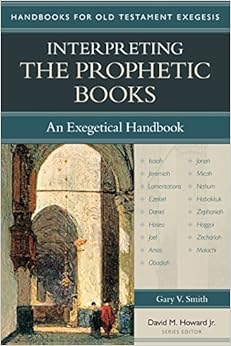
In sports, my experience has been that one of the main causes behind intimidation is simply the unknown. We are intimidated when we don’t know about: How good is this team? Will I be able to defend against this player? How will they attack our offence? More often than not, when the reality of things comes to light we realize we didn't really have anything to be intimidated about. They may be good, but they’re not Superman. They put their pants on the same way we did this morning. Knowledge leads to confidence. I find the same is true for interpreting and preaching; some books of the Bible are intimidating but with knowledge comes confidence.
In Interpreting the Prophetic Books, Gary V. Smith provides helpful information which leads to increased knowledge resulting in a lessening of the intimidation that preaching prophetic books produce.His thorough but concise teaching on understanding and processing biblical, prophetic literature helps preachers, particularly less-than-seasoned preachers such as myself, overcome any inhibitions about preaching this genre. Of course, the Holy Spirit helps us in our weakness, but the Spirit can also use a resource like this as a foundation for future preaching.
Interpreting the Prophetic Books is a well organized, logically laid out book which fosters learning and makes it easy to return to for review. The series it belongs to-Handbooks for Old Testament Exegesis-follows a predetermined chapter structure which Smith’s book follows: the nature of the genres, major themes, preparing for interpretation, proclaiming the text, putting it all together. Structure and organization is facilitated by two table of content; one is brief and the other in-depth. As well, each chapter begins with a very useful chart that provides the chapter at a glance. I really appreciate this aspect of the book. The book finishes with the expected glossary and indexes. Books that are to be used a resources which will be revisited would all benefit from simple yet effective organization as this book has.
Chapter one discusses the nature of prophecy including a distinguishing of the temporal categories as well as the genres of prophecy. It also considers the poetical aspects of these canonical books. For me, this was the most helpful chapter and I learned enough to ease some of that intimidation I was feeling. Chapter two investigates the major themes of all 17 prophetic books and encapsulates these ideas with an overall thematic summary. I will definitely be returning to this section of the book regularly. The third chapter aims at aiding one in preparing for interpretation. Included are concepts revolving around the historical setting, other ancient prophetic literature, textual criticism, and working with commentaries. This chapter ends with suggested commentaries and electronic resources on each book of the bible; this is a great bonus to the chapter.Chapter four addresses interpretive issues in the texts which include issues such as literal/metaphorical considerations, contextual topics, and various other difficulties. The fifth chapter delves into the actual preaching of the text with an almost step-by-step approach to dealing with proclaiming these Scriptures. Reflections on applications for this genre completes the chapter and these points were helpful. The final chapter offers some concrete examples of specific prophetic passages that have been dealt with by the author in light of preaching.This “walk-through”is a very practical demonstration of much of the books contents.
As mentioned, this book is a very helpful aid to those intimidated with preaching the prophetic books. I’m sure even experienced preachers will also find benefits through out. It tight organization strengthens its usefulness as a resource which one can return to. I will certainly be accessing this book for years to come.
One aspect of preaching that was not addressed was that of preaching Christ from these books. Though this may be a topic outside of the aim of the series, I feel that this issue is one that many preachers, experienced or not, will struggle with in the prophetic books of Scripture. Addressing this issue would have been a great finishing touch to a very helpful book.
Monday, May 11, 2015
Touchstones of Prayer

Below I will list Keller’s twelve touchstones of prayer as well as a quotation about each one.
Prayer is a duty and a discipline.
“Prayer should be done regularly, persistently, resolutely, and tenaciously at least daily, whether we feel like it or not.”
Prayer is conversing with God.
“Prayer in Jesus’ name and the power of the Spirit is the restoration of that single most precious thing we had with God in the beginning-free communication with him.”
Prayer is adoration, confession, thanks, and supplication.
These four elements of prayer are “interactive and stimulate each other.”
Prayer is “In Jesus’ name,” based on the gospel.
“Our prayer must be in full, grateful awareness that our access to God as Father is a free gift won by the costly sacrifice of Jesus the True Son, and then enacted in us by the Holy Spirit, who helps us to know inwardly that we are his children”
Prayer is the heart engaged in loving awe.
“One important sign of an engaged heart is awe before the greatness of God and before the privilege of prayer.”
Prayer is accepting one’s weakness and dependence.
“To pray is to accept that we are, and always will be, wholly dependent on God for everything.”
Prayer reorients your view toward God.
“Prayer in all its forms. . . reorients your view and vision of everything.”
Prayer is spiritual union with God.
“Prayer is the way that all the things we believe in and that Christ has won for us actually become our strength.”
Prayer seeks a heart sense of the presence of God.
“[W]e are to meditate on the truth until our heart’s affections are stirred and we find ourselves desiring the service of God.”
Prayer requires and creates honesty and self-knowledge.
“Prayer, however, must eventually take us beyond a mere sense of insufficiency into deep honesty with ourselves.”
Prayer requires and creates both restful trust and confident hope.
“The final thought of every prayer must be for the help we need to accept thankfully from God’s hand whatever he sends in his wisdom.”
Prayer requires and creates surrender of the whole life in love to God.
“Real believers, though they are profoundly aware of how imperfectly they love God, nonetheless want to love him supremely.”
Monday, April 20, 2015
Keller writes on Calvin and prayer
In the seventh chapter of Manhattan's own Tim Keller's book called Prayer, Keller provides a summary of some of John Calvin's teaching on prayer from Institutes of the Christian Religion. Keller reviews Calvin's treatment of what Clavin calls his "rules for prayer."
Keller introduces the four rules of prayer:
After laying out these rules of prayer by John Calvin, Keller describes what it means to pray in Jesus' name. I found this a solid explanation.
Keller introduces the four rules of prayer:
- Christians are to have a due sense of the seriousness of what prayer is. That is, they should pray with reverential fear.
- Christians should pray with spiritual humility which includes a sense of our dependence on God and a willing readiness to repent of our faults.
- Christians should pray with a submissive trust of God.
- Christians should pray with confidence and hope.
After laying out these rules of prayer by John Calvin, Keller describes what it means to pray in Jesus' name. I found this a solid explanation.
To pray in Jesus' name means to come to God in prayer consciously trusting in Christ for our salvation and acceptance and not relying on our own credibility or record. It is, essentially, to reground our relationship with God in the saving work of Jesus over and over again. It also means to recognize your status as a child of God, regardless of your inner state.I find the idea of regrounding my relationship in the saving work of Jesus again and again a concept that brings me much joy. Prayer can be intimidating if even the most miniscule part of it is relying on anything I have merited. If it's going to be, and it's up to me, then nobody should be holding their breath. But thankfully, prayer is not grounded on my actions, but rather it is grounded on the Son of God's greacious work of salvation. That I can work with!
Saturday, April 18, 2015
The Holy Spirit preaching to us while we pray

This experience, of having Scripture made alive and clearly relevant by the Holy Spirit, is a rich and edifying occurrence. I like that Keller notes that this happens "sometimes;" it is not a routine, daily event. But, as the Spirit wills, he will give you fresh insight into the Word that you have been meditating on. This is not new revelation in the canonical sense, but rather the illuminating of Scripture by the Spirit to specific situations in our lives. When it does happen, it is glorious.
As a reminder that helps us from straying too far down the mystical-experiential yellow brick road, Keller reminds us that Luther's prayer life was informed by the Bible and had God's Word as its foundation: "To paraphrase Luther's little treatise-he tells us to build on our study of Scripture through meditation, answering the Word in prayer to the Lord."
However, there is definitely some room for the Spirit to break through our routines and communicate. Keller writes, "we should be aware that the Holy Spirit may begin "preaching" to us. When that happens, we must drop our routines and pay close attention.
Thursday, March 5, 2015
Reading in Community - Prayer: Experiencing Awe and Intimacy with God.
I'm starting a new book today, and reading it in community with Chris Power, who is separated by distance but unified in Spirit. To compensate for the physical difficulties of fellowshipping over a book while separated by an hour and a half drive, we are going to try and post on the blog once a week a reflection on the chapter we have read.
The book we are reading together is by Timothy Keller: Prayer: Experiencing Awe and Intimacy with God.

Towards the end of the first chapter, Keller discusses some practical changes he made to his prayer life after a particularly difficult season of his life. These changes included: summarizing the Psalms and "praying through the Psalms regularly"; adding a "time of meditation as a transitional discipline between my bible reading and my time of prayer"; praying both in the evening and the morning instead of just the morning; and"praying with greater expectation."
I look forward to learning more about these practices from the author, but it is what he wrote next that really caught my attention. Keller informs that the changes "took time to bear fruit, but after sustaining these practices for about two years, I began to have some breakthroughs" (emphasis mine).
I find it both daunting and encouraging that Keller experienced breakthroughs after two years of applying and practicing his new found disciplines: daunting because I am a fickle, lazy, and self-seeking individual; encouraging because breakthroughs take time, hard work, and God's grace even for gifted and godly people like Keller which means there is hope for me.
And here is my hope: I hope to pray more, and to pray more sincerely, and to pray with greater effectiveness, and to pray for the glory of God.
The book we are reading together is by Timothy Keller: Prayer: Experiencing Awe and Intimacy with God.
Towards the end of the first chapter, Keller discusses some practical changes he made to his prayer life after a particularly difficult season of his life. These changes included: summarizing the Psalms and "praying through the Psalms regularly"; adding a "time of meditation as a transitional discipline between my bible reading and my time of prayer"; praying both in the evening and the morning instead of just the morning; and"praying with greater expectation."
I look forward to learning more about these practices from the author, but it is what he wrote next that really caught my attention. Keller informs that the changes "took time to bear fruit, but after sustaining these practices for about two years, I began to have some breakthroughs" (emphasis mine).
I find it both daunting and encouraging that Keller experienced breakthroughs after two years of applying and practicing his new found disciplines: daunting because I am a fickle, lazy, and self-seeking individual; encouraging because breakthroughs take time, hard work, and God's grace even for gifted and godly people like Keller which means there is hope for me.
And here is my hope: I hope to pray more, and to pray more sincerely, and to pray with greater effectiveness, and to pray for the glory of God.
Friday, January 23, 2015
Book Review – All For Jesus

Winston Churchill once declared, “Study
history, study history. In history lie all the secrets of statecraft.” The same
may be said of church-craft as well. The study of Christ’s bride and her
history will bring clarity and conviction in regards to the church’s present
situation. All For Jesus, written by
authors Robert L. Niklaus, John S. Sawin, and Samuel J. Stoesz, considers the
work of God in the Christian and Missionary Alliance from 1873 until 1987. A
wealth of knowledge from the past, ideas for today, and insight for the future
is contained in this work.
The work is divided into four main sections which represent four
periods in the history of The Christian and Missionary Alliance: Part One,
Formulation, 1873-1881; Part Two, Formation, 1881-1912; Part Three,
Redirection, 1912-1936; and Part Four, Acceleration 1936-1987. Highlights from
each chapter in each of the four periods will be offered...
In the book’s Introduction, it is suggested that the reason for
A. B. Simpson’s success, and the ensuing success of The Christian and
Missionary Alliance, is primarily due to the gracious providence of God. The
details that emerge over the following four sections give ample evidence of
that truth. Truly, God deserves the glory for the work of the many godly men
and women who helped propel this one-time alliance into the force for God’s
kingdom that it has become.
Part One, entitled Formulation, deals with the pre-twentieth
century years between 1873 and 1881. Beginning with the first chapter, The
Louisville Experience, the authors begin a fairly detailed account of founder
Simpson’s life and ministry. From 1873 until 1879 Simpson pastored in
Louisville where ecumenicism and evangelism became two of his appreciated
qualities. Just short of six years of ministry in Kentucky, Simpson would take
a new direction.
Chapter Two provides a flashback into the earlier years of Simpson’s
life in southwestern Ontario where he decided to pursue the ministry and where
he met his wife, Margaret. He pastored in Hamilton, Ontario for eight years
before leaving for Louisville.
Chapter 2 foundation years 1843 to 1873
Simpson grew up in southwestern Ontario as part of a strict religious family he
had a crisis of health and a crisis of faith he decided to pursue the ministry
– Simpson met his wife Margaret and became a successful preacher at Knox
Presbyterian church in Hamilton after eight years of ministry he decides to
leave Hamilton for Louisville
Chapter Three, The New York Pastorate,
deals with the years he would move and work in New York City. This period, from
1879 through 1881, Simpson emphasized evangelism; evangelism in North America
and a passion for evangelism to the ends of the earth. These years saw Simpson
begin a missionary magazine, become convinced of divine healing, experience
healing himself, and commit to see the gospel shared overseas. Part One
finishes with Simpson resigning his pulpit in New York.
Part Two, chapters Four through Seven,
leads the reader through the turn of the century and encompasses the years
between 1881 and 1912. It titles the chapters The Gospel Tabernacle; The Two
Alliances; The Missionary Explosion; and Changes, Crises, and Convictions.
Chapter Four regards Simpson’s endeavours
at the Gospel Tabernacle where many of The Christian and Missionary Alliance’s
long-running initiatives would begin. With the creation of this church also
came the creation of evangelistic tent meetings, small group gatherings, a
healing home, a missionary training college, a convention, and an orphanage.
This work could not be locally contained, and it spilled over the border into
Canada.
The Two Alliances, chapter Five, deals with
four years beginning with 1886. It details the initiation of the two alliances
which would later be joined to generate The Christian and Missionary Alliance.
The Evangelical Missionary Alliance would be an organization focused on
obedience to the Great Commission and in Simpson’s eyes, would speed up the day
of the Lord’s return. The Christian Alliance would be a parent organization
that would support the missionary effort. It would operate in North America,
and give testimony to certain truths while encouraging like-minded believers to
put truth into action and was to be a fellowship, and not a denomination.
The end of the nineteenth century is
covered in Chapter Six. At this time, three churches identified officially with
the Christian alliance: one in New York, one in Toronto, and one in
Peterborough. These early churches would spearhead a missionary movement that
would contribute to the provision of and for fifty-four missionaries in 1891
and thousands more in the years to come.
The final chapter of Part Two discusses the
amalgamation of the two alliances in 1897, introduced in Chapter Six. It
describes the continued growth of the fellowship in North America which was a
result of, among other things, the steady advance of evangelism at home. Similarly,
missionary work around the world continued to expand with missionaries
penetrating Asian and South American countries. The charismatic movement, with
its divisive teaching on tongues, was another issue the fellowship of growing
churches had to deal with.
Part Three, labelled Redirection by the
authors, deals with the early twentieth century and includes both World War 1
and the Great Depression. The next three chapters pertain to the working of God
and God’s people in the years leading up to World War II.
The eighth chapter’s title indicates coming
changes: Question of Succession. These years, 1912-1919 would see a new
president take over for patriarch A. B. Simpson and would also see the passing
of the man of God. World War I would impact the movement financially, resulting
in a shortage of funds for the training institutes at home. However, work in
the missionary fields forged ahead as churches committed to resourcing
missionary work despite shortages. Paul Rader, arguably the Alliance’s greatest
promoter, would become vice-president and the president after Simpson.
The years from 1919 to 1926 are summarized
in Chapter Nine. President Rader would begin many new and different
evangelistic strategies including the Tabernacle Strategy which saw cheap
building quickly erected in order to hold evangelistic outreach. Rader was a
controversial leader who was replaced by Frederic Senft when the former
resigned.
Chapter 9 19-26
The years of the Great Depression saw
another change in leadership with Harry Shuman becoming president at the death
of Shuman. As with all institutions during this era, the depression caused
financial distress for the Alliance. Once again, however, almost in denial of
the reality, the Alliance’s work oversea continued even in light of the
cash-strapped situation in North America. Shuman would lead the fellowship
through these tumultuous years with an eye for the future. This chapter
finishes Part Three.
With a nod to the world around it, Part
Four is entitled Acceleration and encompasses the pre-war years, beginning in
1937, and finishes in the year 1987. Chapters Eleven, Twelve, and Thirteen deal
with an era of great change and great opportunity for The Christian and Missionary
Alliance.
Before the second Great War, the Alliance’s
jubilee celebration would occur in 1937. Chapter Eight details a fellowship of
believers committed to seeing the gospel spread to the corners of the earth
through evangelism. This commitment would be sorely tested in the coming years
of conflict. Missionary endeavours and workers would experience, as a result of
World War II, persecutions and martyrdoms, trials and tribulations,
imprisonments and expulsions. Despite the varied difficulties, the work of the
Alliance continued and was quickly restarted where it stopped in the years
after the war. President Shuman, well into his seventies, would step down from
his position as president in 1954.
Chapter Twelve deals with the presidency of
Harry Turner who would oversee the Alliance through the years in which North American
church growth would become a major emphasis. President Nathan Bailey, elected
in 1960, would see this trend continue. He would also see the emergence of A.
W. Tozer, an Alliance man whose influence would rival that of founder A. B.
Simpson, primarily through his writing and preaching. Missionary work came
under increasing pressure, usually due to regime changes in countries where
work was already present. Countries such as Zaire, Indonesia, Guinea, and Viet
Nam would be areas of concern for Alliance missionaries. And, in 1974, The
Christian and Missionary Alliance would become the denomination that most
people considered them to be.
The final years dealt with in this book,
1975 through 1987, are covered in Chapter Thirteen. This chapter reports of the
forming of the Alliance World Fellowship and the benefits this brought to
worldwide fellowship of Alliance churches. It also discusses the formation of
the non-profit relief agency CAMA Services which delivered aid to people in
need across the globe. This period saw continued growth in North American
congregations as well as developing churches in the urban explosion that
continues to this day. In 1978, The Canadian contingent chose to become
autonomous thereby paving the way for the creation of The Canadian Christian
and Missionary Alliance.
This book was very interesting and equally
informative. Having this insight in The Christian and Missionary Alliance
cannot help but make one better suited to work in and with the institutions and
individuals of this worldwide fellowship. The lessons reach beyond just this
denomination, but help one appreciate and grow in one’s outlook and
understanding of the global church.
Thursday, January 22, 2015
Two Thousand and Fourteen’s Top Book
Before I tell
you my choice for top book of 2014, let me share with you a couple of
honourable mentions.
Honourable
Mentions:
Books from the Building Healthy Churches series:
- Church Elders: How to Shepherd God's People Like Jesus by Jeramie Rinne
- Sound Doctrine: How a Church Grows in the Love and Holiness of God by Bobby Jamieson
- Expositional Preaching: How We Speak God's Word Today by David Helm
- Evangelism: How the Whole Church Speaks of Jesus by J. Mack Stiles
I found these books extremely
helpful. They are concise, well-written, and deal with subject matter that I
find particularly important. The various authors are clearly passionate about their
particular topic. And their passion is matched by their competency. Get your
hands on all the books from this series and you will not be disappointed.
A Brief Theology of Sport by Lincoln Harvey:
Another short and well-written book
on a topic that is dear to my heart. This read was eye-opening and
heart-filling for a one-time athlete wannabe theologian like myself. I really
appreciate the authors approach and hope this book encourages more discussion
on this topic.
The Deliberate Church by Mark Dever and Paul Alexander:
I really appreciate Mark Dever and his ministry with
9Marks. This books articulates a philosophy of ministry that reflects much of
what I think church should be about. I’m greatly encouraged having read this
book.
Books on preaching from the Old Testament:
- Jesus on Every Page by David Murray
- Is Jesus in the Old Testament? by Ian M. Duguid
- Joshua: No Falling Words by Dale Ralph Davis
I the summer of 2014, I had my first opportunity to
preach a series from the Old Testament. I was thoroughly stretched by the task,
and thoroughly enjoyed the whole process. These three books were invaluable to
me and left a lasting impression. Whether you preach or not, these were great
reads.
The English Language’s master wordsmith:
- The Tempest by William Shakespeare
- King Lear by William Shakespeare
- Othello by William Shakespeare
- Henry V by William Shakespeare
- Titus Andronicus by William Shakespeare
- The Merchant of Venice by William Shakespeare
- As You Like It by William Shakespeare
- Much Ado About Nothing by William Shakespeare
As your eyes return to their normal
position, having rolled back into your skull, and after you pick yourself up
from the fetal position that bad memories from highschool English class forced
you in to, let me suggest to you that Shakespeare is indeed one of the greats.
And, if you’re willing, reading a play or two just might leave you pleasantly
surprised. I’m looking forward to more of these in 2015.
The Ortlunds and my top two books of
2014:
- Edwards on the Christian Life by Dane Ortlund
- The Gospel: How the Church Portrays the Beauty of Jesus by Ray Ortlund

This is called keeping it in the
family. I cannot say enough about these two books by Ray Ortlund and his son
Dane. The Gospel is a heart-warming
and soul-stirring look at the gospel and the impact it can have on a church, on
the church’s members, and on those the church comes in contact with. Not much
more than 100 pages, this book is nevertheless a heavyweight. Readable and
memorable, The Gospel left me
convicted and convinced; convicted by my lack of gospel-ness and convinced that
the gospel can overcome that very shortcoming. Ray writes about the gospel in
such a way that Jesus indeed looks beautiful. Get this book. Read it. And then
pass it on. Edwards on the Christian Life
was a book that I anticipated reading when I first heard it would be added to
the Theologians on the Christian Life series. When I finally got my hands on it
my expectations were resoundingly surpassed. What a book! If Jonathan Edwards
is the theological juggernaut that people suggest – and I believe he is, and if
we all should be reading him – and I believe we should, than I cannot think of
a better place

Wednesday, January 21, 2015
A Year’s Worth of Reading
I try, for sundry reasons, to annually record and report what the past year held for me in terms of reading. Of these many reasons, two are very significant to me. First, it is my way of holding myself to account. I want to be a reader…a literary person as C. S. Lewis would say. Keeping track of the pages I have turned and the volumes I have finished is a way for me to take stock of my reading. Secondly, I hope it is an encouragement to you. An encouragement to read more, and to read more often.
I read less this year than I have in the past few. The main reason for less reading and less books was more preaching and more preparing to preach. I preached far more in 2014 than I anticipated. And this preaching took a toll on my free time and was a regular intellectual withdraw that left the mental reserves lower than they might have been otherwise. Note, however, that this was a trade I gladly made and one I would gladly make again. But between duties at home, duties in the classroom, and duties at the church, I just didn’t read like I had in years past.
Nevertheless, I still flipped plenty of pages and find myself contentedly reminiscing over the list of books I share below.
The first list, in no particular order, are the non-fiction books I greedily grappled with last year. A substantial amount of my reading was either preaching related or ordination related. There are a lot of good ones below, most of which I would gladly recommend. Again, here they are in no particular order:
Edwards on the Christian Life by Dane Ortlund
A Brief Theology of Sport by Lincoln Harvey
Surprised by Hope by N. T. Wright
Shakespeare's Hamlet by Leland Ryke
The Self Life and the Christ Life by A. B. Simpson
The Fourfold Gospel by A. B. Simpson
The Cross of Christ by A. B. Simpson
Church Elders: How to Shepherd God's People Like Jesus by Jeramie Rinne
Sound Doctrine: How a Church Grows in the Love and Holiness of God by Bobby Jamieson
Expositional Preaching: How We Speak God's Word Today by David Helm
Evangelism: How the Whole Church Speaks of Jesus by J. Mack Stiles
The Gospel: How the Church Portrays the Beauty of Christ by Ray Ortlund
The Cross and Christian Ministry by D. A. Carson
The Deliberate Church by Mark Dever and Paul Alexander
Joshua: No Falling Words by Dale Ralph Davis
God in the Whirlwind by David Wells
Five Points by John Piper
Victorious Christian Living by Alan Redpath
Jesus on Every Page by David Murray
Is Jesus in the Old Testament? By Ian M. Duguid
Preaching the Word - Philippians, Colossians, and Philemon by R. Kent Hughes
Taking God at His Word by Kevin DeYoung
The Final Days of Jesus by Andreas Kostenberger and Justin Taylor
It Is Well by Mark Dever and Michael Lawrence
Christianity and Liberalism by J. Gresham Machen
PNTC - The Letters to the Colossians and to Philemon by Douglas Moo
The Godly Man's Picture by Thomas Watson
Gospel-Centered Teaching by Trevin Wax
Creature of the Word by Chandler, Geiger, and Patterson
What’s Your Worldview by James Anderson
How People Change by Lane and Tripp
Death by Living by N. D. Wilson
Though I do not read near as much fiction, I still found time to read several of the Bard’s plays as well as a couple novels by McCarthy and Faulkner. I had set the goal to read a Shakespearean play a month, but fell short as you can see:
The Tempest by William Shakespeare
King Lear by William Shakespeare
Othello by William Shakespeare
Henry V by William Shakespeare
Titus Andronicus by William Shakespeare
The Merchant of Venice by William Shakespeare
As You Like It by William Shakespeare
Much Ado About Nothing by William Shakespeare
Child of God by Cormac McCarthy
As I Lay Dying by William Faulkner
Overall, I consider it a gracious gift of God that I have both the opportunity to read books and the availability of books to read. I’m looking forward to another year with my nose buried in a bunch of books.
Subscribe to:
Posts (Atom)