Friday, January 11, 2013

Ware on Phil. 2:5-7 and the kenosis

Have this mind among yourselves, which is yours in Christ Jesus, who, though he was in the form of God, did not count equality with God a thing to be grasped, but emptied himself, by taking the form of a servant, being born in the likeness of men. (Philippians 2:5-7 ESV)

Bruce Ware, in his excellent book on the humanity of Christ called The Man Christ Jesus, comments on Paul's writing above:
 ...he cannot mean that Christ gave up equality with God or that he ceased being fully God. Since he is fully God he cannot cease to be fully God. God is eternal, self-existent, immortal, and immutable, and thus he cannot cease to exist as God, nor can he fail to be fully God. Surely what Paul means is this: Christ being fully God, possessing the very nature of God and being fully equal to God in every respect, did not thereby insist on holding onto all the privileges and benefits of his position of equality with God (the Father) and thereby refuse to accept coming as a man. He did not clutch or grasp his place of equality with the Father and all that this brought to him in such a way that he would refuse the condescension and humiliation of the servant role he was being called to accept ... it is crucial to see that Christ's "not grasping" equality with God cannot rightly be taken to mean that Christ gave up being God or became in any way less than fully God when he took on also a fully human nature. (18-9)

Thursday, January 10, 2013

Resentment and unforgiveness


This quote from Jonathan Edwards' classic Charity and Its Fruits was painful to read the first time and is equally so in writing this post. I am easily to take offense because I think much of myself. I know there are people out there who might think too disparagingly of themselves, but I'm not one of them. My own estimation of myself rarely displays humility, but often evidences pride. Thus, I am oft-offended and slow to forgive. Consider:
A humble spirit disinclines us to indulge resentment of injuries, for he that is little and unworthy in his own eyes, will not think so much of an injury offered to him as he that has high thoughts of himself. For it is deemed a greater and higher enormity to offend one that is great and high, than one that is mean and vile. It is pride or self-conceit that is very much the foundation of a high and bitter resentment, and of an unforgiving and revengeful spirit. (79)

Wednesday, January 9, 2013

Differences in the Gospels

From Inerrancy and the Gospels: A God-Centered Approach to the Challenges of Harmonization:
The Gospels are intrinsically in harmony, but also complimentary. No one Gospel says everything that could be said. Each one is completely true in what it presents about Christ and his life. If we had access to only one Gospel out of the four, it would give us knowledge of God in Christ, and we would be saved by trusting in Christ  as he is presented in that Gospel. We would have true knowledge. But it would not be all the knowledge we could ever have. We learn more when we read a second Gospel because it brings out aspects of Christ that were not so much in the foreground in the first. The four Gospels together give us greater riches than any one alone. They harmonize in a symphony rather than giving a unison performance. This symphonic harmony agrees magnificently with the very character of God who is magnificently rich, and with the character of Christ, who reveals God to us in his fullness. The richness in inexhaustible. The differences among the Gospels make known the manifold wisdom of God (Eph. 3:10). (36)


Tuesday, January 8, 2013

Excellence and the pursuit of virtue

Andreas J. Kostenberger on excellence through the pursuit of virtue:
(1) Who are we? We are a people of faith who have been given all that we need for living a godly life and have been called to (or by) God's own glory and excellence. In this way, we participate in what God is doing in the world (2 Peter 1:1-4). (2) What ought we to become? The persons we ought to become stand in direct continuity with who we already are . . . The goal is progressive transformation into Christlikeness. (3) How do we get there? We achieve God's purpose for our lives by making every effort to add to our faith the virtues that will make us more and more completely the people God has called us to be. (Köstenberger, Andreas J. Excellence: The Character of God and the Pursuit of Scholarly Virtue. Wheaton, IL: Crossway, 2011. Print. 47)


Monday, January 7, 2013

Performance and Perfection

From Gospel-Centered Discipleship:
Whenever we replace Jesus with another lord, we displace the gospel from the center of our discipleship. We substitute Jesus's perfect performance for our imperfect performance, which will always fail.  The gospel reminds us that our approval before God rests, not on our performance but on the performance of Jesus in his perfect life, death, and resurrection. Religious performance deceives us by saying: "Impress God and he will approve of you." The truth of the goepl, however, says: "You don't have to impress God because Jesus has impressed him for you." (71)

Substitution in the atonement as understood by evangelicals is a beautiful doctrine. But when the substitution you're practicing is one in which you substitute your good works in place of Christ's, to quote the younger generation, "you're doing it wrong."

Substitution in the proper sense is necessary precisely because our own good works are not sufficient to assuage God's wrath and make him pleased with us. Thus, Christ became sin for us and suffered the penalty due us, that we might be reconciled to God. Our sin was imputed to him; his righteousness was imputed to us.

Friday, January 4, 2013

Book Review – The Man Christ Jesus


Tension is characteristic of the Christian faith. It doesn’t take long to realize that the Christian’s pilgrimage is one fraught with various positions, ideas, and beliefs that appear to be contradictory and yet are convictions we must hold. We experience an “already-not yet” redemption in which we are saved and yet await a final salvation. Our God is three and our God is one. God is sovereign and we have free will. And the list goes on. Author and professor Bruce A. Ware deals with one of seemingly contradictory doctrines held by Christians in his book The Man Christ Jesus: Theological Reflections on the Humanity of Christ. Ware addresses the clear biblical fact that our Savior is fully God and fully human. He does so in a manner that clarifies how we ought to think about many of the apparent contradictions. His approach is one of worshipful study of Christ that leads the reader to join him in adoration. And the format of the book lends itself to both individual and group study.

In a relatively short and thus accessible book, only 156 pages, Ware engages with many difficult issues related to the united divine and human natures in the son of Mary who was also the Son of the Most High. Ware presents and satisfactorily addresses the following questions: How could two natures-the divine and the human-coexist? How could one who was divine be truly human? Was Christ able to live a perfect and sinless life of obedience because he was God or did he accomplish this as a human? How should one think about Jesus, the second person of the Trinity, increasing in wisdom and growing in faith? Did Christ really experience temptation as humans do? Was it necessary for Christ to be male? How is Christ’s humanity related to the atonement? These questions, and many others, are answered in a way that is understandable and awe inspiring. The author regularly uses helpful illustrations to support his points, some of which I have already shared with others who have also found them edifying. I was very impressed with the amount of ground this book covers and the teaching that it delivers on some very tough questions.

Ware states that he longs for “Jesus to be honoured through the reflections upon his humanity” (12) in The Man Christ Jesus. Having read the book, my guess is that his longing will be fulfilled as Christians read and digest this work. Ware regularly pauses in his explanations and answers to remind the reader of how certain aspects of Jesus’ humanity are glorious and praise-worthy. His consideration of difficulties and queries about Christ’s humanity do not terminate on the accumulating of knowledge but lead to adulation and adoration. For example, Ware grapples with how Jesus was tempted and concludes that his temptations were similar in every way to ours and the fact that as God he was impeccable (unable to sin) Jesus did not resist sin from his divinity but rather from his humanity. To this he writes, “For our sake and for our salvation, he steeled his heart to fight temptation as a man, in dependence on his Father and by the power of the Holy Spirit. Praise be to Jesus who, though tempted in every way as we are, never, ever sinned.” (85) This response-heartfelt worship-to theological truths encourages the reader to move from thinking in the head to adoring in the heart. Ware’s proclivity to pursue praise for Christ from doctrines about his humanity is a commendable characteristic of this book.

Finally, this book is very functional due to its format. Each chapter contains a section focused on application as well as a section of questions for further discussion. The application sections are wonderfully written and contain practical considerations that are pure gold. These support the reader by helping him to apply these significant spiritual truths to everyday life. These practical portions make the book helpful for personal study and growth. I am very glad that Ware included this aspect in his book. The questions for discussion that are positioned at the end of each chapter promote the benefit of this book as a resource for small groups. These questions help clarify the issues and ideas in each chapter and indicate what knowledge should be garnered. They lend themselves to a small group study and I intend to use them and this book for that purpose. Both individuals and groups will find the book’s format, sections for application and further study, beneficial for practical application.

This book was easily one of the top books I read this year. It was significant for its teaching on some difficult doctrines about Christ’s humanity. It elicited thoughtful exultation and worship of the great God-man who redeemed us. And it is a very functional book with a format that encourages practical application of its truths. I highly recommend this book.

Thursday, January 3, 2013

Top Books of 2012

Yesterday I posted my reading for the year 2012. Today I would like to share with you my top reads of 2012. I read many wonderful books last year, but I will select my best of the year from those titles published in 2012. Many of the older books are classic that would be on "must read" lists and their oldness, rather than taking away from them, are one of the things which makes them so wonderful; they have passed the test of time. However, three books published in 2012 rise above the rest in my estimation.

Tied for Top Spot

Two books I read this past year were edifying and enjoyable and enriching enough for me to suggest they were the best. But I cannot decide between the two. So I give you them both.

Revelation: The Spirit Speaks to the Churches

I have a review of the Revelation: The Spirit Speaks to the Churches here. It is an wonderful collection of 37 sermons on the book of Revelation and is written by Jim Hamilton. This book has many great qualities but there are two which are most significant in my estimation. First, the balanced and intelligent passion that Hamilton has for eschatology is evident on every page of this book, and it is infectious. It is clear that the author is excited about this book of the Bible and he manages to effectively transfer this affection to the reader in the pages of his book. And the main thing that this apocalyptic letter demonstrates, in the view of the author, is the magnificent and glorious all-sovereign God and the beauty of Christ his Son. Hamilton shows how these sometimes confusing passages demonstrate the glory and grace of our Savior and the all-powerful working of our God. Hamilton conveys these ideas and it follows that our affections for Christ are raised. The Christ-centered approach to this book is an endearing quality which is both edifying and enjoyable. Secondly, this book does a wonderful job of espousing the escatalogical position known as historic premillenialism. Hamilton explains difficult passages and clarifies confusing sections while humbly admitting that there is mystery present as well. His use of illustrations brings both clarity and cause for worship. Because of Hamilton's writing, I will never look at the canonical book of Revelation the same again.

The Man Christ Jesus: Theological Reflections of the Humanity of Christ

I read this book in the last two weeks of the year. And right from the start it was obvious that it would be one of the best reads of the past 12 months. This relatively short book-156 pages-is overflowing with awe-inspiring reflections on the humanity of Christ. Author Bruce A. Ware delivers a book that encourages exultation of our wonderful Savior and also explains an evangelical position on some of the difficulties that appear when one considers the divine and human Jesus Christ.Ware explains how we should consider the suffering of Jesus; the growth of Jesus' faith, wisdom, and understanding; the taking on of a human nature; the manner of Christ's temptations to sin; and many other issues that Christians have struggled with. The Man Christ Jesus contains sections pertaining to the application of what has been discussed and these sections are gold. There are also many surprisingly helpful illustrations which I have already used in explaining the books ideas to others. This book would make a wonderful small group study with its topic and contents but the questions at the end of each chapter make it even more appealing as a small group resource. This book appropriately came to me at Christmas, when the incarnation of God's Son is already on our minds. It filled me with wonder about and worship for our Savior, the God-man Jesus Christ. I will be posting a full review of this book early in the new year.

A Very Close Second

Gospel-Centered Discipleship

I received Jonathan K. Dodson's book Gospel-Centered Discipleship as a gift and it has been the gift that keeps on giving throughout 2012. This book explains how a Christian's discipleship and growth in grace is anchored in the very same thing that brought him to salvation in the first place; the gospel. Dodson deftly describes how the gospel is of first importance in our coming to Christ and our staying in Christ. The gospel applies in a foundational way to how grace saved us and how grace keeps us and Dodson shows how we should think and act about our discipleship with this in mind. I found this book very helpful in integrating a Jesus-Cross-gospel centered approach to my daily sanctification. It builds on ideas of Christian hedonism as espoused by John Piper and clearly relies upon Jonathan Edwards as well. This excellent book was a welcome read in the past year.

Wednesday, January 2, 2013

Reading for 2012

Happy New Year everyone. I hope your holidays have been enjoyable and that you have found some refreshment in the midst of all the hustle and bustle. I have not been blogging at all and I'm missing the mental engagement it requires. Hopefully I can pick things up in 2013.

My first post for the year will relate to the reading I did for 2012. I managed to read 55 books this past year. Though it is not about the numbers, I find that I need to challenge myself in my reading or I will slack off. I am happy with the amount I read this year and am gearing up for another year with my nose buried in books.

My reading for the year was somewhat planned and purposeful. Below you will see the list of books I read and underneath the list appears three areas of focus for my reading in 2012: fiction, the atonement, and the Bible.

I wanted to increase my fiction reading mainly because I am an English teacher and this is probably the best thing I can do for my personal development in my vocation. I have some interesting plans for fiction reading in 2013. I do want to note for you that though many of the books below are highly recommended by me and others, personally I cannot recommend Lolita by Vladimir Nabakov. Lolita is a book that makes many "best novel" lists and I decided to read it. It is a dark book that revolves around pedophilia. It is not graphic in details, but in my estimation, it has very little redeeming value.

I think the other two foci of my reading need no explanation. The Bible and the atonement are as foundational to the Christian walk as any topics.

Let this list be an encouragement to you to keep reading in 2013.


Reading for 2012
1. Atonement by Ian McEwan
2. The Man Christ Jesus by Bruce Ware
3. That Hideous Strength by C. S. Lewis
4. Excellence by Andreas J. Kostenberger
5. Cities of the Plain by Cormac McCarthy
6. Perelandra by C. S. Lewis
7. Out of the Silent Planet by C. S. Lewis
8. Inerrancy and the Gospels by Vern S. Poythress
9. The Crossing by Cormac McCarthy
10. Christ Crucified by James Durham
11. Julius Ceasar by William Shakespeare
12. All the Pretty Horses by Cormac McCarthy
13. Basic Christian by Roger Steer
14. Generous Justice by Timothy Keller
15. Gospel Centered Discipleship by Jonathan K. Dodson
16. Why Read Moby Dick by Nathaniel Philbrick
17. Christ Our Mediator by C. J. Mahaney
18. Charity and its Fruits by Jonathan Edwards
19. The Hole in Our Holiness by Kevin DeYoung
20. Freedom and Boundaries by Kevin DeYoung
21. What Is the Mission of the Church? by Kevin DeYoung and Greg Gilbert
22. Why We Love the Church by Kevin DeYoung and Ted Kluck
23. Run to Win: Perseverance in the New Testament by Thomas R. Schreiner
24. Jonathan Edwards and Justification by Ed. Josh Moody
25. Fifth Business by Robertson Davies
26. Moby Dick by Herman Melville
27. Reasons for Faith by Scott Oliphint
28. The Doctrine of the Word of God by John Frame
29. Literature: A Student's Guide by Louis Markos
30. The Master and Margarita by Mikhail Bulgakov
31. The Big Picture of the Bible by eds.Wayne Grudem, Thomas Schreiner, and C. John Collins
32. Gods Glory in Salvation Through Judgment by Jim Hamilton
33. Explicit Gospel by Matt Chandler
34. The Atonement by R. W. Dale
35. Church Membership by Jonathan Leeman
36. No Innocent Affair by Edward F. Mrkvicka Jr.
37. The Atonement and the Modern Mind by James Denney
38. The Apostles' Doctrine of the Atonement by George Smeaton
39. Am I Called? by Dave Harvey
40. The Glory of the Atonement eds. Charles E. Hill and Frank A. James III
41. The Legacy of Sovereign Joy by John Piper
42. Understanding Scripture by eds. Wayne Grudem, C. John Collins, and Thomas R. Schreiner
43. The Valley of Fear by Sir Arthur Conan Doyle
44. From the Resurrection to His Return: Living Faithfully in the Last Days by D. A. Carson
45. C. H. Spurgeon: The Prince of Preachers by Christian Timothy George
46. The Apostolic Preaching of the Cross by Leon Morris
47. The Battle Belongs to the Lord by K. Scott Oliphint
48. Revelation: The Spirit Speaks to the Churches by Jim M. Hamilton Jr.
49. The Picture of Dorian Gray by Oscar Wilde
50. The Sisters Brothers by Patrick deWitt
51. How To Read The Bible For All Its Worth by Gordon Fee and Douglas Stuart
52. Salvation Accomplished by the Son by Robert A. Peterson
53. Affirming the Apostle's Creed by J. I. Packer
54. Just Do Something by Kevin DeYoung
55. Lolita by Vladimir Nabakov

Fiction
1. The Sisters Brothers by Patrick deWitt
2. The Picture of Dorian Gray by Oscar Wilde
3. The Valley of Fear by Sir Arthur Conan Doyle
4. The Master and Margarita by Mikhail Bulgakov
5. Fifth Business by Robertson Davies
6. Moby Dick by Herman Melville
7. Julius Ceasar by William Shakespeare
8. All the Pretty Horses by Cormac McCarthy
9. The Crossing by Cormac McCarthy
10. Cities of the Plain by Cormac McCarthy
11. Atonement by Ian McEwan
12. Perelandra by C. S. Lewis
13. Out of the Silent Planet by C. S. Lewis
14. That Hideous Strength by C. S. Lewis
15. Lolita by Vladimir Nabakov

Bible Related
1. Inerrancy and the Gospels by Vern S. Poythress
2. The Doctrine of the Word of God by John Frame
3. The Big Picture of the Bible by eds.Wayne Grudem, Thomas Schreiner, and C. John Collins
4. Understanding Scripture by eds. Wayne Grudem, C. John Collins, and Thomas R. Schreiner
5. How To Read The Bible For All Its Worth by Gordon Fee and Douglas Stuart

Atonement Related
1. Christ Crucified by James Durham
2. Christ Our Mediator by C. J. Mahaney
3. The Atonement by R. W. Dale
4. The Atonement and the Modern Mind by James Denney
5. The Apostles' Doctrine of the Atonement by George Smeaton
6. The Glory of the Atonement eds. Charles E. Hill and Frank A. James III
7. The Apostolic Preaching of the Cross by Leon Morris
8. Salvation Accomplished by the Son by Robert A. Peterson

Wednesday, December 19, 2012

Truth is personal

Here is a short paragraph from Vern S. Poythress' book Inerrancy and the Gospels that you can ponder for a few minutes...or a few years:
First, the involvement of persons and their perspectives in knowledge does not in itself undermine the validity of knowledge. An impersonalist worldview may suggest that truth ultimately be impersonal. But God is the ultimate standard for truth, and he is personal. We may express this reality by saying that truth is what God knows. So personal involvement, namely God's involvement, is necessary for the existence of truth. And of course, human persons must become involved as persons when they come to know something true. This involvement takes place according to the design of God. It is not innately alien or corrupting. (34)

Tuesday, December 18, 2012

Authenticity

Fake watches and ersatz purses. They were everywhere. Imitation perfumes and copy-cat colognes lined the shelves of the many stores. Vendors hawked their wares making note of the excellent prices of their "authentic" goods. Such was the scene on Canal and Broadway in Manhattan. I was there as a supervisor for a group of 44 students on a field trip to the Big Apple. The visit to Chinatown's purse peddlers and scent sellers was frustrating for me. There is something bothersome, even with the cheap prices, about knock-offs and fakes. They lack authenticity. There is something inside of us that yearns for the real deal. Inside, we long to be authentic people; people with integrity and a deep-down realness. But at our core, apart from Christ, we realize that authenticity, being who we are supposed to be, has eluded us. Jonathan Dodson touches upon this idea as he writes,
Sin stands in the way of authenticity. It is a silent, spiritual rejection of our identity in Christ. It denies judgment and grace. However, when we confess our sin in true repentance, we come to our senses in Jesus. We return to our selves. Confession of sin is a kind of repentance from being inauthentic ... Both the religious rule keeper and the confessionless rule breaker are inauthentic. They choose "sinner" over "son." The difference between the two is that the rebel avoids God while the religious person tries to impress him. One runs away from him, while the other runs past him. Instead, rebels and the religious need to run straight to God in confession of their sin and in confidence of his forgiveness. (Dodson, Jonathan K. Gospel-centered Discipleship. Wheaton, IL: Crossway, 2012. Print. 68-9)
Our authenticity, our stepping into who we really are meant to be, is only possible through the forgiveness of sin. For this, we can only turn to Christ.

Saturday, December 15, 2012

Why Did Jesus Have to Suffer?

After such a horrendous act of evil the world is left with so many questions. How can a family move past a day like yesterday? Jesus is the only answer. At face value it may seem like a simple answer, a cop out maybe, but it's not. John Piper has a great blog post that I found very moving. Please continue to pray for those families in Connecticut.

Wednesday, December 12, 2012

Blogged Through Books - Chosen For Life

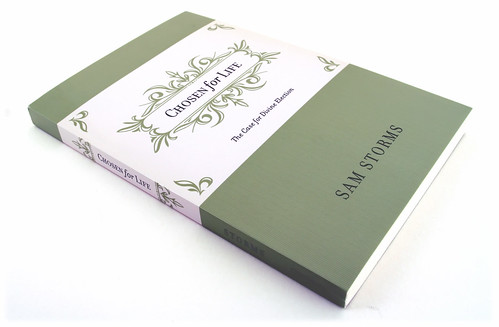
Blogged Through Books is a series that I hope to continue regularly. I will use posts from this blog that have already been produced for a particular book and will compile them all in one post. This will give the reader access to all of the content concerning particular books, as it appears on this blog, in one convenient location. This edition of BTB engages with many posts on one of my favourite pastor-theologians, Sam Storms, and his book Chosen For Life.

Three Impossibilities from John 6
Spurgeon on Election
Chosen For Life - Chapter 6 - Amazing Grace
Sam Storms' problems with the Arminian view of election
Summer of Sam
Ten Characteristics of Grace

Monday, December 10, 2012

Blogged Through Books - Altogether Lovely

Blogged Through Books is a series that I hope to continue regularly. I will use posts from this blog that have already been produced for a particular book and will compile them all in one post. This will give the reader access to all of the content concerning particular books, as it appears on this blog, in one convenient location. This edition of BTB covers over 20 posts I, or other bloggers, wrote while reading a collection of Jonathan Edwards sermons entitled Altogether Lovely.


Thursday, December 6, 2012

Blogged Through Books - A Praying Life

Blogged Through Books is a series that I hope to continue regularly. I will use posts from this blog that have already been produced for a particular book and will compile them all in one post. This will give the reader access to all of the content concerning particular books, as it appears on this blog, in one convenient location. This edition of BTB deals with the best book on prayer, tied for first with Bill Hybel's Too Busy Not To Pray, that I have read recently; A Praying Life by Paul Miller.


Tuesday, December 4, 2012

Fighters, Beholders, Believers

I love this excerpt from Gospel-centered Discipleship by Jonathan Dodson. It touches on the battle of our faith, the battle to behold the Beautiful One. There is a sublimity to the Christian walk. There is battle, blood, and beauty in this life we are called to.

In summary, disciples of Jesus are called to fight, not in physical or virtual combat, but for the noble cause of everyday faith in Jesus. We are called to beauty, not through performance, but by beholding Jesus. We fight to behold the image of the glory of God shining in the face of Jesus Christ. This faith fights not for perfection, but for belief. We fight to believe that Jesus is more precious, satisfying, and thrilling than anything else this world has to offer. This is faith in the gospel-the grand announcement that Jesus has defeated sin, death, and evil through his own death and resurrection and is making all things new, even us. When we believe the gospel, we get to enjoy the promises of God's grace, peace, and joy. When we don't believe the gospel, we move away from these things. most of all, we move away from Jesus, who is worth our every effort, every gaze, and every belief.

(Dodson, Jonathan K. Gospel-centered Discipleship. Wheaton, IL: Crossway, 2012. Print. 59-60)

Monday, December 3, 2012

Blogged Through Books - A Body of Divinity

Blogged Through Books is a series that I hope to continue regularly. I will use posts from this blog that have already been produced for a particular book and will compile them all in one post. This will give the reader access to all of the content concerning particular books, as it appears on this blog, in one convenient location. In the near future I hope to write a post about the benefits of blogging through a book. This edition of BTB lists all of the posts that pertain to a classic Puritan work by Thomas Watson, A Body of Divinity.


Friday, November 30, 2012

Submit and cherish

I recently finished reading and reviewing Vern S. Poythress' book on the harmonization of the Gospels entitled Inerrancy and the Gospels. It was an interesting and informative read which introduced me to several new concepts of harmonization as well as reminding me of some I have encountered before. The most compelling part of the book for me was the attitude that the author demonstrated in regards to Scripture. Pervasive throughout the book is Poythress' determination to submit himself to God's Word, and to cherish God's Word. His posture in relation to the Bible is one of humble deference and exalting admiration. This brief except gives you the idea:

The Gospels, since they are written with God's authority, deserve our ultimate allegiance and trust. They are therefore more ultimate and more reliable accounts of the events of the life of Christ than is any humanly constructed harmonization, which would try to figure out "what really happened." It is legitimate for us to try to see how the various Gospel accounts fit together into a larger picture. But this larger picture should include everything that the Gospels give us, rather than only a minimum core in the form of our modern human reconstruction of what happened. (Poythress, Vern S. Inerrancy and the Gospels: A God-centered Approach to the Challenges of Harmonization. Wheaton, IL: Crossway, 2012. Print. 32)

Wednesday, November 28, 2012

The long-suffering of God

I regularly recall the marrow of lesson that Wayne Grudem taught on the common grace of God in which he vividly describes God's great mercy and patience in how he deals with mankind. To paraphrase his point, God's common grace-his mercy and long-suffering with sinful humanity-is evident every time we look outside and see something other than flames, every time we smell something other than smoke and burning sulfur, every time we feel something other than excruciating burns, every time we hear something other than screams of pain and suffering. God is patient with mankind; he does not immediately give us what we deserve.

This idea that originally came from the teachings of Grudem came to mind when I read the following quote by Jonathan Edwards from his book of lectures called Charity and Its Fruits:

If we consider the wickedness that there is in the world, and then consider how God continues the world in existence, and does not destroy it, but showers upon it innumerable mercies, the bounties of his daily providence and grace, causing his sun to rise on the evil and on the good, and sending rain alike on the just and on the unjust, and offering his spiritual blessings ceaselessly and to all, we shall perceive how abundant is his long-suffering toward us.

God's abundant and merciful patience is remarkable in light of all our sin. His gracious care is magnified when the transgressions and evil in this world is considered.

Tuesday, November 27, 2012

We fight, contend, and struggle

"...we have been called to "take hold" of eternal life. There is urgency in our faith. True faith struggles to pry our hands off the old life and keep them on our eternal life. Biblical faith fights to believe the gospel to such a degree that it is reflected in our practice. Disciples fight to believe that Jesus' death and resurrection is our death and resurrection. His death is our death and his life our life (Romans 5; Galatians 2). As a result, the lie-believing, image-distorting life is dead, and in its place we have received a truth-believing, Christ-adoring life (Eph. 4:20-24). However, because of our tendency to return to the old image, we walk by faith until we see Jesus, when faith will correspond with sight (2 Cor. 5:6-7; Gal. 2:20). Until then, we fight, contend, and struggle. Believing the gospel is not a passive, one-time decision; it is an active, continual fight for faith in what God says is noble, true, and good."

(Dodson, Jonathan K. Gospel-centered Discipleship. Wheaton, IL: Crossway, 2012. Print. 58)


Thursday, November 22, 2012

Book Review - Inerrancy and the Gospels


Book Review – Inerrancy and the Gospels

I am not overly interested in biblical inerrancy though I certainly hold to it and have read several books, as well as essays and articles, discussing it; that is not why I requested to review this book. Neither did I request a copy of Inerrancy and the Gospels: A God-Centered Approach to the Challenges of Harmonization from Crossway because I needed convincing of the legitimacy of the Gospel accounts. My main interest in this book had to do with its author. Vern Sheridan Poythress, professor of New Testament interpretation at Westminster Theological Seminary in Philadelphia, has impressed me with his brilliant mind, his precise teaching, and most of all his love for God’s Word. I wanted to hear what he had to say about reconciling the differences in the Gospel narratives. His work on this topic as expressed in this book is notable, in my opinion, for three reasons: its presentation of principles for harmonization, its practically helpful examples, and its clear respect and reverence for God and his Word.

Principles
Obviously, a book discussing the harmonization of the Gospels should introduce and explain some of the various principles that theologians and apologists use to reconcile difficult passages in these canonical narratives. Poythress elucidates many of these principles in a manner that is interesting and easily understandable, even for a layman such as I. Most of these principles are covered in Part Two of the book which is simply Principles for Harmonization. Poythress introduces initial principles that discuss the trustworthiness of the Bible, the use of help from past scholars, differing incidents confused as the same event, omission of details, and the theological emphasis of the writers. He moves from these to consideration of history, theology, artistry, and the genre’s effects on harmonization. His chapter on mental-pictures and how we use and misuse them in regards to interpretation was very enlightening for me and it alone made reading the book worthwhile. Explanations of the principles of contrast, variation, and distribution are elaborated as are ideas of compression and precision. Principles are adeptly explained by the author and examples from Scripture anchor these concepts for the reader. This material will provide solid reference fodder for future study.

Examples
Inerrancy and the Gospels delivers what many readers will be looking for; examples. Throughout the book, Poythress demonstrates harmonization and addresses many of the seemingly erroneous or contradictory passages in the Gospels that those familiar with their Bibles will recognize. These are tackled with intelligence and an approach that endeavours to be realistic in terms of the difficulties that really exist. Some of the  parallel passages that Poythress engages with are: the healing of the Centurion’s servant, the cleansing of the Temple, the rejection of Jesus at Nazareth, the cursing of the fig tree, the commissioning of the twelve, the stilling of the storm, the rich young ruler, Jarius’ daughter, blind Bartimaeus, and several others. These examples are necessary when you consider the topic at hand, but they are also successful in demonstrating how the principles brought forth work in the harmonizing of the passages.

Reverence
The most enamouring aspect of this book is the attitude that Poythress takes in regards to Scripture. The professor’s stance goes beyond a high view of Scripture; it is clear the author admires and adores God’s Word as he admonishes and advocates for the reader to do the same. This is evident throughout the book, but is most poignant in the third section entitled Attitudes in Harmonization. The author reminds readers that though we wrestle with doubt, neutrality is not an option. One should read the Bible with submission and receptivity while rejecting the current trend to try and be autonomous in our approach to Holy Writ. We should accept the limits of our sin-stained and derivative knowledge while anticipating difficulties and suffering in our intellectual pursuits. These are not just any books, the author regularly reminds us, but they are the very words of God written to us. Poythress’ posture when it comes to Scripture is an edifying glimpse into the heart of a professional interpreter who clearly recognizes God’s sovereignty and grace directed towards us. I will not soon forget this.

Inerrancy and the Gospels is a formative work that succeeds due to, among other things, lucid teaching of harmonization principles, practical demonstration of those principles at work, and a refreshingly uplifting attitude toward the Bible. I recommend this book.

Wednesday, November 21, 2012

Who but the God-man?

In his Institutes of the Christian Religion, Calvin addresses why it is that humans needed God to become man in order to mediate our reconciliation to God successfully.
...it was also imperative that he who was to become our Redeemer be true God and true man. It was his task to swallow up death. Who but the Life could do this? It was his task to conquer sin. Who but very Righteousness could do this? It was his task to rout the powers of world and air. Who but a power higher than world and air could do this? Now where does life or righteousness, or lordship and authority of heaven lie but with God alone? Therefore our most merciful God, when he willed that we be redeemed, made himself our Redeemer in the person of his only-begotten Son [cf. Rom. 5:8].

Tuesday, November 20, 2012

Mystery and Magnificence

God has given us His Word that we might be fully equipped in our understanding. However, the fullness is not exhaustive. We are given everything we need to know, but not everything. There are some things we will likely never understand. Oliphint, in his book Reasons for Faith, writes:

Though arguments for God's character can be, and is, profound and complex at times, we may need to realize that arguments concerning exactly how, for example, the Son of God can be one person who is both created and uncreated, sovereign and limited in power, a se and hungry, may never be forthcoming.

The incarnation teaches us that God can be in ways that simply are not readily conducive to intellectually satisfying argumentation. The fact, for example, that God can remain eternal while at the same time interacting with his creation on a day-to-day basis does not always make for good philosophical fodder. It does, however, (if we are correct here) make for the truth of the matter, and we would be hard pressed to want anything less from our theological and philosophical meanderings. (254-5)

Though we should strive to understand all we can, and unravel the complex mysteries of our faith to the best of our abilities, we must realize and accept that we will not intellectually master all there is to know about our great God. And we should be fine with this. Professor Vern Poythress, in his newly published book Inerrancy and the Gospels writes, "Any difficulty that does not quickly yield to our investigation testifies to the fact that God is greater than we are and that he understands what we do not." (107)

Mysteries and lack of complete clarity should be expected and exulted in; we serve an awesome God. If we could completely grasp our Creator, he would not be infinite and eternal and therefore not fit to be worshiped. Let the mystery and paradox that surround our God propel us to more study and more worship.

Friday, November 16, 2012

A vision correcting gospel

This is a fantastic excerpt by Jonathan K. Dodson from his book Gospel Centered Discipleship. Every sentence in this passage is worth contemplating. The Piperian paradigm of sanctification (Piper didn't invent it, but I first encountered it through him), beholding-is-becoming-ism, has become something that I find very helpful. In his book, Dodson formulates helpful discipleship issues and ideas along the same lines.

Only by looking to Jesus can our disfigured image be restored and our contemptuous disregard forgiven. When we look away from ourselves into the face of Christ, we behold "the light of the knowledge of the glory of God in the face of Jesus Christ" (2 Cor. 4:6). This gospel knowledge corrects our vision so that we not only behold but also become the image of the glory of God in Christ. True nobility and beauty converge in the image of Jesus.

It is a fundamental truth that we become what we behold. Children become like their parents; interns become like their mentors. If we behold the beauty of Christ, we become beautiful like Christ. While it is true that our first glance into the face of Christ restores our image (Rom. 5:1-2; 8:29-30), it is also true that we drift back into fashioning our own distorted image. We slip into our own distorted forms of masculinity and femininity. The gospel calls us back to look at Jesus over and over again. A disciple of Jesus is a person who so looks at Jesus that he or she actually begins to reflect his beauty in everyday life. The gospel gives us the eyes to Jesus as well as the power to look like him. It changes us into the image of his glory: "And we all, with unveiled face, beholding the glory of the Lord, are being transformed into the same image from one degree of glory to another" (2 Cor. 3:18). This transformative vision comes from the presence and power of the Holy Spirit (2 Cor. 3:17-18) ... gospel-centered disciples rely on the Spirit, who focuses our hearts' attention on Jesus, where beholding him results in becoming like him. This goal is worth fighting for.

Thursday, November 15, 2012

Are you busy?

There have been some busy months in the St. John house this fall. The past month has been particularly crazy. Some respite is in sight, however. The secondary school football team I coach plays in the "B Championship" this Saturday. The end of our football season, hopefully a win, will free up 3 hours a day. That alone will lighten the burden of business the last few months has included.

Hopefully my contributions to this blog will increase in frequency and regularity next week.

That being said, I recognize that pretty much everyone is busy; we fill our schedules with meetings, work, play, children's activities, church duties, and whatever else we might feel obligated to do. There can sometimes emerge a certain smug sense of accomplishment in the performance of all these duties. As if, in the simple acts of doing them, we have accomplished much. We can subtly believe that we have merited much in our dutiful fulfilling of our obligations.

Not so says Jonathan Edwards. In his second lecture on love in Charity and Its Fruits, Edwards deals with the misconception that performance of tasks is in and of itself profitable. The title of the lecture, "The Greatest Performance or Sufferings in Vain without Charity," gives an indication of Edwards' direction. He writes,
And as there is nothing profitable to God in any of our services or performances, so there can be nothing profitable in his sight in a mere external action without sincere love in the heart, "for the Lord seeth not as man seeth; for man looketh on the outward apperance, but God looketh on the heart." The heart is just as naked and open to him as the actions. And therefore he sees our actions, and all our conduct, not merely as the external motions of a machine, but as the actions of  rational, intelligent creatures, and voluntary free agents; and therefore there can be, in his estimation, no excellence or amiableness in anything we can do, if the heart be not right with him.
Thus, we are called to act our actions and do our doings with proper motivation; love. Let's not think that in simply performing our duties we have accomplished much.

Thursday, November 8, 2012

Does God really repent? "Yes" says Oliphint

I can't stress enough how helpful I find the writings of Professor Scott Oliphint. His books have been very formative in my understanding of God. In the following excerpt, Oliphint explains that though some characteristics of God are covenantal as opposed to essential, this does not mean they are any less literally true. Consider this quote from Reasons for Faith,
Well there can be no question that there are truths given to us in God's revelation that point to his essential character, and others that point to his covenantal character, we should be careful to note that those covenantal attributes of God are no less "literal" than are his essential attributes. Repentance, then, is not simply something that "seems to us" like repentance. It is literal repentance, he is (covenantally) changing directions because of his faithfulness to his covenant. But it is repentance of a condescended, covenant God who has come down, taking on the form of a creature, in order to glorify himself, and it is repentance that does not in anyway sacrifice, undermine, or otherwise alter his essential character as a se. He repents, all the while remaining the eternal, immutable "I AM." (253-4)
Is this easy to understand? No. But I think it remains faithful to the biblical record.

The sovereign, omniscient God of the universe condescendingly repents. Amazing!

Wednesday, November 7, 2012

Fighting for something

So you see, everyone fights for something. The desire to fight isn't masculine or feminine; it is human. Deep down we all want to be noticed, for our lives to count for something. We want to be beautiful or noble. The problem is that we direct our fighting desires toward the wrong things. We work hard at being noticed or entertained. We fall short of beauty and nobility. What would happen if, instead of spending hours in front of the video screen or mirror, we spent hours in front of the gospel? What if we fought for a more noble cause ... I need to fight for the nobility of faith in Jesus Christ as Lord and to be ravished with the image of his glory shining in the face of Jesus Christ (2 Cor. 4:6). (Dodson, Jonathan K. Gospel-centered Discipleship. Wheaton, IL: Crossway, 2012. Print. 53-4)

Monday, November 5, 2012

Fun weekend!

It was an exciting weekend at the ice rinks for two of the St. Johns. My two oldest girls competed in tournaments in Oshawa, Ontario and both girls' teams went undefeated for the three days resulting in gold medals. Both girls work hard and enjoy their sports. It was a lot of fun for dad.


Friday, November 2, 2012

We have an advocate

From James Durham's collection of 72 sermons on Isaiah 53 entitled Christ Crucified:

For your encouragement, consider that it is most advantageous and profitable. These words in the promise are broad and full, Whatsoever ye ask in my name, I will do it. And the promise is frequently repeated in these core cited chapters of John. O what calmness, tranquility, peace, victory over anxiety, what patience in waiting, whether when in bonds or liberty, do flow from the exercising of faith on this ground, to wit, that we have an advocate in heaven with the Father! (emphasis mine)