Saturday, July 31, 2010

Confessions and Creeds

Great post here from Dane Ortlund's blog:

The Dutch Reformed Confessions


The past few years I've been spending time in the Reformed creeds and confessions. Through seminary training at a Presbyterian school I was already familiar with the Westminster standards (Confession of Faith, Larger Catechism, Shorter Catechism). What I haven't known so well are the Reformed creeds and confessions linked to the Dutch tradition (Westminster is British).

Of special importance are the so called 'Three Forms of Unity'--the Heidelberg Catechism, the Belgic Confession, and the Canons of Dort. Heidelberg (pictured to the right) is a pastorally warm expression of the Reformed faith in the form of questions and answers. The Belgic Confession is a series of longer but fewer statements covering the main tenets of Reformed theology. The Canons of Dort, from which we get our five points of Calvinism (TULIP), are five statements produced in response to the Remonstrants' (Arminians') five statements, which were themselves a protest against the Calvinistic Belgic Confession.

Several things have struck me in getting acquainted with the Three Forms of Unity.

1. Wow. These guys loved God. They loved his Word, his Son, his grace, and his sole right to run the universe.

2. While, sure, all these documents are historically situated and bear the marks of their time, it is astonishing how much of what they have written transcends their historical situatedness. I observe: to the degree that you seek to submit yourself to the Bible and God's revealed truth, to that degree you lengthen the time your words will be around, maybe for centuries; to the degree that you try to be clever with Christian verbiage but self-produced ideas, to that degree you shorten your words' lifespan. Case in point: Is anyone talking about the Emergent/emerging church anymore, so seemingly significant 4-5 years ago? With Google you can find a few, but the flood of 'conversation' has slowed to a trickle.

3. Doctrinal formulations forged in the fires of affliction have an air of sober, gripping, clear-ringing truth that angry bloggers whose greatest trial has been a B+ in Systematic Theology at their reformed seminary can't touch.

4. These Netherlanders understood the need for the gospel in progressive sanctification. Dort on perseverance:
just as it has pleased God to begin this work of grace in us by the proclamation of the gospel, so he preserves, continues, and completes his work by the hearing and reading of the gospel, by meditation on it. . . . (5.14)
Belgic on sanctification:
far from making people cold toward living in a pious and holy way, this justifying faith, quite to the contrary, so works within them that apart from it they will never do a thing out of love for God but only out of love for themselves and fear of being condemned. (Art. 24; emphasis added)
5. These guys loved to express truth because they loved to make God look good. They didn't love to express truth because they loved to make themselves look good.

6. Minus the bits on baptism, with which I agree but find frustrating as a dividing line among those who gladly share the rest of this glorious theology, I would like to do what I can in my remaining 1-60 years to make these confessions a beloved staple in evangelical churches of all stripes.

7. These confessions, especially Heidelberg and Belgic, bring out and concretize and sharpen and lift up the gospel. These documents are not, as is sometimes assumed, in competition with the gospel--as if you can have either a Jesus-loving gospel-cherishing faith over here or a more sophisticated Calvinistic theology over there. You go deeper in these confessions, you go deeper in the gospel.

8. Light, heat. Both. Redwood theology with rose beauty. You have to have the right recipe if you're going to make the strawberry-rhubarb pie; but the pie exists not to be analyzed on a petry dish, but to be enjoyed.



Thursday, July 29, 2010

Passion

From Jack Deere's book Surprised by the Power of the Spirit:

"I like the word passion because it stresses an emotional side of love. Passion can be defined as " any kind of feeling by which the mind is powerfully effected or moved: a vehement, commanding, or overpowering emotion." Passion is a feeling that moves the mind and the will to action. The term passion covers a whole range of feelings that are appropriate to living God ... I want these passionate feeling to characterize my relationship with the Lord Jesus. Of course, I want to be perfectly obedient to the Lord, but I want that obedience to spring out of a passionate love for him. I want to obey Jesus not simply out of discipline or duty, or because of some reward or fear of punishment. I want t serve him simply for the joy of being able to please the one I love so much. If discipline is what ultimately drives us in our pursuit of Jesus, eventually we will give up that pursuit. But a man in love or a woman in love will never quit ... I want my life to be characterized by an unrestrained affection for the Son of God." (192)

Wednesday, July 28, 2010

Antithetical Complexes

Romans 5:12-21
12 Therefore, just as sin came into the world through one man, and death through sin, and so death spread to all men because all sinned— 13 for sin indeed was in the world before the law was given, but sin is not counted where there is no law. 14 Yet death reigned from Adam to Moses, even over those whose sinning was not like the transgression of Adam, who was a type of the one who was to come.

15 But the free gift is not like the trespass. For if many died through one man's trespass, much more have the grace of God and the free gift by the grace of that one man Jesus Christ abounded for many. 16 And the free gift is not like the result of that one man's sin. For the judgment following one trespass brought condemnation, but the free gift following many trespasses brought justification. 17 For if, because of one man's trespass, death reigned through that one man, much more will those who receive the abundance of grace and the free gift of righteousness reign in life through the one man Jesus Christ.

18 Therefore, as one trespass led to condemnation for all men, so one act of righteousness leads to justification and life for all men. 19 For as by the one man's disobedience the many were made sinners, so by the one man's obedience the many will be made righteous. 20 Now the law came in to increase the trespass, but where sin increased, grace abounded all the more, 21 so that, as sin reigned in death, grace also might reign through righteousness leading to eternal life through Jesus Christ our Lord.

John Murray, in his commentary on Romans, discusses this passage:
"We cannot grasps the truths of world-wide significance set forth in this passage unless we recognize that two antithetical complexes are contrasted. The first is the complex of sin-condemnation-death and the second is that of righteousness-justification-life. These are invariable combinations. Sin sets in the operation the inevitable consequences of condemnation, and death, righteousness the consequents of justification and life, and, as is obvious, these are antithetical at each point of the parallel."

Tuesday, July 27, 2010

From The Puritan's Woodshop

A post at The Puritan's Woodshop that fits in well with yesterday's post:

The Desires of The Righteous


What do you desire? Where is the longing of the flesh taking you? Do you see the Lord more clearly or has His glory begun to fade in your sight? What is the fruit being produced by the fertilizer sown into the ground of where we are planted? Are we good grounds keepers or are we slack in the work required of us that by the sweat of our brow we must labor?


Bunyan would have us examining the fruit we are producing…..


“As the tree is known by its fruit, so is the state of a man’s heart known by his desires. The desires of the righteous are the touchstone or standard of Christian sincerity—the evidence of the new birth—the spiritual barometer of faith and grace—and the springs of obedience. Christ and him crucified is the ground of all our hopes—the foundation upon which all our desires after God and holiness are built—and the root by which they are nourished. It is from this principle of Divine life which flows from Christ to his members, that these desires and struggles after holiness of thought and conduct arise, and are kept alive. They prove a fountain of consolation to the harassed and tried believer; for if we are in the sense of this scripture ‘righteous,’ we shall have those desires to enjoy the presence of God on earth, and with him felicity in heaven, which the voice of the Omnipotent declareth shall be granted. O! the blessedness of those in whose hearts are planted ‘the desires of the righteous.’ “


-John Bunyan, The Works of, Volume 1; page 743; from The Desire of the Righteous Granted; buy the 3 volume set here, or read here for free

Monday, July 26, 2010

Fruitless joys

Fruitless joys are what we turn to when life is boring and gray and lonely and we know that tomorrow nothing will have changed. Fruitless joys aren't necessarily scandalous sins. They may be little more than harmless hobbies in which we invest countless hours to make life a little less dull. They may be the newest gadgets we work so hard to own and worry about losing. They may be the fantasies and daydreams that swirl around in our heads that we know will never come true but somehow strangely bring a measure of excitement to an otherwise dreary life ... Fruitless joys don't transmute of their own accord into pain and discomfort and ugliness. They will lose their grip on your soul only when they are displaced by greater joys, more pleasing joys, joys that satisfy not for the moment but forever." (Storms, C. Samuel. One Thing: Developing a Passion for the Beauty of God. Fearn, Ross-Shire, Scotland: Christian Focus, 2004.p137,139)

Sunday, July 25, 2010

Steal treasures


From Christ-Centered Preaching (Chapell, Bryan. Christ-centered Preaching: Redeeming the Expository Sermon. Grand Rapids, MI: Baker Academic, 2005. Print.):

"Nothing in life goes by us without notice. Preachers who illustrate well do not wait passively for the world to offer them something significant to note. Rather, they steal from the world the treasures others do not notice or do not have the opportunity to display. There is beauty in an oil slick, irony in a detergent ad, pageantry in a barn lot, and grief in an abandoned railroad track if a preacher will but see it. The psalmist saw in the nest of swallows his own heart's longing to be near the Lord (Ps. 84:3), and Jesus recognized faith in a mustard seed (Matt. 17:20). You too can see as much and show as much if you are committed to relating truth through the experiences that enable people to see beyond textbook propositions." (191)

Be your own preacher. Choose to see the hidden beauty, irony, tragedy, or majesty in the everyday objects and occurrences around you. Be committed, and excited, to seeing God's glory all around you. Steal treasures from the world. And then, preach to yourself.

Saturday, July 24, 2010

The Top 5 most influential books I have read!

This is the list of the top 5 influential books I have read. It is a list of non-canonical books only. The Bible and each of its books would, of course, dwarf the list of all the books I have read. So, aside from Scripture, these are the books that have had the greatest impact on my life.

They are not necessarily the best books I have read. And I have read some books recently that may supplant some of these but their impact , perhaps based on the short amount of time they have had influence on me, has not been as significant as those listed below.

Also, I am not claiming that I agree with everything in these books nor am I claiming they do not have some erroneous ideas in them. I am simply saying that they have affected me more than any other books I have read.

Enough caveats.

Here is the list in no particular order:


1) Too Busy Not To Pray by Bill Hybels

Summary: Hybels's accessible introduction to prayer has ... helped ...readers develop a rich and regular prayer life in the midst of life's busyness. [H]e includes new insights from his years of ministry and his own spiritual journey. He shows how to slow down to pray, listen to God, respond to what we hear, practice the presence of God and overcome prayer barriers. His fun and practical book offers the resources we need for growing, ongoing experiences in prayer.

Comments: I not interested in what people think of Hybels, Willow Creek, or seeker-friendliness. The bottom line is: I did not have a regular time of prayer and Bible reading until this book had its influence on me. For that reason, it makes this list.


2) Sacred Pathways by Gary L. Thomas

Summary: "Thou shalt not covet thy neighbor's spiritual walk." Are you envious of the way that some people seem to walk closely with God? Gary Thomas insists that it’s better to discover the path God designed you to take--a path marked by growth and fulfillment, based on your unique temperament. In Sacred Pathways, he strips away the frustration of a one-size-fits-all spirituality and guides you toward a style of relating to God that frees you to be you.

Comments: I don't like the title and I can't stand the cover-art this book has had. Even the summary provided at Thomas' website doesn't do it justice. All I can say as it has had a lasting, positive impact on my pursuit of God.


3)Why I Still Believe by Joe Boot

Summary: In Why I Still Believe, apologist Joe Boot provides a readable introduction to presuppositional apologetics for the average layperson. This approach assumes that the Christian and non-Christian come to the discussion of faith with worldviews--sets of presuppositions--that are miles apart, so that there is little common ground on which to build an objective argument of rational proof. In this conversational survey of his own intellectual and spiritual journey, Boot invites the non-believer to step inside the Christian worldview to see whether or not it makes sense. Along the way he builds a coherent argument for the truth of Christianity. He also examines the non-Christian worldview, showing how it ultimately fails to make sense of the world.

Comments: Joe gave me a framework for understanding and articulating what I believe. He prepared me to give a reason for the hope I have within me. Joe, more than any other author, wrote in such a way that I felt as if he was writing exactly what I was thinking. He introduced me to presuppositional apologetics and did so in a manner that was easy to comprehend. Joe is incredibly intelligent and well-spoken. If you ever get the chance to hear him, take advantage of it.


4)Systematic Theology by Wayne Grudem

Summary: The Christian church has a long tradition of systematic theology, that is, studying theology and doctrine organized around fairly standard categories such as the Word of God, redemption, and Jesus Christ. This introduction to systematic theology has several distinctive features: - A strong emphasis on the scriptural basis for each doctrine and teaching - Clear writing, with technical terms kept to a minimum - A contemporary approach, treating subjects of special interest to the church today - A friendly tone, appealing to the emotions and the spirit as well as the intellect - Frequent application to life - Resources for worship with each chapter - Bibliographies with each chapter that cross-reference subjects to a wide range of other systematic theologies.

Comment: I cannot express in this short post the impact this book has had on me. I will try and give you an idea as briefly as I can. I have learned an enormous amount of theology from this book. It has introduced, clarified, and strengthened so much of my doctrine I no longer remember what I used to believe. Grudem also gave my immature and insecure ego the girding it needed to face the Calvinism question which is tough for a one-time Arminian-charismatic like myself. I was once Pentecostal, Arminian, egalitarian. I am now conside myself charismatic, Calvinistic, complementarian. I cannot envision this transformation without this book and this author.


5) The Cross-centered Life by C. J. Mahaney

Summary: What are you centered on?

Sometimes the most important truths are the easiest to forget. It's time to get back to the starting point of the Christian life—the cross of Christ. Jesus' work on your behalf must be the central motivation for your life and faith—the main thing.

Never lay it aside. Never move on, says C.J. Mahaney, who shows you how to center every day around the cross of Calvary and how to escape the pitfalls of legalism, condemnation, and feelings-driven faith.

Comments: How about one word to encapsulate the effect of this book; revolutionary, reformational, recalibrating, reviving, revivifying, renewing, re-centering, refocusing ... take your pick. I think(hope) that twenty years from now I will attribute the trajectory of my walk with Christ in large part due to this book. But let me leave you with one more "R-E" word. Read. As in read this book.

Honourable Mentions:

1) The Doctrine of God by John Frame - This book is sure to join the books listed above.

2) Chosen for Life by Sam Storms - Election? After reading this book; case closed!

3) Knowing God by J. I. Packer - I wish I read it 20 years ago.

Friday, July 23, 2010

God of surprises

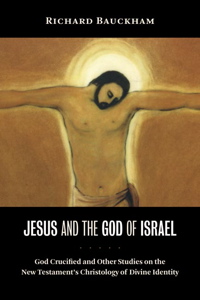
An interesting quote from Jesus and the God of Israel (Bauckham, Richard. Jesus and the God of Israel: God Crucified and Other Studies on the New Testament's Christology of Divine Identity. Grand Rapids, Mich.: Eerdmans, 2009. Print.):

"... God's freedom as God requires his freedom from all human expectations, even those based on his revealed identity. He may act in new and surprising ways, in which he proves to be the same God, consistent with his known identity, but in unexpected ways. He is both free and faithful. He is not capricious, but nor is he predictable. He may be trusted to be consistent with himself, but he may surprise in the ways he proves consistent with himself. The consistency can only be appreciated with hindsight." (53)

Thursday, July 22, 2010

Here is another excerpt from One Thing (Storms, C. Samuel. One Thing: Developing a Passion for the Beauty of God. Fearn, Ross-Shire, Scotland: Christian Focus, 2004.). This is, to me, a compelling argument and one that flies in the face of the practices, in general, of my denomination. This truth, for me, has been reinvigorating and reviving in my walk. I hope it does the same for you.

I earlier spoke of the relationship between celebration and elevation or between exultation and exaltation and argued that the former in each case is both a prelude to and grounds for the latter. There is, however, one additional stage in our experience that is antecedent to both exultation and exaltation, namely, education.

If we don't know who God is and how he thinks and what he feels and why he does what he does, we have no grounds for joy, no reason to celebrate, no basis for finding satisfaction in him ...

Delight in God cannot occur in an intellectual vacuum. Our joy is the fruit of what we know and believe to be true of God. Emotional heat such as joy, delight, and gladness of heart, apart from intellectual light (i.e. the knowledge of God) is useless. Worse still it is dangerous, for it inevitably leads to fanaticism and idolatry. The experience of heaven’s inhabitants confirms that our knowledge of God (education) is the cause or grounds for our delight in him (exultation), which blossoms in the fruit of his praise and honor and glory (exaltation).

What this tells us is that the ultimate goal of theology isn’t knowledge, but worship. If our learning and knowledge of God do not lead to joyful praise of God, we have failed. We learn only that we might laud, which is to say that theology without doxology is idolatry. The only theology worth studying is a theology that can be sung! (81-2)

Wednesday, July 21, 2010

Marriage as a model of Christ and the church

In John Piper's book on marriage, This Momentary Marriage (Piper, John. This Momentary Marriage: a Parable of Permanence. Wheaton, IL: Crossway, 2009. Print.), he gives 3 reasons why one cannot say "that marriage is a model of Christ and the church" too often:
1) This lifts marriage out of the sordid sitcom images and gives it the magnificent meaning God meant it to have; 2) this gives marriage a solid basis in grace, since Christ obtained and sustains his bride by grace alone; and 3) this shows that the husband’s headship and the wife’s submission are crucial and crucified. That is, they are woven into the very meaning of marriage as a display of Christ and the church, but they are both defined by Christ’s self-denying work on the cross so that their pride and slavishness are canceled. (42-3)


Piper goes on to summarize this idea:
In other words, the main point in this chapter is that since Christ’s new covenant with his church is created by and sustained by blood-bought grace, therefore, human marriages are meant to showcase that new-covenant grace. And the way husbands and wives showcase it is by resting in the experience of God’s grace and bending it out from a vertical experience with God into a horizontal experience with their spouse. In other words, in marriage you live hour by hour in glad dependence on God’s forgiveness and justification and promised future grace, and you bend it out toward your spouse hour by hour—as an extension of God’s forgiveness and justification and promised help. (43)

Tuesday, July 20, 2010

Beauty

"God's relevatory manifestation of himself in creation, in providence, in Scripture, and pre-eminently in the face of his Son, Jesus Christ, is designed to evoke within the breath-taking delight and incomparable joy of which God alone is worthy. Beauty is that in God which makes him eminently desirable and attractive and quickens in the soul a realization that it was made for a different world." (Storms, C. Samuel. One Thing: Developing a Passion for the Beauty of God. Fearn, Ross-Shire, Scotland: Christian Focus, 2004. Print.p53)

Monday, July 19, 2010

Love this post!

Enjoy this post by Ray Ortlund, I know I did!

There is only one way to play football — 110% effort every play, all the way to the end of the fourth quarter. You lay it all down on that field. Then you crawl off the field after the final gun with nothing left to give. Football must be played with wholehearted abandon. It’s the nature of the game. It prepares us for life.

If I could change the Bible, all I would do is add “play high school football” to the qualifications for elders. Men who have experienced such intense effort, hurling themselves into every play, especially as a team sport — such men understand what ministry demands and how good it feels to give their all for a cause greater than self.

Of course, there are other ways God provides for men to punch through to the experience of total abandon. Football is not the only way. But every man needs some kind of experience like this, to become the warrior God wants him to be.

There is only one way to serve Christ — all-out passion. Passive men don’t understand, men who are afraid they might get knocked down or hurt. Christianity must be lived with wholehearted abandon. It’s the nature of the faith. It prepares us for eternity.

Men with a whole heart — joy awaits them!

“Blessed are those who seek Him with their whole heart.” Psalm 119:2

Sunday, July 18, 2010

Practical tips for enjoying God

In his book on developing a passion for the beauty of God, entitled One Thing(Storms, C. Samuel. One Thing: Developing a Passion for the Beauty of God. Fearn, Ross-Shire, Scotland: Christian Focus, 2004. Print.), Sam Storms gives some practical tips on how one might develop a passion for God's beauty:

"First, we should 'endeavor to increase spiritual appetites by meditating on spiritual objects'. Each time we surrender our minds to meditate on base and sordid objects their grip on our lives is intensified. To think we can decrease our affinity for sinful pleasure apart from a concentrated fixation on the spiritually sublime is simply delusional ... we must actually 'think' about them, ponder them, pore over them, and become vulnerable to the power God has invested in them to transform our values and feelings and to energize our volitions." (37)
Focusing our minds on anything, lustful fantasies or trivial daydreams, other than gospel truths will reinforce and reinvigorate their power in our lives. I don't want 'my neighbour's wife' or my co-workers car to have that power in my life. Neither should you. So don't put your affections and hence your thoughts on those things. But the mind is not a vacuum; it will meditate on something. So give it solid material to digest; Scripture, God-ward thoughts, Jesus Christ and him crucified.

Second, we "should 'endeavor to promote spiritual appetites by laying yourself in the way of allurement'. Posture your life so that you may be easily enticed by the beauty of Christ. Make it easy on your soul by exposing your senses to those things that awaken spiritual desire and deepen holy longings."(41)
If we are always about watching TV, browsing internet stores, listening to the radio, reading carnal books and magazine, we are putting ourselves under the enticing powers of the wrong things. We are making it hard on our souls to enjoy God. So think about those things which strengthen your passion and solidify your resolve to pursue God; sermons by great preachers, books by sanctifying authors, fellowship with like-minded believers, worship music that entices you to relish the beauty of God. That will help us maintain a posture where we can fall under the enticing beauty of Christ.

"Third, 'we should express our longings to God; they will increase by being expressed'. Passions often wither in silence. Undeclared delight is a virtual contradiction in terms. God never intended for our joy to be quiescent. 'I think we delight to praise what we enjoy,' said Lewis. 'because the praise not merely expresses but completes the enjoyment; it is its appointed consummation.'"(42)
God's not interested in secret admirers. God wants us, commands us, to express our love and enjoyment of Him. Find ways to release the God-formed pressure that builds inside of you when you enjoy God. Sing, shout, discuss, argue, share, 'tweet', blog, compose, write; do something to give expression to the wonder of God. This expressing of our longings will feed the fire and fan the flames of our passion for God. It has that effect on our affections.

Saturday, July 17, 2010

Mortify That!

You who were one slaves of sin have become obedient from the heart. —Romans 6:17

You cannot mortify a specific lust that is troubling you, unless you are seeking to obey the Lord from the heart in all areas. If a man finds a particular lust that is powerful and violent and it takes away his peace and troubles him, and if he sets himself against it, prays against it, groans under it, and sighs to be delivered; but in the meantime, perhaps, in other duties and in other ways he is loose and negligent, he will not be able to gain the victory over the troubling lust. This is a common condition among sons of men in their pilgrimage. If we seek to correct a coarse or filthy outbreak of sin in the soul, but neglect the basic duties that promote our spirituality, we labour in vain, for it has a bad foundation. We must hate all sin, as sin, and not only because it troubles us. Love for Christ because he went to the cross, and hate for sin that sent him there, is a solid foundation for true spiritual mortification. To seek mortification only because a sin troubles us proceeds from self-love. Why do you seek to mortify this sin?—Because it troubles you and takes away your peace. Yes, but you have neglected prayer and reading. Neglect of these are just as sinful. Chris bled for these also. If you hate sin as sin, you will be watchful against everything that grieves the Spirit. Do you think God will help you in such a hypocritical effort? Do you think he will free you from this so you can commit another sin that grieves him? 'No', says God, 'If I free him from this lust, I will not hear from him anymore, and he will be content in his failure.' We must not be concerned only with that which troubles us, but with all that troubles God. God's work is to have full victory, and universal obedience, not just the sins that trouble your soul.

Friday, July 16, 2010

Jesus and the God of Israel


Here are some quotes from Jesus and the God of Israel (Bauckham, Richard. Jesus and the God of Israel: God Crucified and Other Studies on the New Testament's Christology of Divine Identity. Grand Rapids, Mich.: Eerdmans, 2009. Print.) by Richard Bauckham:
  • Jewish monotheism clearly distinguished the one God and all other reality, but the ways in which it distinguished the one God from all else did not prevent the early Christians including Jesus in this unique divine identity. (3-4)
  • If we wish to know in what Second Temple Judaism considered the uniqueness of the one God to consist, what distinguished God as unique from all other reality, including beings worshipped as gods by Gentiles, we must look not for a definition of divine nature but for ways of characterizing the unique divine identity. (7)
  • To our question, 'In what did Second Temple Judaism consider the uniqueness of the one God to consist, what distinguished God as unique from all other reality, including beings worshipped as gods by gentiles?', the answer given again and again, in a wide variety of Second Temple Jewish literature, is that the only true God, YHWH, the God of Israel, is sole Creator of all things and sole Ruler of all things. (9)
  • It is God's unique identity which requires worship of him alone. Worship of other beings is inappropriate because they do not share in this unique identity. Worshipping God along with withholding worship from any other being is recognition of the absolute distinction between God and all other reality. (12)
  • The Second Temple Jewish understanding of the divine uniqueness does not define it as unitariness and does not make distinctions within the divine identity inconceivable. (17)
  • It [Bauckham's hermeneutical key] will enable us to see that the intention of New Testament Christology, throughout the texts, is to include Jesus in the unique divine identity as Jewish monotheis understood it. Thy do this deliberately and comprehensively by using precisely those characteristics of divine identity on which Jewish monotheism focused in characterizing God as unique. They include Jesus in the unique divine sovereignty over all things, they include him in the unique divine creation of all things, they identify him by the divine name which names the unique divine identity, and they portray him as accorded the worship which, for Jewish monotheists, is recognition of the unique divine identity. In this way, they develop a kind of christological monotheism which is fully continuous with early Jewish monotheism, but distinctive in the way it sees Jesus Christ himself as intrinsic to the identity of the unique God. (19)
  • I [Bauckham] shall be arguing what will seem to anyone familiar with the study of New Testament Christology a surprising thesis: that the highest possible Christology – the inclusion of Jesus in the unique divine identity – was central to the faith of the early church even before any of the New Testament writings were written, since it occurs in all of them. (19)
  • What Jewish monotheism could not accommodate were precisely semi-divine figures, subordinate deities, divinity by delegation or participation. (20)

Thursday, July 15, 2010

Self-resourced contribution

This great post comes from Strawberry-Rhubarb Theology. I was for a long time, in my mind, a semi-Pelagian. I always maintained some "tiny bit of self-resourced contribution" to my own salvation. I may act at times like I still believe this, but at least, by God's grace, I no longer believe this; by grace alone through faith alone!

Forde on our Functional Semi-Pelagianism


Semi-Pelagianism is the notion that all humans require grace in order to be right with God, but because we have free will we have the natural ability to seek out, respond to, and appropriate this grace. Forde comments-
Officially this position . . . has been rejected by the church. Even the tiny bit [of self-resourced contribution] cannot be reconciled with grace alone. I say it has officially been rejected because I think one can nevertheless say that in actual practice this is the kind of system most people finally settle for. . . . [A] position which is officially rejected becomes nevertheless the basic operating theology of the church.
--Gerhard Forde, Where God Meets Man: Luther's Down-to-Earth Approach to the Gospel (Augsburg 1972), 50; emphasis original

'To the one who does not work but believes in him who justifies the ungodly . . .' --Romans 4:5


Wednesday, July 14, 2010

The Glory of Christ

A mosaic of Christ ... made piecemeal ... bit by bit ... but still beautiful.

From The Glory of Christ:

In our view of the glory of Christ by faith, we gather things, one by one, out of the Scripture; and comparing them in our minds they become the object of our present sight—our spiritual comprehension of the things themselves. We have no proposal of the glory of Christ to us by vision or illustrious appearance of His person, as Isaiah had of old (6:1—4); or as John had in the Revelation (1:13—16). We need it not; it would be of no advantage to us. For as to the assurance of our faith, we have a Word of prophecy more useful to us than a voice from heaven (II Pet. 1:17—19). And of those who received such visions, though of eminent use to the Church, yet as to themselves, one of them cried out, "Woe is me! I am undone"; and the other "fell as dead at his feet." We are not able in this life to bear such glorious representations of Him, to our edification.

And as we have no such external proposals of His glory to us in visions, so neither have we any new revelations of Him by immediate inspiration. We can see nothing of it, know nothing of it, but what is proposed to us in the Scripture, and that as it is proposed. Nor does the Scripture itself, in any one place, make an entire proposal of the glory of Christ with all that belongs to it; nor is it capable of so doing, nor can there be any such representation of it to our capacity on this side heaven. If all the light of the heavenly luminaries had been contracted into one, it would have been destructive, not useful, to our sight; but being by divine wisdom distributed into sun, moon, and stars, each giving out his own proportion, it is suited to declare the glory of God and to enlighten the world.

A few things I noticed from this excerpt:
  1. Our vision of Christ and his glory is like a mosaic. It is brought together piecemeal. It is a glorious view, but it it is garnered one bit at a time from Scripture. This idea is wonderful. We are given a view of Christ's glory that is beautiful and awe-inspiring. Yet, it is not complete; not perfect. But it will be one day.
  2. A powerful, spiritual visitation or vision of Christ, like those had by Isaiah or John, is not in the works for us. But, WE DON'T NEED IT! A very Revelation-like vision of Christ would be of no advantage to us! Why? Because we have the Word of God!
  3. We behold the glory of Christ ONLY by faith and ONLY in the Scriptures.

Tuesday, July 13, 2010

Mortify This!!

Put to death therefore what is earthly in you: sexual immorality, impurity, passion, evil desire, and covetousness, which is idolatry. — Colossians 3:5

We need to be intimately acquainted with the ways, wiles, methods, advantages, and occasions in which lust has victory. This is the way that men deal with their enemies. They search out their plans, ponder their goals, and consider how and by what means they have prevailed in the past. Then, they can be defeated.

If you do not utilize this great strategy, your warfare is very primitive. We need to know how sin uses occasions, opportunities, and temptations to gain advantage.

We need to trace this serpent in all of its windings, and to recognize its most secret tricks: 'This is your usual way and course; I know what you aim at.' Even when one thinks that a lust is dead because it is quiet, we must labour to give it new wounds and new blows everyday.

When the heart recognizes at any time sin and temptation at work, seducing and forming sinful imaginations to get you to fulfill its lusts, the heart must immediately see it for what it is, bring it to the law of God and love of Christ, condemn it, and follow it to execute it to the uttermost.

Monday, July 12, 2010

How Satan tries to darken the Christian's mind

In The Glory of Christ, John Owen discusses how Satan tries to darken and distort the mind's clear sight of the glory of Christ:

1) "With some, Satan arouses fears, doubts, arguments, uncertainties and various worries and troubles, so that believers find it difficult to maintain comforting views of Christ or his glory." In this first group, Satan uses anxiety, fear, and despair to mar their vision of Christ and his glory.

2) "Satan deceives others into false assurance by which they promise peace to themselves, and so live in a vague presumption that they will be saved by Christ even though they have no idea how." Satan uses this attack to deceive people in the world into an apathetic stupor in which they have no clear vision of Christ's glory.

God help us to neither fall into false fears nor accept apathetic attitudes. Let us pursue, in the strength of the Holy Spirit, a clear apprehension of the glory of Christ.