Showing posts with label David Martyn Lloyd-Jones. Show all posts

Wednesday, October 9, 2013

Lloyd-Jones on our union with Christ

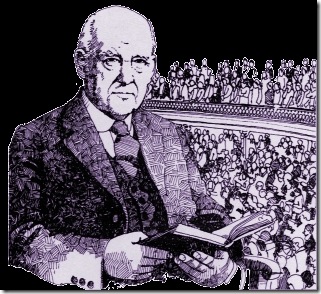
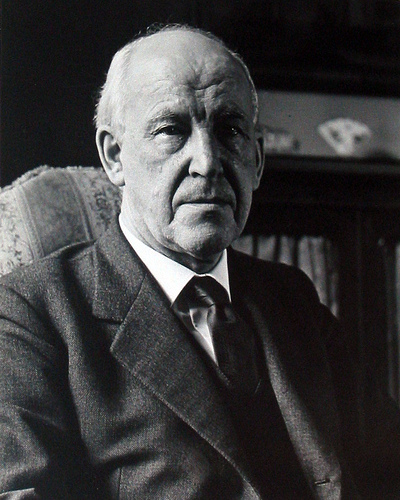
David Martyn Lloyd-Jones, the well-known expository preacher of Westminster Chapel, addresses the topic of union with Christ in a sermon entitled In Christ Jesus. He engages this doctrine as he expounds Ephesians 2:4-7 which reads, "But God, being rich in mercy, because of the great love with which he loved us, even when we were dead in our trespasses, made us alive together with Christ—by grace you have been saved—and raised us up with him and seated us with him in the heavenly places in Christ Jesus, so that in the coming ages he might show the immeasurable riches of his grace in kindness toward us in Christ Jesus."

Of this doctrine, Lloyd-Jones declares:
Here we are undoubtedly face-to-face with one of the greatest and most marvelous of all the Christian doctrines, one of the most glorious beyond any question at all. It is the whole teaching of the Scripture with regard to our union with Christ. It is a teaching that you find in many places. I would refer you to the fifth chapter of the Epistle to the Romans, which is in many ways the most extended statement of the doctrine to be found anywhere. But it is to be found in exactly the same way in the sixth chapter of the Epistle to the Romans. It is likewise found in 1 Corinthians 15, the great chapter that is read so often at funeral services; but it is seen equally clearly in 2 Corinthians, chapter 5. Similarly it is the teaching found in those beautiful words at the end of the second chapter of the Epistle to the Galatians: “I am crucified with Christ: nevertheless I live; yet not I, but Christ liveth in me: and the life which I now live in the flesh I live by the faith of the Son of God, who loved me, and gave himself for me” (Gal 2:20). This is the most wonderful and the most amazing thing of all, and to me it is always a matter of great surprise that this blessed doctrine should receive so little attention! For some reason or other, Christian people seem to be afraid of it… [Yet] according to this teaching in Ephesians 2 and elsewhere, you are not Christians at all unless you are joined to Christ and “in Him”…
This preacher excitement and joy is evident in the words of his address. Lloyd-Jones recognizes, as many Christians before and after him have realized, that union with Christ is a doctrine that forms the basis for our relationship with Christ and therefore the entire Christian faith.

Lloyd-Jones sees two ways in which we can understand our union with Christ. The first he calls "federal sense, or, in other words, a covenant sense." This sense considers the representative nature that Christ demonstrated in his life, death, and resurrection. Lloyd-Jones proclaims:
Adam was constituted and regarded by God as the head and the representative of the human race. He was the federal head, the federal representative, the covenant head. God made covenant with Adam, made an agreement with him, made certain statements to him as to what He would do, and so on. Now that is the first sense in which this doctrine of union is taught. And what is said, therefore, about the Lord Jesus Christ is that He is our Federal Head, He is our Representative. Adam, our representative, rebelled against God: he sinned, he was punished, and certain consequences followed. But because Adam was our representative and our head, what happened to Adam also therefore happened to all his posterity and to us.
The second aspect of our union with Christ that Lloyd-Jones points out is what he calls a "mystical" or "vital" union. He preaches:
This is something that was taught by our Lord Himself in the famous words in the fifteenth chapter of the Gospel according to John, where He says, “I am the vine, ye are the branches” (John 15:5). The union between the branches and the vine is not mechanical: it is vital and organic. They are bound together: the same sap, the same life is in the stock as in the branches.
Thus, Lloyd-Jones sees in our union with Christ a two-fold understanding of how this union works. His exhilaration is heard again as summarizes this section of the sermon exalting that,
All these blessings that we enjoy become ours because we are joined to Christ in this double manner: in the forensic, federal, covenant manner, but also in this vital and living manner. We can therefore claim that what has happened to Christ has happened to us. This is the marvel and mystery of our salvation, and it is the most glorious thing we can ever contemplate!
I have engaged our union with Christ this past week after having touched upon it during a sermon I gave last week. It is clearly something I need to study more, and Lloyd-Jones has me excited to do just that.

Tuesday, April 16, 2013

Fools! Simpletons! Dullards!

From a sermon preached by D. M. Lloyd-Jones called The Church Today: The Road to Emmaus as it is found in Crossway's book entitled Setting Our Affections Upon Glory:
I say again that I have an awful feeling that is what our Lord is saying about us and to us today. "You fools!" What he means is that we are dullards, that we are simpletons, that we do not know how to think, that we allow ourselves to be governed by circumstances and accidents and change and the things that happen to us and the conditions in which we find ourselves. And instead of using our minds and reason and our understanding and applying the truth we have received, we allow ourselves to be in this state of misery and dejection and discouragement. "What a terrible world this is!" Is that not true of us? Fools! Simpletons! Dullards! 
This is said frequently in the New Testament. Writing in his first epistle to certain churches, to unknown people whose names we do not know, strangers scattered abroad in various countries who were having a horrible time and were enduring terrible persecution, the apostle Peter says-and its one of the first things he tells them, "Gird up the loins of your mind" (1 Pet. 1:13). 
The church must think. She must use her mind and her reason. The tragedy is that we constantly tend to fall back on other things in order somehow or another to relieve ourselves and to keep thing going. We are sentimental. Sentimentality is very largely the trouble with present church. We are very nice people, we members of the Christian church, but we are very foolish. And the first thing we must do is wake up and gird the loins of our minds and think and understand the truth and begin to apply it to the situation in which we find ourselves, instead of giving way, instead of giving in, instead of just commiserating with one another. I am sometimes afraid that the church is dying of niceness. We are really good at praising one another, are we not, and saying that we are doing well. We have become a mutual admiration society, sympathisizing and communing with one another, and thus being sentimental with one another. And the whole time the condition of the church degenerates from bad to worse. Fools! We must apply our understanding to the situation with which we are confronted (76-7).

Wednesday, March 6, 2013

The wrong starting point

Now I know there are many who, looking at the state of the church today, feel that the one thing for us to do is immediately to consider what methods we can employ in order to win outsiders. That is a perfectly right and good thing to think about. But they start with that. They say, "Here we are, and there are people outside who are indifferent to the church," and immediately they begin to consider means and methods of interesting and attracting outsiders. And some of them seem to be prepared to go to almost any lengths and to borrow any measures conceivable from the world itself in order to do something to get hold of these people. Now while I am in total agreement with evangelism and would be among the first to say that the primary task of the Christian church is evangelism, I do, nevertheless, suggest that when we start immediately to think of the methods, of what we can do, to attract those who are outside, we are stating at the wrong point.

(Lloyd-Jones, David Martyn. Setting Our Affections upon Glory: Nine Sermons on the Gospel and the Church. Wheaton, IL: Crossway, 2013. Print. 68)

Monday, February 25, 2013

Doctrine and the church

From Setting Our Affections Upon Glory by D. M. Lloyd-Jones:
Doctrine comes before fellowship, and unless our fellowship is based upon doctrine, it is not Christian fellowship ...

The church in her great periods has always seen the absolute necessity of defining what she believes in order that wrong teaching might be corrected and driven out. That is why teaching or doctrine must always come before fellowship. There is nothing more dangerous to the true life of the church than reversing this order and putting fellowship before doctrine (55-58)

Monday, February 18, 2013

Book Review - Setting Our Affections Upon Glory


In an essay written in 1985, theological giant J. I. Packer is said to have commented on the preaching of D. Martyn Lloyd-Jones: “Through the thunder and the lightning, I felt and saw as never before the glory of Christ and of his gospel ….” Though the “thunder and lightning” of this great preacher may be difficult to apprehend by reading his sermons in a book, the “glory of Christ and of his gospel” reverberates through every page of this recently published collection of Lloyd-Jones sermons entitled Setting Our Affections Upon Glory. This compilation of the Good Doctor’s preaching is notable for its gospel-centeredness, its emphasis on doctrine, and its relevancy and timeliness.

The nine sermons in Setting Our Affections Upon Glory are permeated by a gospel-centeredness that, with regularity, brings the Christ, the cross, and the resulting Calvary-wrought salvation before the eyes of the reader. Lloyd-Jones does not miss an opportunity to remind the listener, or reader in this case, of the issue of “first importance” (1 Cor. 15:3).  He continually reminds us, with creativity and conciseness, that the essence of Christianity is “the great doctrine of the atonement. You cannot be a Christian without this” (118). His emphatic and insistent proclamations of “Jesus Christ and him crucified” (1 Cor. 2:2) give evidence of the great value and singular priority he attributes to the gospel: “Reconciliation! There is nothing in the whole world today as valuable as this. To be reconciled to God! To know that our sins are forgiven! The wealth of the universe cannot purchase this. There is nothing more valuable” (95). These sermons will help you understand why Packer “felt and saw as never before the glory of Christ and of his gospel.”

D. M. Lloyd-Jones, as well as the many manifestations of his ministry, is known for the priority he places on doctrine in general and Reformed doctrine in particular. He frequently admonishes the reader to note the importance of doctrine in the life of the Christian. He reflects that the early church “was a gathering of people who had undergone a profound change as a result of listening to the apostolic preaching” (53, emphasis mine) and that, in terms of the church both then and now, doctrine “comes before fellowship, and unless our fellowship is based upon doctrine, it is not a Christian fellowship” (55-6). These are strong words for one who was noted for his high regard for the church. For the author, doctrine’s importance rested on the fact that “you cannot preach the gospel without doctrine” (117). Lloyd-Jones valued preaching and thus he valued doctrine. The prominence doctrine holds in Lloyd-Jones’ mind is evident throughout the book: In the church, “teaching and doctrine must have the pre-eminence, the precedence, the priority. They must always come in first position” (61). This book is evidence that he was a preacher who esteemed doctrine.

This collection of Lloyd-Jones’ preaching was originally delivered in 1969. However, the timeliness and relevancy of these nine addresses is conspicuous. It seems the great preachers have a penchant for framing things in such a way so as to reveal the issue that is common to all ages. They deal with the heart of the matter. For instance, Lloyd-Jones warned of the church’s dangerous practice of prostrating themselves to the idol of popularity: “The church asks: What do people actually want? What do they like? What do they think? And we pander to them” (50). This is a remarkable assessment of the modern church and this preacher saw it in his day. Or consider this concern that is raised: “I have sometimes feared that we are rapidly getting to the stage in which there will only be two or three preachers-if even that many-in the world. And the rest of the world will be listening to them on tapes or on television or something else” (110). We now know that the “something else” the author was concerned about are downloads and podcasts and Youtube and iTunes. His apprehension on this matter is almost prophetic as we see the danger of blogsniffers and website groupies following an increasing smaller number of big name preachers. His sermons are applicable to us today because he saw the unchanging dangers that the church faced. Ponder his foreboding of the treacherous nature of tolerance: “It is that in our fear and dread and horror of being called narrow we could swing so far to the other extreme and in the end be so wide and so broad and so large that we lose our landmarks altogether and end by not knowing what the real meaning of the word Christian is … A charity and a tolerance that is prepared to include everything! That seems, to me, to be the greatest danger” (146). That is an incredibly accurate accusation against today’s churches by a minister who preached over 40 years ago.

For its pervasive gospel-centeredness, for its continuous concern for doctrine, and for its timely relevancy, this volume of sermons is noteworthy. A preacher will often be lauded by those who he leads. But when a preacher is admired and acclaimed by his peers, both great and small, it is likely his preaching will be efficacious and edifying. These sermons by D. M. Lloyd-Jones are just that. They have power in written form that build us up and encourage us. Setting Our Affections Upon Glory is a welcome addition to a growing number of this great preacher’s published sermons.

I recommend this book.

Sunday, March 11, 2012

What is needed


“What is needed is something that cannot be explained in human terms. What is needed is something that is so striking and so signal that it will arrest the attention of the whole world. That is revival.

Now we of ourselves can never do anything like that. We can do a great deal, and we should do all we can. We can preach the truth, we can defend it, we can indulge in our apologetics, we can organize our campaigns, we can try to present a great front to the world. But you know, it does not impress the world. It leaves the world where it was. The need is for something which will be so overwhelming, so divine, so unusual that it will arrest the attention of the world . . . .

‘Authenticate thy word. Lord God, let it be known, let it be known beyond a doubt, that we are thy people. Shake us!’ I do not ask him to shake the building, but I ask him to shake us. I ask him to do something that is so amazing, so astounding, so divine, that the whole world shall be compelled to look on and say, ‘What is this?’ as they said on the day of Pentecost.”

Martyn Lloyd-Jones, Revival (Westchester, 1987), pages 183-185.

HT: Ray Ortlund

Sunday, January 22, 2012

Lloyd-Jones on the quest for truth

From Romans 1: The Gospel of God by D. M. Lloyd-Jones:

“We have heard so much about the ‘quest’ for truth, the ‘search’ for reality. Now that is the exact opposite of the gospel. The gospel is not something that invites us to join in a great search or a great quest. It is an announcement. It is a revelation. It is an unfolding, an unveiling of something.” (295)

This quote causes me to ponder how we use use words in our society and the often unnoticed effect those words have on our beliefs. As I read this quote I immediately thought of a popular label for non-believers; seekers.

The church has been using this term for quite some time now. And really, I think it is quite misleading in the sense that nobody, apart from God's gracious hand in their lives, seeks God. And though churches may understand this, I doubt it is ever explained to the ones they have labeled 'seekers'.

Thus, there are likely a whole whack of converts who, due to this term, understand themselves to have sought out God. And instead of realizing they were apprehended by God with the Gospel, they are under the impression that they sought and found the gospel. This can quite clearly lead to some theological errors.

Is this a big deal? Really? Is it really that problematic to call people 'seekers'? Well, yes and no. It is not a big enough deal to stop the progress of the gospel in those people's lives. But then again, nothing is in terms of God's sovereignty. But, it just may well get new believers off on the wrong foot and older believers going down the wrong path.

The gospel is not an invitation to join a journey. It is a revelation of the God in the face of Christ. We do not seek Him; He sought us.

Saturday, January 21, 2012

Lloyd-Jones and Spurgeon on the offense of the cross

“The offence of the cross is this – that I am so condemned and so lost and so hopeless that if He, Jesus Christ, had not died for me, I would never know God, and I could never be forgiven. And that hurts; it annoys; it tells me that I am hopeless, that I am vile, that I am useless; and as a natural man I do not like it.” (Lloyd-Jones, David Martyn. Romans: An Exposition of Chapter 1 ; the Gospel of God. Edinburgh: Banner of Truth Trust, 1985. Print.266)

In a sermon entitled The Offense of the Cross, C. H. Spurgeon explains the offense of the cross:

Let us enquire, first, WHEREIN DOES “THE OFFENSE OF THE CROSS” CONSIST? 
Our limits forbid any attempt to be elaborate and we commence by saying that “the offense of the Cross” lies, first, in the way in which it deals with all human wisdom ... But there is something in the Cross of Christ which hurts men’s pride even more than this! And that is, it is opposed to all their notions of human ability ... And the Cross offends men, yet again, because it goes clean contrary to their ideas of human merit ... But there is another offense which is a very grievous one and the world has never forgiven the Cross that “offense” yet—it will not recognize any distinctions between mankind

Spurgeon continues on the preaching of the gospel, or lack of it, and the ensuing offense:

If the Cross of Christ is an offense and always was an offense, what is the reason why so many professed Christians go on so easily from January to December and never have any trouble about it? Old John Berridge said, “If you do not preach the Gospel, you may sleep soundly enough. But if you preach it faithfully, you will hardly have a sound place in your skin, for you will soon have enemies enough assailing you.” How is it that we never hear of any slander against a great many ministers? Everything goes easily and comfortably with them. Nobody is ever offended with their preaching. People go out of their chapel doors and say, “What a nice sermon! It was just the thing for everybody, and nobody could be offended.” They do not fully preach the Gospel, or they would be sure to offend some people! Suppose that somebody says to me, “Do you know that Mrs. So-and-So was fearfully offended with your last sermon?” That is no trouble to me if I know that I have preached the Truth of God! A celebrated preacher was once told that he had pleased all his hearers. “Ah,” he said, “there is another sermon lost.”

Friday, January 20, 2012

The wrath of God according to D. M. Lloyd-Jones

The following are a few quotes on the wrath of God from D. M. LLoyd-Jones. They occur on his commentary on Romans 1 called The Gospel of God:
 
“There are many people today who do not like the gospel of atonement. They say ‘We do not like this talk about the “blood”; we do not like the idea that God punished our sins in Christ.’ They reject that, and do you know why? It is because they reject the idea of the ‘wrath of God’; they reject this section of the Epistle. I argue that you cannot understand the gospel unless you understand this; but if you understand this, you will not only understand the gospel but you will embrace it immediately and thank God for it the rest of your life.” (315)

“…it is not enough that you and I should be clear about the evangel; our methods of evangelism must correspond to the Scriptures as much as our message does…He [Paul] starts with the wrath of God, not with the needs of people as such, not with the things which were worrying them, not with that sin which gets them down, which they cannot overcome; nor with their unhappiness, and so on. Not at all! He does not mention these things. Instead, he speaks of the wrath of God!” (326)

“There are many who are denying this doctrine in practice, and they are offering Christ to people as a friend or helper or sympathizer, as one who can understand them, as one who will be with them. All that is absolutely true, but you do not start with it. It is not the context of the wrath of God.” (330)

“Well, this is the cross, the death of our Lord and Saviour Jesus Christ. There is nothing – there is nothing in history anywhere – which in any way approximates to this as a revelation of the wrath of God against all ungodliness and unrighteousness of men.” (348)

“This is not a matter of discussion; this is not a matter of argument. The wrath of God belongs with the love of God, and the salvation of God in Christ. It has been revealed. Man does not like it. He never would have thought of such a thing. He hates it. But our preaching neither depends upon man, nor his reason, nor his understanding, nor his likes and dislikes.” (352)

Wednesday, January 18, 2012

Lloyd-Jones on the first thing to say about sin

D. M. Lloyd-Jones on sin:


"...it seems to me that one of the main problems in connection with evangelism, especially today, is our failure to realize that sin primarily is disobedience. Sin is not just that which I do that is wrong, and which makes me feel miserable and unhappy; sin is not just that thing which gets me down, and which I would like to overcome. It is all that, but, my friends, that is not the first thing to say about sin; indeed, that is not the most important thing to say about it...What is sin? Sin is the transgression of the law. Primarily, it is rebellion against God." 

(Lloyd-Jones, David Martyn. Romans: An Exposition of Chapter 1 ; the Gospel of God. Edinburgh: Banner of Truth Trust, 1985. Print. 138)

Sunday, February 13, 2011

More from D. Ortlund

Another great post a Strawberry Rhubarb Theology:

Break Them and Smash Them and Humble Them

Lloyd-Jones, preaching on Mark 9:29 ('And he said to them, "This kind cannot be driven out by anything but prayer"'):
We must become utterly and absolutely convinced of our need.

We must cease to have so much confidence in ourselves, and in all our methods and organizations, and in all our slickness.

We have got to realize that we must be filled with God's Spirit. And we must be equally certain that God can fill us with his Spirit.

We have got to realise that however great 'this kind' is, the power of God is infinitely greater, that what we need is not more knowledge, more understanding, more apologetics . . . no, we need a power that can enter into the souls of men and break them and smash them and humble them and then make them anew.

And that is the power of the living God. And we must be confident that God has this power as much today as he had one hundred years ago, and two hundred years ago, and so we must begin to seek the power and to pray for it. We must begin to plead and yearn for it. 'This kind' needs prayer.
--Martyn Lloyd-Jones, Revival (Crossway, 1987), 19

Sunday, December 12, 2010

Romans 1:2

From David Martyn Lloyd-Jones' exposition of Romans 1, The Gospel of God; specifically Romans 1:2.

Why was the gospel hidden?
  1. To reveal the depth of our sin
  2. To show mankind cannot save himself
  3. To show God’s lordship and sovereignty

Why does Paul appeal to the Old Testament?
  • To show the gospel was not something strange and new
  • To show the Bible as complete, authoritative, unified, essential
  • To show the New never contradicts the Old
  • To show the New fulfills the Old
  • To show salvation is for the world.

Sunday, May 30, 2010

Love this!

From Ray Ortlund's blog at The Gospel Coalition:


“There are certain things which have to be said over and over again, of necessity, and yet this is the marvel and the wonder of the cross, that however many times a man may preach about it, he has never finished preaching about it. There is always something fresh to say, always something new. There is a great central message that is always there, but nothing is so wonderful as to see that one thing in different ways . . . . During these twenty-six years in my Westminster pulpit there have been times when in my utter folly I have wondered, or the devil has suggested to me, that there is nothing more for me to say, that I have preached it all. I thank God that I can now say that I feel I am only at the beginning of it. There is no end to this glorious message of the cross, for there is always something new and fresh and entrancing and moving and uplifting that one has never seen before.”


D. Martyn Lloyd-Jones, The Cross (Westchester, 1986), pages 155-156.

Sunday, March 21, 2010

Lloyd-Jones on pride and biographies

"The best way of checking any tendency to pride-pride in your preaching or in anything else that you may do or may be-is to read on Sunday nights the biography of some great saint. It does not matter which, or to which century or branch of the church he belonged as long as he was a saint ... if that does not bring you to earth then I pronounce you are ... beyond hope." (Lloyd-Jones, David Martyn. Preaching and Preachers. Grand Rapids, Mich.: Zondervan Publ. House, 1971. 256)

I need to read more biographies.

Saturday, March 20, 2010

Lloyd-Jones on preaching

"I say this because I believe, as I have been indicating, that in preaching the message should always arise out of the Scriptures directly and not out of the formulations of men, even the best men."

Interestingly and surprisingly, Lloyd-Jones is not singularly for a systematic verse-by-verse or passage-by-passage expositional preaching of Scripture. He does believe, as the above quote indicates, that all preaching should be expositional. However, he is fine with, and often participated in, preaching on topics derived from Scripture. What he was against was preaching that was initiated with man's ideas to which a preacher would add Scriptures he felt were relevant. The preacher should begin with the Word and build his sermon on it.

Friday, March 19, 2010

Impulses to Pray


Having just finished Preaching and Preachers by David Martyn Lloyd-Jones, I thought I would share a few quotes from this excellent book. Over the next few days, I will post some thoughts and ideas by Lloyd-Jones along with some thoughts of my own.

This first quote is great advice for any Christian who realizes they need to pray more often; is there any Christian who doesn't? Lloyd-Jones simply implores the preacher, and I extend this to every believer, to pray whenever they get an impulse to. It sounds pretty simple, right? But so many of us, certainly myself, don't do this. Our prayer lives would improve significantly if on every impulse, even if it is just briefly, we responded with prayer.

Here is Lloyd-Jones on prayers and their impulses:
"Above all—and this I regard as most important of all—always respond to every impulse to pray. The impulse to pray may come when you are reading or when you are battling with a text. I would make an absolute law of this—always obey such an impulse. Where does it come from? It is the work of the Holy Spirit; it is a part of the meaning of, ‘Work out your won salvation with fear and trembling. For it is God which worketh in you both to will and to do of his good pleasure’ (Phil 2:12-13). This often leads to some of the most remarkable experiences of the minister. So never resist, never postpone it, never push it aside because you are busy. Give yourself to it, yield to it; and you will find not only that you have not been wasting time with respect to the matter with which you are dealing, but that actually it has helped you greatly in that respect. You will experience and ease and a facility in understanding what you are reading, in thinking, in ordering matter for a sermon, in writing, in everything, which is quite astonishing. Such a call to prayer must never be regarded as a distraction; always respond to it immediately and thank God if it happens to you frequently. (Lloyd-Jones, David Martyn. Preaching and Preachers. Grand Rapids, Mich.: Zondervan Publ. House, 1971. 170-171)


I hope this is helpful. I am going to work at this. An immediate response to an impulse to pray would be a great discipline for me.

Thursday, August 20, 2009

David Martyn Lloyd-Jones on Pentecostals and Charismatics


Here is an excerpt from an excellent post on David Martyn Lloyd-Jones I came across on the Desiring God website:

Martin Lloyd-Jones' Criticisms of the Pentecostalism He Knew

These are remarkable teachings coming from the main spokesman for the reformed cause in Britain in the last generation. He helped found a publishing house (Banner of Truth Trust) that has consistently put forward cessationist, Warfield-like thinking on spiritual gifts. And lest you think Lloyd-Jones was a full-blown charismatic incognito let me mention some things that gave him balance and made him disenchanted with Pentecostals and charismatics as he knew them.


1. He insisted that revival have a sound doctrinal basis. And from what he saw there was a minimization of doctrine almost everywhere that unity and renewal were being claimed (see note 53). The Holy Spirit is the Spirit of truth and revival will be shallow and short-lived without deeper doctrinal roots than the charismatic tree seems to have.

2. Charismatics put too much stress on what they do and not enough emphasis on the freedom and sovereignty of the Spirit, to come and go on his own terms. "Spiritual gifts," he says, "are always controlled by the Holy Spirit. They are given, and one does not know when they are going to be given" (see note 54).

You can pray for the baptism of the Spirit, but that does not guarantee that it happens ... It is in his control. He is the Lord. He is a sovereign Lord and he does it in his own time and in his own way (see note 55).

3. Charismatics sometimes insist on tongues as a sign of the baptism of the Holy Spirit which of course he rejects.

It seems to be that the teaching of the Scripture itself, plus the evidence of the history of the church, establishes the fact that the baptism with the Spirit is not always accompanied by particular gifts (see note 56).

4. But even more often most charismatics claim to be able to speak in tongues whenever they want to. This, he argues is clearly against what Paul says in 1 Cor. 14:18, "I thank God I speak in tongues more than you all." If he and they could speak in tongues any time they chose, then there would be no point in thanking God that the blessing of tongues is more often given to him than to them (see note 57).

5. Too often, experiences are sought for their own sake rather than for the sake of empowerment for witness and for the glory of Christ (see note 58).

The aim is not to have experiences in themselves but to empower for outreach and making Christ known (see note 59) ...

We must test anything that claims to be a movement of the Spirit in terms of its evangelistic power (see note 60) ...

The supreme test of anything that claims to be the work of the Holy Spirit is John 16:14—"He shall glorify me" (see note 61).

6. Charismatics can easily fall into the mistake of assuming that if a person has powerful gifts that person is thus a good person and is fit to lead and teach. This is not true. Lloyd-Jones is aware that baptism with the Holy Spirit and the possession of gifts does not certify one's moral fitness to minister or speak for God. The spiritual condition at Corinth, in terms of sanctification, was low and yet there was much evidence of divine power.

Baptism with the Holy Spirit is primarily and essentially a baptism with power ... [But] there is no direct connection between the baptism with the Holy Spirit and sanctification (see note 62) ... It is something that can be isolated, whereas sanctification is a continuing and a continuous process (see note 63).

7. Charismatics characteristically tend to be more interested in subjective impressions and unusual giftings than in the exposition of Scripture. Be suspicious, he says, of any claim to a "fresh revelation of truth" (see note 64). (In view of what he said above concerning how the Holy Spirit speaks today in guidance, he cannot mean here that all direct communication from God is ruled out.)

8. Charismatics sometimes encourage people to give up control of their reason and to let themselves go. Lloyd-Jones disagrees. "We must never let ourselves go" (see note 65). A blank mind is not advocated in the Scriptures (see note 66). The glory of Christianity is what we can "at one and the same time ... be gripped and lifted up by the Spirit and still be in control" (see 1 Cor. 14:32) (see note 67). We must always be in a position to test all things, since Satan and hypnotism can imitate the most remarkable things (see note 68).


Read the whole article, which includes a biographical sketch of Lloyd-Jones, here.

Monday, February 16, 2009

Overview of First 4 Chapters of Lloyd-Jones' Exposition of Romans 1


Romans: An Exposition of Chapter 1- The Gospel of God

By D. M. Lloyd-Jones

One

  • “I am one of those who do not recognize any consideration of the Word of God which is not accompanied by worship”
  • Those greatly affected by Romans: Augustine who used Romans to counter Pelagius, Martin Luther, John Bunyan, John Wesley
  • There is nothing wrong with natural gifts; they are bestowed by God
  • Natural gifts should not be relied upon or gloried in
  • Paul was uniquely naturally gifted to fulfill all that God had ordained for him to do

Two: Romans 1:1, 7

  • The church is a gathering of believers in a place though they are not of the place; thus, the believers in Rome
  • The reason for Paul’s letter: that they be established
  • “...but today, the tendency is to say that doctrine does not matter at all – that as long as a man has had some sort of an experience, it does not matter.” (p21)
  • Roman Christians would be persecuted but they knew in whom they believed and what they believed
  • Romans 1-11 are doctrinal, 12-16 are practical
  • The theme is The Gospel of God
  • Paul explains what this great Gospel is through the end of Romans 4
  • Romans 5-8 are Paul demonstrating the certainty, fullness, and finality of this great salvation

Three: Romans 1:1

  • Many blessings are found in the study of the preliminary and introductory section of the epistles
  • “I have no hesitation in asserting that as we grow in grace, we talk much less about ourselves and our experiences, and much more about Him.” (p33)
  • “This idea that you can believe in Christ first as your Saviour only, and the perhaps, years later, go on to take Him as your Lord, is a denial of Scripture. From the moment He sets you free He is your Lord.”
  • Definition of an apostle – one chosen and sent with a special mission as the fully authorized representative of the sender

Four: Romans 1:1

  • “You see, I cannot expound the Epistle to the Romans without expounding all of the other Epistles at the same time…All Paul’s writings have to be taken together.” (p51)
  • “Many things are permitted which seem to be the exact opposite of what might be expected, but the end is always certain.” (p53)
  • The fact that our salvation is determined before the foundation of the world is most glorious and most humbling

Tuesday, February 10, 2009

Some quotes from Joy Unspeakable

“This is no age to advocate restraint; the church today does not need to be restrained, but to be aroused, to be awakened, to be filled with the spirit of glory, for she is failing in the modern world.” (p75)

“It is our business to desire to attain always to the New Testament norm; we have no right to do anything else.” (p184)

“New Testament Christianity is not just a formal, polite, correct, and orthodox kind of faith and belief. No! What characterizes it is this element of love and passion, the pneumatic element, this life, this vigor, this abandon, this exuberance – and as I say, it has ever characterized the life of the church in all periods of revival and reawakening.” (p203)

Lloyd-Jones was quite passionate about the church. It would have been fascinating to hear him preach in Westminster Chapel. I'm almost done the book

Monday, February 9, 2009

Types of Assurance

In Joy Unspeakable, Lloyd-Jones describes three types of assurance that are experienced by the believer:
  1. assurance from deductions from Scripture. We believe Scripture to be God's word and Scripture assures us we are God's children.
  2. assurance from the 'tests of life'. These tests are from Scripture and they demonstrate we are God's children. One such test is "Do you love your brothers and sisters in Christ?" If yes, this demonstrates your adoption and you can take assurance from that fact.
  3. assurance from God's Spirit bearing witness with our spirit.
This final assurance is emphasized by the author: "But the glory of this third and highest form of assurance is that it is neither anything that we do, nor any deduction that we draw, but an assurance that is given to us by the blessed Spirit himself." (p93)