Octavius Winslow from Consider Jesus:
You are, perhaps, suffering from MISPLACED AND WOUNDED AFFECTION. You have naturally allowed the fibers of your heart to entwine around some object of its warm and clinging love; but chilled affection, or the whisper of envy, or the venomed tooth of slander, has wrenched those fibers from their stem, and trailed them, torn and bleeding, in the dust. How like Jesus now you are, of whose loved disciples it is recorded, "They all forsook Him, and fled."
Or, you are suffering from BETRAYED AND DISAPPOINTED CONFIDENCE. One you thought a friend, tender and true, has deserted you; a judgment upon whose guidance you leaned has misled you; a source upon whose supplies you depended has failed you; a confidence in which you too implicitly reposed has betrayed you; and thus you are learning the lesson Jesus learned when, "all His disciples forsook Him, and fled."
Cheer up, my soul! there is One who has promised never to leave you. When father and mother, husband and wife, lover and friend, forsake you, the Lord will take you up. He who was deserted by friends and followers, will cling to you in prosperity and in adversity, in weal and in woe, with unfaltering fidelity and unchanging love; and though all forsake you, yet will He not in life, in death, and through eternity. How great and precious the divine promise—"They may forget, yet I will not." "Jesus Christ, the same yesterday, today, and forever." Precious Jesus! though all forsake me, as all forsook You; yet YOU will never leave me, nor forsake me!
Tuesday, December 28, 2010


Monday, December 27, 2010
Beauty
 Beauty is whatever stuns and surprises and tales our breath away, whether the golden glow of a lingering sunset, the cavernous depths of the Grand Canyon, or the inaugural steps of a first-born child. Beauty is whatever causes our hearts to beat with increasing rapidity and sends chills down our spines our causes goosebumps to rise on our arms. Beauty is whatever stirs up worth in the human spirit and enables us to feel the dignity of self and the hope of tomorrow. (147)
What will turn our hearts from the passing pleasure of sin? What can strengthen our wills to reject the temptations of the flesh? What will energize our souls to turn from worldly delusions? What has the power to transform our desires and reconfigure our longings and stir our emotional chemistry that we might love what God loves and hate what He hates? Only one thing. Jesus, in all His beauty. Jesus, in all that He is for us now and will be tomorrow. (163)
Storms, C. Samuel. Pleasures Evermore: the Life-changing Power of Enjoying God. Colorado Springs, CO: NavPress, 2000. Print.
Sunday, December 26, 2010
Merry Christmas
An interesting article from this past week:
I guess the whole world isn't offended every time someone says Merry Christmas. Go figure.
I guess the whole world isn't offended every time someone says Merry Christmas. Go figure.
Saturday, December 25, 2010
Christmas Gift
Some Christmas gifts are expensive, others are priceless. Below is a story my son wrote for me as a Christmas gift.


Friday, December 24, 2010
Books
From Strawberry Rhubarb Theology:
Books, People
Books, People
We must not live in the world of books, but in the world of real people. Yet, all that is worth saying to them of lasting value comes from books.--William Still, The Work of the Pastor (Christian Focus, 2010), 101-2
Thursday, December 23, 2010
Grudem Q and A
Below are some videos of one of my favourite theologians, Wayne Grudem. The videos come from the Clarus Conference. Enjoy.
Wednesday, December 22, 2010
Tuesday, December 21, 2010
Frogs are better off

"I have heard it said, “God didn’t die for frogs. So he was responding to our value as humans.” This turns grace on its head. We are worse off than frogs. They have not sinned. They have not rebelled and treated God with the contempt of being inconsequential in their lives. God did not have to die for frogs. They aren’t bad enough. We are. Our debt is so great, only a divine sacrifice could pay it." (Piper, John. Fifty Reasons Why Jesus Came to Die. Wheaton, IL: Crossway, 2006. Print. 29)
Monday, December 20, 2010
Winslow on our justification
From Octavius Winslow's Morning Thoughts for the 20th of December:
You are often in fear that the righteousness of the law will rise against you; and when you consider your many failures and short-comings, you justly tremble. But fear not; for in Christ the law is perfectly fulfilled, and fulfilled in your stead, as much as if you had obeyed in your own person. Is not this a sure ground of comfort? You see the imperfection of your own obedience, and you are alarmed; but have you not an eye also for the perfection of Christ’s obedience, which He has made yours by imputation? "There is therefore now no condemnation to them who are in Christ Jesus," because He has fulfilled the law’s righteousness in their behalf. You are cast down because of the law of sin, but the Spirit of life has freed you from the law. You are troubled because of the law of God, but that law, by Christ’s perfect obedience, is fulfilled in you. You desire a righteousness that will present you without spot before God; you have it in Him who is the "Lord our righteousness." Christian! Christ’s whole obedience is yours. What can sin, or Satan, or conscience, or the law itself allege against you now? Be humble, and mourn over the many flaws and failures in your obedience; yet withal rejoice, and glory, and make your boast in the fullness, perfection, and unchangeableness of that righteousness on the Incarnate God which will place you without fault before the throne.
You are often in fear that the righteousness of the law will rise against you; and when you consider your many failures and short-comings, you justly tremble. But fear not; for in Christ the law is perfectly fulfilled, and fulfilled in your stead, as much as if you had obeyed in your own person. Is not this a sure ground of comfort? You see the imperfection of your own obedience, and you are alarmed; but have you not an eye also for the perfection of Christ’s obedience, which He has made yours by imputation? "There is therefore now no condemnation to them who are in Christ Jesus," because He has fulfilled the law’s righteousness in their behalf. You are cast down because of the law of sin, but the Spirit of life has freed you from the law. You are troubled because of the law of God, but that law, by Christ’s perfect obedience, is fulfilled in you. You desire a righteousness that will present you without spot before God; you have it in Him who is the "Lord our righteousness." Christian! Christ’s whole obedience is yours. What can sin, or Satan, or conscience, or the law itself allege against you now? Be humble, and mourn over the many flaws and failures in your obedience; yet withal rejoice, and glory, and make your boast in the fullness, perfection, and unchangeableness of that righteousness on the Incarnate God which will place you without fault before the throne.
Sunday, December 19, 2010
Consciousness of sin

Two quotes from Christianity and Liberalism by J. Gresham Machen:
The consciousness of sin was formerly the starting-point of all preaching; but today it is gone. Characteristic of the modern age, above all else, is a supreme confidence in human goodness; the religious literature of the day is redolent of that confidence. Get beneath the rough exterior of men, we are told, and we shall discover enough self-sacrifice to found upon it the hope of society; the world's evil, it is said, can be overcome with the world's good; no help is needed from outside the world.
The more one observes the condition of the Church, the more one feels obliged to confess that the conviction of sin is a great mystery' which can be produced only by the Spirit of God. Proclamation of the law, in word and in deed, can prepare for the experience, but the experience itself comes from God. When a man has that experience, when a man comes under the conviction of sin, his whole attitude toward life is transformed; he wonders at his former blindness, and the message of the gospel, which formerly seemed to be an idle tale, becomes now instinct with light. But it is God alone who can produce the change. Only, let us not try to do without the Spirit of God.
Saturday, December 18, 2010
Doctrines of self-esteem
The God-centered love of God is foreign to fallen human beings, especially those who, like most of us, have been saturated for decades with doctrines of self-esteem. We have absorbed a definition of love that makes us the center. That is, we feel loved when someone makes much of us. Thus the natural, human definition of love is making much of someone. The main reason this feels like love is that it feels so good to be made much of. The problem is that this feels good on wholly natural grounds. There is nothing spiritual about it. No change in us is needed at all to experience this kind of “love.” This love is wholly natural. It operates on the principles that are already present in our fallen, sinful, and spiritually dead souls. We love the praise of man. It feels good. Praise is to the ego what sex is to the body. It just doesn’t get any better—as long as we are spiritually dead.
The ground of natural love is finally me, not God. If you make much of me, I feel loved, because I am the final ground of my happiness. God is not in that place. He should be, but he is not. That is what it means to be unconverted and natural. The deepest foundation of my happiness is me.
(Piper, John. God Is the Gospel: Meditations on God's Love as the Gift of Himself. Wheaton, IL: Crossway, 2008. Print. 149)
The ground of natural love is finally me, not God. If you make much of me, I feel loved, because I am the final ground of my happiness. God is not in that place. He should be, but he is not. That is what it means to be unconverted and natural. The deepest foundation of my happiness is me.
(Piper, John. God Is the Gospel: Meditations on God's Love as the Gift of Himself. Wheaton, IL: Crossway, 2008. Print. 149)
Friday, December 17, 2010
The awful gulf
 From beginning to end the Bible is concerned to set forth the awful gulf that separates the creature from the Creator. It is true, indeed, that according to the Bible God is immanent in the world. Not a sparrow falls to the ground without Him. But he is immanent in the world not because He is identified with the world, but because He is the free Creator and Upholder of it. Between the creature and the Creator a great gulf is fixed. (Machen, J. Gresham. Christianity and Liberalism. Grand Rapids, MI: William B. Eerdmans Pub., 2009. Print. 54)
Thursday, December 16, 2010
Sam Storms on Paul's confidence in the flesh
If anyone else thinks he has reason for confidence in the flesh, I have more: circumcised on the eighth day, of the people of Israel, of the tribe of Benjamin, a Hebrew of Hebrews; as to the law, a Pharisee; as to zeal, a persecutor of the church; as to righteousness under the law, blameless. But whatever gain I had, I counted as loss for the sake of Christ. Indeed, I count everything as loss because of the surpassing worth of knowing Christ Jesus my Lord. For his sake I have suffered the loss of all things and count them as rubbish, in order that I may gain Christ and be found in him, not having a righteousness of my own that comes from the law, but that which comes through faith in Christ, the righteousness from God that depends on faith— that I may know him and the power of his resurrection, and may share his sufferings, becoming like him in his death, that by any means possible I may attain the resurrection from the dead.
(Philippians 3:4-11 ESV)
This passage is all about a transformation, a personal revolution, a moral and mental 180 degree turn in one man’s life and how it can happen in our life as well. It is as if Paul envisions himself walking down a certain path in life, heading in a specific direction, believing certain things, honoring and valuing what he was convinced would bring him life, cherishing and nourishing his earthly achievements, only to find himself suddenly walking in the opposite direction. It is as if he is saying, “Those things of which I once boasted and loved and pursued, those things that energized me and gave me joy and got my juices flowing, I now look upon and say, YUK!”
How did he do it? Why did he do it? How do you explain this phenomenal experience that all of us yearn for so deeply?
First, We must look at what Paul used to prize. There are seven ,things in which he had once placed his confidence. The first four relate to birth and upbringing, the last three to personal choice:
l. He was circumcised the eighth day.
2. He was of the nation of Israel.
3. He was of the tribe of Benjamin.
4. He was a Hebrew of Hebrews.
5. He was, as to the Law, a Pharisee.
6. He was, as to zeal, a persecutor of the church.
7. He was, as to righteousness, blameless.
One can almost hear Paul’s prideful reminder: “No one did it better than I. I was the best. I was number one. If it is possible to have good reason and warrant for boasting in human achievement and religious excellence and ethnic purity, I did it!”
Perhaps it would be wise for each of us to pause at this point and draw up our own list. They will undoubtedly be different from Paul’s, but that’s OKAY. So let me ask you: What are the seven things in this world, in your life, that compete with the most intensity to win your heart away from Jesus? If you were of a mind to boast in earthly achievements and accolades, what would they be?
The second thing of importance is for us to recognize we are not going to simply wake up one morning and discover that we suddenly hate what we used to love. The things of this world will never appear as “dung” when viewed in and of themselves. They will smell good and taste good and feel good and bring satisfaction and we will treasure and value them and fight for them and work for them and find every excuse imaginable to get them at any and all cost; they will retain their magnetic appeal and allure and power until they are set against the surpassing value and beauty of Christ Jesus.
(Storms, C. Samuel. Pleasures Evermore: the Life-changing Power of Enjoying God. Colorado Springs, CO: NavPress, 2000. Print. 115-6. emphasis mine)
Wednesday, December 15, 2010
Oden on Luther
 In his introduction to The Justification Reader (Oden, Thomas C. The Justification Reader. Grand Rapids, MI: W.B. Eerdmans, 2002. Print.), Thomas C. Oden touches upon several thoughts Luther had on justification that I thought were worth sharing:
"Luther regarded justification as the "rule and judge over all other Christian doctrines." Of justification he wrote: "Nothing in this article can be given up or compromised. ... On this article rests all that we teach. ... Therefore we must be quite certain and have no doubts about it. Otherwise all is lost. ... Luther taught that every time you insist that I am a sinner, just so often do you call me to remember the benefit of Christ my Redeemer, upon whose shoulders, and not upon mine, lie all my sins. So, when you say that I am a sinner, you do not terrify, but comfort me immeasurably." (4-5)
Tuesday, December 14, 2010
Let us not deceive ourselves
Let us not deceive ourselves.
A Jewish teacher of the first century can never satisfy the longing of our souls.
Clothe Him with all the art of modern research,
throw upon Him the warm, deceptive calcium-light of modern sentimentality;
and despite it all common sense will come to its rights again,
and for our brief hour of self-deception-- as though we had been with Jesus
--will wreak upon us the revenge of hopeless disillusionment ...
Certainly we shall remain forever in the gloom if we attend merely to the character of Jesus and neglect the thing that He has done,
if we try to attend to the Person and neglect the message.
We may have joy for sadness and power for weakness;
but not by easy half-way measures,
not by avoidance of controversy,
not by trying to hold on to Jesus and yet reject the gospel.
A Jewish teacher of the first century can never satisfy the longing of our souls.
Clothe Him with all the art of modern research,
throw upon Him the warm, deceptive calcium-light of modern sentimentality;
and despite it all common sense will come to its rights again,
and for our brief hour of self-deception-- as though we had been with Jesus
--will wreak upon us the revenge of hopeless disillusionment ...
Certainly we shall remain forever in the gloom if we attend merely to the character of Jesus and neglect the thing that He has done,
if we try to attend to the Person and neglect the message.
We may have joy for sadness and power for weakness;
but not by easy half-way measures,
not by avoidance of controversy,
not by trying to hold on to Jesus and yet reject the gospel.
(Machen, J. Gresham. Christianity and Liberalism. Grand Rapids, MI: William B. Eerdmans Pub., 2009. Print. 35, line breaks mine)
Monday, December 13, 2010
No stint
Sunday, December 12, 2010
Romans 1:2
From David Martyn Lloyd-Jones' exposition of Romans 1, The Gospel of God; specifically Romans 1:2.
Why was the gospel hidden?
Why does Paul appeal to the Old Testament?
Why was the gospel hidden?
- To reveal the depth of our sin
- To show mankind cannot save himself
- To show God’s lordship and sovereignty
Why does Paul appeal to the Old Testament?
- To show the gospel was not something strange and new
- To show the Bible as complete, authoritative, unified, essential
- To show the New never contradicts the Old
- To show the New fulfills the Old
- To show salvation is for the world.
Saturday, December 11, 2010
Botanical Biblical Theology
From Dane Ortlund at Strawberry Rhubarb Theology:
 God placed mankind in a fruitful, lush garden, out of which he was kicked (Gen 2-3).
At important points in the developing story we hear of a world-tree (Dan 4) and a vine with many branches (Ezekiel 17), and of a coming Branch who will sprout from David’s line and restore God’s people (Isa 11; Jer 23; 33; Zech 6).
Christ arrives on the scene and not only teaches that the kingdom of God is like a mustard seed that becomes a huge tree (Mark 4:30–32) but also declares himself to be the vine (John 15:1), in whom we bear fruit. And along the way of faith, we are beset with 'thorns' (2 Cor 12:7-10) that ultimately make us more, not less, fruit-bearing (John 15:2).
Could it be that the very reason there is such a thing as botany--the very reason there is such a thing as a tree--is so that God might give one more picture to his people of his great salvation?
 God placed mankind in a fruitful, lush garden, out of which he was kicked (Gen 2-3).
At important points in the developing story we hear of a world-tree (Dan 4) and a vine with many branches (Ezekiel 17), and of a coming Branch who will sprout from David’s line and restore God’s people (Isa 11; Jer 23; 33; Zech 6).
Christ arrives on the scene and not only teaches that the kingdom of God is like a mustard seed that becomes a huge tree (Mark 4:30–32) but also declares himself to be the vine (John 15:1), in whom we bear fruit. And along the way of faith, we are beset with 'thorns' (2 Cor 12:7-10) that ultimately make us more, not less, fruit-bearing (John 15:2).
Could it be that the very reason there is such a thing as botany--the very reason there is such a thing as a tree--is so that God might give one more picture to his people of his great salvation?
Friday, December 10, 2010
Super big nerd
As I have shared before, one of the blogs I follow and enjoy is Miscellanies by Tony Reinke. Here is a self-description Tony gives on his blog:


As you will soon see, I focus an inordinate amount of my life on the topic of books. I enjoy reading, reviewing, and talking about books (nerdness alert), sharing research tips and tricks with electronic reference books (big nerdness), photographing books (super big nerdness), censuring publishers for inferior book construction (hyper-extensive nerdness), and photographing the graves of dead writers (insert your own label here).Taking into account that autobiographical definition, the blogger at The Puritan's Woodshop is a super big nerd. Brandon qualifies because he takes pictures of books. And they are amazing pictures at that. Below are a sample from his blog. If these pictures get your blood pumping, you just may be a super nerd too.
Thursday, December 9, 2010
The key to holiness
Volitional restraint and abstinence are only effective against sin when the soul embraces a pleasure superior to the one denied. there is little sanctifying value in depriving our souls of fleshly entertainment if steps are not taken to feast on all that God is for us in Jesus. Suppressed desire will always resurface, desperate for satisfaction. Finding fullness of joy and everlasting pleasure in God's presence alone will serve to woo our wayward hearts from the power of the world, the flesh, and the Devil. Therefore, falling in love with the Son of God is the key to holiness.
(Storms, C. Samuel. Pleasures Evermore: the Life-changing Power of Enjoying God. Colorado Springs, CO: NavPress, 2000. Print. 103-104)
(Storms, C. Samuel. Pleasures Evermore: the Life-changing Power of Enjoying God. Colorado Springs, CO: NavPress, 2000. Print. 103-104)
Wednesday, December 8, 2010
An antagonistic principle
I really enjoy the writing style of Octavius Winslow. He is eloquent and honest, and writes things in such a way that his words resonate with me. I have read two of his books, The Glory of the Redeemer and Personal Declension and Revival, and I have been going through his morning devotional the past few months. Below is an excerpt from yesterday's devotional:
Regeneration does not transform flesh into spirit. It proposes not to eradicate and expel the deep-seated root of our degenerate nature; but it imparts another and a superadded nature—it implants a new and an antagonistic principle. This new nature is divine; this new principle is holy: and thus the believer becomes the subject of two natures, and his soul a battlefield, upon which a perpetual conflict is going on between the law of the members and the law of the mind; often resulting in his temporary captivity to the law of sin which is in his members. Thus every spiritual mind is painfully conscious of the earthly tendency of his evil nature, and that from the flesh he can derive no sympathy or help, but rather everything that discourages, encumbers, and retards his spirit in its breathings and strugglings after holiness. A mournful sense of the seductive power of earthly things enters deeply into this state of mind. As we bear about with us, in every step, an earthly nature, it is not surprising that its affinities and sympathies should be earthly; that earthly objects should possess a magnetic influence, perpetually attracting to themselves whatever is congenial with their own nature in the soul of the renewed man. Our homeward path lies through a world captivating and ensnaring. The world, chameleon-like, can assume any color, and, Proteus-like, any shape, suitable to its purpose and answerable to its end. There is not a mind, a conscience, or a taste, to which it cannot accommodate itself. For the gross, it has sensual pleasures; for the refined, it has polished enjoyments; for the thoughtful, it has intellectual delights; for the enterprising, it has bold, magnificent schemes. The child of God feels this engrossing power; he is conscious of this seductive influence.
Regeneration does not transform flesh into spirit. It proposes not to eradicate and expel the deep-seated root of our degenerate nature; but it imparts another and a superadded nature—it implants a new and an antagonistic principle. This new nature is divine; this new principle is holy: and thus the believer becomes the subject of two natures, and his soul a battlefield, upon which a perpetual conflict is going on between the law of the members and the law of the mind; often resulting in his temporary captivity to the law of sin which is in his members. Thus every spiritual mind is painfully conscious of the earthly tendency of his evil nature, and that from the flesh he can derive no sympathy or help, but rather everything that discourages, encumbers, and retards his spirit in its breathings and strugglings after holiness. A mournful sense of the seductive power of earthly things enters deeply into this state of mind. As we bear about with us, in every step, an earthly nature, it is not surprising that its affinities and sympathies should be earthly; that earthly objects should possess a magnetic influence, perpetually attracting to themselves whatever is congenial with their own nature in the soul of the renewed man. Our homeward path lies through a world captivating and ensnaring. The world, chameleon-like, can assume any color, and, Proteus-like, any shape, suitable to its purpose and answerable to its end. There is not a mind, a conscience, or a taste, to which it cannot accommodate itself. For the gross, it has sensual pleasures; for the refined, it has polished enjoyments; for the thoughtful, it has intellectual delights; for the enterprising, it has bold, magnificent schemes. The child of God feels this engrossing power; he is conscious of this seductive influence.
Tuesday, December 7, 2010
Precious and precarious
Consider the following quote from John Piper's book, God is the Gospel:
To drive home what Piper is suggesting, imagine a young lady who receives a Christmas gift from her fiancee who is temporarily out of the country. It is a beautiful gift that should indicate to the young lady how much her husband-to-be loves her. But in receiving this gift, the lady becomes captivated and falls in love with the gift. The gift becomes the foremost affection in her heart; she loves this present. Instead of seeing the gift as a token of her fiancee's love, and thus having her become more enthralled with him, she allows the gift to replace him in her heart.
Sounds crazy, doesn't it?
But, I think Piper is right in that, at least on a small scale, we do that all the time with God. We become enamoured with the gift instead of the Gift-giver. We 'seek first' the secondary things, and relegate the Primary One to a position of secondary importance.
All the enticements to God that are not God are precious and precarious. They can lead us to God or lure us to themselves. They may be food or marriage or church or miracles. All of these blessings bring love letters from God. But unless we stress continually that God himself is the gospel, people will fall in love with the mailman—whether his name is forgiveness of sins or eternal life or heaven or ministry or miracles or family or food. (143)
To drive home what Piper is suggesting, imagine a young lady who receives a Christmas gift from her fiancee who is temporarily out of the country. It is a beautiful gift that should indicate to the young lady how much her husband-to-be loves her. But in receiving this gift, the lady becomes captivated and falls in love with the gift. The gift becomes the foremost affection in her heart; she loves this present. Instead of seeing the gift as a token of her fiancee's love, and thus having her become more enthralled with him, she allows the gift to replace him in her heart.
Sounds crazy, doesn't it?
But, I think Piper is right in that, at least on a small scale, we do that all the time with God. We become enamoured with the gift instead of the Gift-giver. We 'seek first' the secondary things, and relegate the Primary One to a position of secondary importance.
Monday, December 6, 2010
Machen
"... the Christian movement at its inception was not just a way of life in the modern sense, but a way of life founded upon a message. It was based, not upon mere feeling, not upon a mere program of work, but upon an account of facts. In other words it was based upon doctrine."
So wrote J. Gresham Machen in his classic Christianity and Liberalism. I have long-intended to read this book and in the closing month of the year I have finally begun. So far, it is excellent. Machen is a concise writer; he doesn't waste words or take the long way around to get to a point. I enjoy this type of writing. Following are a few more quotes from the first chapter.
"It is perfectly conceivable that the originators of the Christian movement had no right to legislate for subsequent generations. But at any rate they did have an inalienable right to legislate for all generations that should choose to bear the name of "Christian." "
"What is it that forms the content of that primitive teaching? Is it a general principle of the fatherliness of God or the brotherliness of man? Is it a vague admiration for the character of Jesus such as that which prevails in the modern Church? Nothing could be further from the fact. "Christ died for our sins," said the primitive disciples, "according to the Scriptures; he was buried; he has been raised on the third day according to the Scriptures." From the beginning, the Christian gospel, as indeed the name "gospel" or "good news" implies, consisted in an account of something that had happened. And from the beginning, the meaning of the happening was set forth; and when the meaning of the happening was set forth then there was Christian doctrine. "Christ died"--that is history; "Christ died for our sins"--that is doctrine. Without these two elements, joined in an absolutely indissoluble union, there is no Christianity."
So wrote J. Gresham Machen in his classic Christianity and Liberalism. I have long-intended to read this book and in the closing month of the year I have finally begun. So far, it is excellent. Machen is a concise writer; he doesn't waste words or take the long way around to get to a point. I enjoy this type of writing. Following are a few more quotes from the first chapter.
"It is perfectly conceivable that the originators of the Christian movement had no right to legislate for subsequent generations. But at any rate they did have an inalienable right to legislate for all generations that should choose to bear the name of "Christian." "
"What is it that forms the content of that primitive teaching? Is it a general principle of the fatherliness of God or the brotherliness of man? Is it a vague admiration for the character of Jesus such as that which prevails in the modern Church? Nothing could be further from the fact. "Christ died for our sins," said the primitive disciples, "according to the Scriptures; he was buried; he has been raised on the third day according to the Scriptures." From the beginning, the Christian gospel, as indeed the name "gospel" or "good news" implies, consisted in an account of something that had happened. And from the beginning, the meaning of the happening was set forth; and when the meaning of the happening was set forth then there was Christian doctrine. "Christ died"--that is history; "Christ died for our sins"--that is doctrine. Without these two elements, joined in an absolutely indissoluble union, there is no Christianity."
Sunday, December 5, 2010
God's glory post fall
From John Piper:
From John Owen (quoted by Piper):
... God went beyond the revelation of his glory in nature and in man by working redemptively in the material world after the fall. This was not just to recover for man the lost vision of God, but to reveal in the gospel vastly more of his glory than could have ever been known without the fall and the history of redemption. (Piper, John. God Is the Gospel: Meditations on God's Love as the Gift of Himself. Wheaton, IL: Crossway, 2008. Print. 139)
From John Owen (quoted by Piper):
The revelation made of Christ in the blessed Gospel is far more excellent, more glorious, and more filled with rays of divine wisdom and goodness, than the whole creation and the just comprehension of it, if attainable, can contain or afford. Without the knowledge hereof, the mind of man, however priding itself in other inventions and discoveries, is wrapped up in darkness and confusion. (Piper, John. God Is the Gospel: Meditations on God's Love as the Gift of Himself. Wheaton, IL: Crossway, 2008. Print.
Saturday, December 4, 2010
No great matter

“To be sovereign of the universe is no great matter to God.”
C. S. Lewis, The Four Loves (New York, 1960), pages 175-176.
HT: Ray Ortlund
Friday, December 3, 2010
Where is the Savior

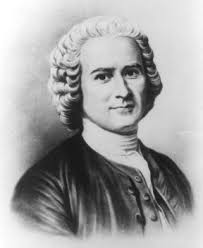

Where are the French Encyclopedists—the men of deep learning and brilliant genius, of moving eloquence, caustic wit, and untiring energy, who banded themselves together with a vow to exterminate Christ and Christianity? Where is the eloquent Rosseau, the witty Voltaire, the ingenious Helvetius, the sophistical Hume, the scoffing D’Alembert, and the ribaldist Paine? Their names have rotted from the earth, and their works follow them. And where is the Savior, whom they sought to annihilate? Enthroned in glory, robed in majesty, and exalted a Prince and a Savior, encircled, worshiped, and adored by countless myriads of holy beings, the crown of Deity on His head, and the scepter of universal government in His hand, from whose tribunal they have passed, tried, sentenced, and condemned, while He yet lives, "to guard His Church and crush His foes." - Octavius Winslow, Morning Thoughts for November 29
Thursday, December 2, 2010
What is God's greatest pleasure?
What is the preeminent passion of God's heart? What is God's greatest pleasure? How does the happiness of God manifest itself? In what does God take supreme delight? I want to suggest that the preeminent passion in God's heart is His own glory. God is at the center of his own affections. The supreme love of God's life is God. God is preeminently committed to the fame of His name. God is Himself the end for which God created the world. Better still, God's immediate goal in all He does is His own glory.
God relentlessly and unceasingly creates, rules, orders, directs, speaks, judges, saves, destroys, and delivers in order to make known who He is and to secure from the whole of the universe the praise, honor, and glory of which He and He alone is ultimately and infinitely worthy.
(Storms, C. Samuel. Pleasures Evermore: the Life-changing Power of Enjoying God. Colorado Springs, CO: NavPress, 2000. Print. 82)
Wednesday, December 1, 2010
Winter ...

Winter in the soul is by no means a comfortable season, and if it be upon thee just now it will be very painful to thee: but there is this comfort, namely, that the Lord makes it. He sends the sharp blasts of adversity to nip the buds of expectation: He scattereth the hoarfrost like ashes over the once verdant meadows of our joy: He casteth forth His ice like morsels freezing the streams of our delight. He does it all, He is the great Winter King, and rules in the realms of frost, and therefore thou canst not murmur. Losses, crosses, heaviness, sickness, poverty, and a thousand other ills, are of the Lord's sending, and come to us with wise design. Frosts kill noxious insects, and put a bound to raging diseases; they break up the clods, and sweeten the soul. O that such good results would always follow our winters of affliction!
Charles Haddon Spurgeon
Tuesday, November 30, 2010
The master-work of Jehovah
From Morning Thoughts by Octavius Winslow:
NOVEMBER 29.
"But I certify you, brethren, that the gospel which was preached of me is not after man. For I neither received it of men, neither was I taught it, but by the revelation of Jesus Christ." Galatians 1:11, 12
THE great and distinctive truth thus so broadly, emphatically, and impressively stated is the divinity of the gospel—a truth, in the firm and practical belief of which the Church of God needs to be established. The gospel is the master-work of Jehovah, presenting the greatest display of His manifold wisdom, and the most costly exhibition of the riches of His grace. In constructing it He would seem to have summoned to His aid all the resources of His own infinity; His fathomless mind, His boundless love, His illimitable grace, His infinite power, His spotless holiness—all contributed their glory, and conspired to present it to the universe as the most consummate piece of Divine workmanship. It carries with it its own evidence. The revelations it makes, the facts it records, the doctrines it propounds, the effects is produces, speak it to be no "cunningly devised fable," of human invention and fraud, but what it truly is, the "revelation of Jesus Christ," the "glorious gospel of the blessed God." What but a heart of infinite love could have conceived the desire of saving sinners? And by what but an infinite mind could the expedient have been devised of saving them in such a way—the incarnation, obedience, and death of His own beloved Son? Salvation from first to last is of the Lord.
NOVEMBER 29.
"But I certify you, brethren, that the gospel which was preached of me is not after man. For I neither received it of men, neither was I taught it, but by the revelation of Jesus Christ." Galatians 1:11, 12
THE great and distinctive truth thus so broadly, emphatically, and impressively stated is the divinity of the gospel—a truth, in the firm and practical belief of which the Church of God needs to be established. The gospel is the master-work of Jehovah, presenting the greatest display of His manifold wisdom, and the most costly exhibition of the riches of His grace. In constructing it He would seem to have summoned to His aid all the resources of His own infinity; His fathomless mind, His boundless love, His illimitable grace, His infinite power, His spotless holiness—all contributed their glory, and conspired to present it to the universe as the most consummate piece of Divine workmanship. It carries with it its own evidence. The revelations it makes, the facts it records, the doctrines it propounds, the effects is produces, speak it to be no "cunningly devised fable," of human invention and fraud, but what it truly is, the "revelation of Jesus Christ," the "glorious gospel of the blessed God." What but a heart of infinite love could have conceived the desire of saving sinners? And by what but an infinite mind could the expedient have been devised of saving them in such a way—the incarnation, obedience, and death of His own beloved Son? Salvation from first to last is of the Lord.
Monday, November 29, 2010
Grounds for contrition
The implication of this truth for preaching the gospel is that God himself must be shown as the ultimate good news of the gospel. If people are not awakened to the preciousness of God and the beauty of his glory in the face of Christ, the sorrow of their contrition will not be owing to their failure to cherish God and prize his glory. It will be owing to the fear of hell, or the foolishness of their former behavior, or the waste of their lives. But none of these grounds for contrition, by themselves, is an honor to God. (Piper, John. God Is the Gospel: Meditations on God's Love as the Gift of Himself. Wheaton, IL: Crossway, 2008. Print.109)
Sunday, November 28, 2010
A sense of glory of the Divine Being
From the diaries of Jonathan Edwards:
The first that I remember that ever I found any thing of that sort of inward, sweet delight in God and divine things, that I have lived much in since, was on reading those words, 1 Tim. 1:17, “Now unto the king eternal, immortal, invisible, the only wise God, be honor and glory for ever and ever, Amen.” As I read the words, there came into my soul, and was as it were diffused thro’ it, a sense of the glory of the Divine Being; a new sense, quite different from any thing I ever experienced before. Never any words of scripture seemed to me as these words did. I thought with myself, how excellent a being that was; and how happy I should be, if I might enjoy that God, and be wrapped up to God in Heaven, and be as it were swallowed up in Him. I kept saying, and as it were singing over these words of scripture to myself; and went to prayer, to pray to God that I might enjoy Him; and prayed in a manner quite different from what I used to do; with a new sort of affection?
Saturday, November 27, 2010
Busy day today...
Preparing to preach tomorrow.
I'd appreciate any prayers!
I'll be preaching a sermon entitled "Just Jesus: Sanctifier".
It comes from 2 Corinthians 3:18 and follows some thoughts I first came across in John Piper's book God is the Gospel and Sam Storms' book Pleasures Evermore.
I'll post up a link to it once it goes up on our church website.
I'd appreciate any prayers!
I'll be preaching a sermon entitled "Just Jesus: Sanctifier".
It comes from 2 Corinthians 3:18 and follows some thoughts I first came across in John Piper's book God is the Gospel and Sam Storms' book Pleasures Evermore.
I'll post up a link to it once it goes up on our church website.
Friday, November 26, 2010
What matters ...
I liked this post by Dane Ortlund:
Make up Your Mind about What Matters
I recently asked four brothers: What would you rather have--
Make up Your Mind about What Matters
One billion dollars deposited into your checking account when you roll out of bed in the morning
or
the assurance of Isaiah 43: 'But now thus says the LORD, he who created you, O Jacob, he who formed you, O Israel: "Fear not, for I have redeemed you; I have called you by name, you are mine. When you pass through the waters, I will be with you."'
Which one?
One billion dollars, or those two verses?
Remember, you can do a lot of good with a billion dollars.
As for me, if you told me that you were going to deposit that money in my account tomorrow, and I knew you were being truthful, and in return those two verses are going to be cut out of my Bible and wiped from my memory, while I could retain the remaining 99.99% of the Bible, I respond: no thank you.
Keep your money.
I want the real thing.
or
the assurance of Isaiah 43: 'But now thus says the LORD, he who created you, O Jacob, he who formed you, O Israel: "Fear not, for I have redeemed you; I have called you by name, you are mine. When you pass through the waters, I will be with you."'
Which one?
One billion dollars, or those two verses?
Remember, you can do a lot of good with a billion dollars.
As for me, if you told me that you were going to deposit that money in my account tomorrow, and I knew you were being truthful, and in return those two verses are going to be cut out of my Bible and wiped from my memory, while I could retain the remaining 99.99% of the Bible, I respond: no thank you.
Keep your money.
I want the real thing.
Thursday, November 25, 2010
Beholding is becoming ... more from Storms
It has been a busy week as far as preparation goes. I have been preparing for a teaching on the existence of God for the Christian fellowship group at the high school I teach at. I have been preparing a small group lesson on "Who is Christ?". And finally, I have been preparing a sermon on "Jesus Our Sanctifier" for this coming Sunday.
For Sunday's sermon, the key text is 2 Corinthians 3:18 which is as follows, "And we all, with unveiled face, beholding the glory of the Lord, are being transformed into the same image from one degree of glory to another. For this comes from the Lord who is the Spirit." (ESV)
The main idea of Jesus as our Sanctifier that I will put forth is the idea that "beholding is becoming". This is a foundational approach of Christian Hedonism as propounded by Jonathan Edwards, John Piper, and Sam Storms.
In his book Pleasures Evermore, Sam Storms presents this idea in many ways. here is one of them:This is the beholding, a mindful delight in our awesome Saviour which causes our affections to rise in response, that will lead to our becoming like Christ.
For Sunday's sermon, the key text is 2 Corinthians 3:18 which is as follows, "And we all, with unveiled face, beholding the glory of the Lord, are being transformed into the same image from one degree of glory to another. For this comes from the Lord who is the Spirit." (ESV)
The main idea of Jesus as our Sanctifier that I will put forth is the idea that "beholding is becoming". This is a foundational approach of Christian Hedonism as propounded by Jonathan Edwards, John Piper, and Sam Storms.
In his book Pleasures Evermore, Sam Storms presents this idea in many ways. here is one of them:
THE KEY TO HOLINESS, ONCE AGAIN, IS FALLING IN LOVE WITH Jesus. By “falling in love” I don’t mean mindless mush. I have in mind having in one ’s mind a passionate delight in the infinite excellencies of God in Christ. Falling in love with Jesus means having your heart and mind entranced, bedazzled, and captivated by the superlative beauty and sweetness of the Son of God. (81)
Wednesday, November 24, 2010
The happiness of God
As I woke this morning, tired and sore, tired from getting to be after midnight and sore from an hour and a half of pick-up hockey, I fought to clear my mind and focus my energies on waking up. I began to prepare my mind for a day of work; always tougher after playing hockey the night before. I had some coffee, oatmeal, and toast, and sat down to get a post up on the blog. I opened God Is The Gospel to find something I uplifting and edifying. In the pre-dawn stupor and fogginess of my mind, I read this: Considering my mental and physical state, this statement grabbed my attention. My, that type of enjoyment does sound wonderful. In this chapter of his book, Piper explains one of the grounds for God's joy and happiness: This is Piper's starting point for the joy he asks us to imagine in the statement that caught my attention this morning. Infinite enjoyment and pleasure and happiness is only possible if the object of that joy is infinite, namely, Jesus Christ. Even in my morning grogginess of brain and body that sounds enticing. Piper goes on,
Imagine being able to enjoy what is infinitely enjoyable with
unbounded energy and passion forever.(102)
The happiness of God is first and foremost a happiness in his Son. Thus when we share in the happiness of God, we share in the very pleasure that the Father has in the Son. Ultimately this is what makes the gospel good news. It opens the way for us to see and savor the glory of Christ. And when we reach that ultimate goal we will find ourselves savoring the Son with the very happiness that the Father has in the Son. (101)
If God’s pleasure in the Son becomes our pleasure, then the object of our pleasure, Jesus, will be inexhaustible in personal worth. He will never become boring or disappointing or frustrating. No greater treasure can be conceived than the very Son of God. Moreover, our ability to savor this inexhaustible treasure will not be limited by human weaknesses. We will enjoy the Son of God with the very enjoyment of his omnipotently happy Father. God’s delight in his Son will be in us, and it will be ours. And this will never end, because neither the Father nor the Son ever ends. Their love for each other will be our love for them, and therefore our loving them will never die.
This is the ultimate reason why the gospel is good news. If this does not come true for Christ’s people, there is no good news. Therefore, preaching the good news must endeavor to lead people to this. We must make plain to people that if their hope stops short of seeing and savoring the glory of God in Christ, they are not fixing their hearts on the main thing and the best thing Christ died to accomplish—seeing and savoring the glory of God in the face of Christ with everlasting and ever-increasing joy. (102)
Tuesday, November 23, 2010
Beholding is becoming
One of the powerful truths in John Piper's book God Is The Gospel (Piper, John. God Is the Gospel: Meditations on God's Love as the Gift of Himself. Wheaton, IL: Crossway, 2008. Print.) is "beholding is becoming." As we behold the glory of the gospel of Christ, hence Christ Himself, we are transformed. The main Scripture Piper uses in discussing this is 2 Corinthians 3:18 which reads, "And we all, with unveiled face, beholding the glory of the Lord, are being transformed into the same image from one degree of glory to another. For this comes from the Lord who is the Spirit."
Piper explains,
Piper explains,
We are transformed into Christ’s image—that’s what sanctification is—by steadfast seeing and savoring of the glory of Christ. This too is from the Lord who is the Spirit. This is the work of the Spirit: to shine the light of truth on the glory of Christ so that we see it for what it really is, namely, infinitely precious. The work of the Holy Spirit in changing us is not to work directly on our bad habits but to make us admire Jesus Christ so much that sinful habits feel foreign and distasteful. (91-2)
Monday, November 22, 2010
Storms on Christian Hedonism
In Pleasures Evermore, Sam Storms offers a summation gleaned from John Piper's book, The Pleasures of God, on Christian Hedonism:
- The longing to be happy is a universal human experience, and it is good, not sinful.
- We should never try to deny or resist our longing to be happy, as though it were a bad impulse. Instead we should seek to intensify this longing and nourish it with whatever will provide the deepest and most enduring satisfaction.
- The deepest and most enduring happiness is found only in God. Not from God, but in God.
- The happiness we find in God reaches its consummation when it is shared with others in the manifold Ways of love.
- To the extent We try to abandon the pursuit of our own pleasure, We fail to honor God and love people. Or, to put it positively: the pursuit of pleasure is a necessary part of all worship and virtue. That is, the chief end of man is to glorify God by enjoying Him forever.
Sunday, November 21, 2010
A few blog posts
Here are two posts I came across on different blogs that I thought were particularly good:
From Miscellanies,
Extrabiblical Books and Scripture’s Sufficiency
And from The Resurgence,
The Six-Second Kiss
From Miscellanies,
Extrabiblical Books and Scripture’s Sufficiency
Without extrabiblical literature we cannot make use of the Bible, argues John Frame. He makes this point in a chapter on the sufficiency of scripture (ch 32) in his new book, The Doctrine of the Word of God (P&R, 2010), 220–238. On pages 232–233, Frame writes this of our need of extrabiblical books in order to properly apply Scripture to our lives:
All our use of Scripture depends on our knowledge of extrabiblical data. Scripture contains no lessons in Hebrew or Greek grammar. To learn that, we must study extrabiblical information. Similarly, the other means that enable us to use Scripture, such as textual criticism, text editing, translation, publication, teaching, preaching, concordances, and commentaries, all depend on extrabiblical data. So in one sense even the first premises of moral syllogisms, the normative premises, depend on extrabiblical knowledge. So without extrabiblical premises, without general revelation, we cannot use Scripture at all.
Then he writes:
None of those considerations detracts from the primacy of Scripture as we have described it. Once we have a settled conviction of what Scripture teaches, that conviction must prevail over all other sources of knowledge. So Scripture must govern even the sciences that are used to analyze it: textual criticism, hermeneutics, and so on. … Scripture must remain primary. …
Frame’s argument culminates here:
Certainly, it is a misunderstanding, then, to think that the sufficiency of Scripture rules out the necessity of extrabiblical information. At every stage of our use of Scripture, we should legitimately refer both to the content of Scripture and to extrabiblical revelation. But each in its proper place: when we are convinced that a teaching is the teaching of Scripture itself (even when we used extrabiblical information in reaching that conviction), that teaching must take precedence over any conclusion derived from outside Scripture.
And from The Resurgence,
The Six-Second Kiss
What can six seconds do for you? Woman to woman, let me encourage you that just six seconds a day can help safeguard your marriage.
How you say goodbye as you and your husband begin your day can help you build a lifelong romance. Ray and I say send each other off each morning with a six-second kiss, and after 39 years of marriage, I highly recommend it!
After years of a quick shout from somewhere near the back door, it started with “Goodbye, honey. See you tonight . . .” which left us both wanting more. It stopped when we decided that before we went out to face our day we would scout the other out, wrap each other up in a warm embrace, and begin our day with an intimate, very married, six-second kiss.
Try it. Tomorrow when you say goodbye, take your husband’s face in your hands. Look deeply into his eyes. Ask him to hold you for just six seconds. Tell him you love him. Admire him. Tell him you can’t wait until the day is done and you’ll have time together again, and then kiss him like you mean it.
Go ahead. Try it! Your young children will grow up feeling secure in the love between their parents. Your adolescents will blush, groan, and hope their friends don’t see you. Your teens will hope that someday they can build a marriage like their parents. And if there are no children around? Hmmmm, now there’s an interesting situation!
“Scarcely had I passed them when I found him whom my soul loves. I held him and would not let him go . . .” Song of Solomon 3:4
Saturday, November 20, 2010
Such is the glory of Christ
The spiritual beauty of Christ is Christ-in-action—
Christ loving,
and Christ touching lepers,
and Christ blessing children,
and healing the crippled,
and raising the dead,
and commanding demons,
and teaching with unrivaled authority,
and silencing the skeptics,
and rebuking his disciples,
and predicting the details of his death,
and setting his face like flint toward Jerusalem,
and weeping over the city,
and silent before his accusers,
and meekly sovereign over Pilate,
and crucified, and praying for his enemies,
and forgiving a thief,
and caring for his mother while in agony,
and giving up his spirit in death,
and rising from the dead—
“No one takes [my life] from me, but I lay it down of my own accord. I have authority to lay it down, and I have authority to take it up again” (John 10:18).
Such is the glory of Christ.
(Piper, John. God Is the Gospel: Meditations on God's Love as the Gift of Himself. Wheaton, IL: Crossway, 2008. Print. 66. line breaks mine)
Christ loving,
and Christ touching lepers,
and Christ blessing children,
and healing the crippled,
and raising the dead,
and commanding demons,
and teaching with unrivaled authority,
and silencing the skeptics,
and rebuking his disciples,
and predicting the details of his death,
and setting his face like flint toward Jerusalem,
and weeping over the city,
and silent before his accusers,
and meekly sovereign over Pilate,
and crucified, and praying for his enemies,
and forgiving a thief,
and caring for his mother while in agony,
and giving up his spirit in death,
and rising from the dead—
“No one takes [my life] from me, but I lay it down of my own accord. I have authority to lay it down, and I have authority to take it up again” (John 10:18).
Such is the glory of Christ.
(Piper, John. God Is the Gospel: Meditations on God's Love as the Gift of Himself. Wheaton, IL: Crossway, 2008. Print. 66. line breaks mine)
Friday, November 19, 2010
Castor oil or honey
 Every syllable of every statute, every clause of every commandment that ever proceeded from the mouth of God was divinely designed to bring those who would obey into the greatest imaginable happiness of heart. Don't swallow God's law like castor oil. For when you understand His intent, it will be like honey on your lips and sweetness to your soul. (Storms, C. Samuel. Pleasures Evermore: the Life-changing Power of Enjoying God. Colorado Springs, CO: NavPress, 2000. Print. 75)
Thursday, November 18, 2010
The goal of the gospel
John Piper, in his wonderful book God Is The Gospel, declares that the glory of the gospel is not raw power, but rather it is the "divine beauty of his manifold perfections. And thus, seeing the glory is not something that one can be forced or coerced into. If one is to see the glory of the gospel, one must have a change of heart.
Piper goes on to explain that the goal of the glory-filled gospel is "the display of God’s glory and the removal of every obstacle to our seeing it and savoring it as our highest treasure."
The natural self-centered condition of human hearts cannot believe, because they cannot see spiritual beauty. It is not a physical inability, as though they can’t act even if they have a compelling desire to act. It is a moral inability because they are so self-absorbed, they are unable to see what would condemn their pride and give them joy through admiring another. That is why seeing the glory of Christ requires a profound spiritual change. (54)
The ultimate good of the gospel is seeing and savoring the beauty and value of God. God’s wrath and our sin obstruct that vision and that pleasure. You can’t see and savor God as supremely satisfying while you are full of rebellion against him and he is full of wrath against you. The removal of this wrath and this rebellion is what the gospel is for. The ultimate aim of the gospel is the display of God’s glory and the removal of every obstacle to our seeing it and savoring it as our highest treasure. “Behold your God!” is the most gracious command and best gift of the gospel. If we do not see him and savor him as our greatest fortune, we have not obeyed or believed the gospel. (56)
Wednesday, November 17, 2010
We admire Him
His glory, in his first coming, was the incomparably exquisite array of spiritual, moral, intellectual, verbal, and practical perfections that manifest themselves in a kind of meek miracle-working and unanswerable teaching and humble action that set Jesus apart from all men ... the glory of Christ, as he appeared among us, consisted not in one attribute or another, and not in one act or another, but in what Jonathan Edwards called “an admirable conjunction of diverse excellencies” ... In other words,
• we admire him for his glory, but even more because his glory(Piper, John. God Is the Gospel: Meditations on God's Love as the Gift of Himself. Wheaton, IL: Crossway, 2008. Print. 51-3)
is mingled with humility;
• we admire him for his transcendence, but even more because
his transcendence is accompanied by condescension;
• we admire him for his uncompromising justice, but even more
because it is tempered with mercy;
• we admire him for his majesty, but even more because it is a
majesty in meekness;
• we admire him because of his equality with God, but even
more because as God’s equal he nevertheless has a deep reverence
for God;
• we admire him because of how worthy he was of all good, but
even more because this was accompanied by an amazing
patience to suffer evil;
• we admire him because of his sovereign dominion over the
world, but even more because this dominion was clothed with
a spirit of obedience and submission;
• we love the way he stumped the proud scribes with his wisdom,
and we love it even more because he could be simple
enough to like children and spend time with them;
• and we admire him because he could still the storm, but even
more because he refused to use that power to strike the
Samaritans with lightning (Luke 9:54-55) and he refused to use
it to get himself down from the cross.
Tuesday, November 16, 2010
Providence in reading
For the past while I have been incorporating 2 devotional writings into my morning prayer and reading time. I have been using Octavius Winslow's Morning Thoughts and Charles Spurgeon's Morning by Morning. You can access both of these online: Morning Thoughts, Morning by Morning.
This morning's writing by Spurgeon was particularly timely for me. It touched upon to concepts that I am currently reading about. The first idea is that of Christian Hedonism and I have been reflecting on that topic as I read Pleasures Evermore by Sam Storms. Spurgeon writes, "Well may we "delight ourselves in the Lord" who makes us to drink of the river of His pleasures."
Spurgeon also raises the main point that is the focus of a book by John Piper that I am also currently reading: God Is The Gospel. The following shares the theme of Piper's book: "It is not "The Lord is partly my portion," nor "The Lord is in my portion"; but He Himself makes up the sum total of my soul's inheritance. Within the circumference of that circle lies all that we possess or desire." God Is The Gospel is about God being the end of the gospel; that is, the gospel is 'good news' because it brings us to God. Anything short of God Himself is not the chief end of the gospel.
It is always exciting and encouraging when providence orchestrates 'coincidences' like these in our lives. He sees the sparrow fall, and He sees the books you are studying and the devotionals you are reading and blesses you as they coalesce at certain points. God is good.
I encourage you to consider readying both the devotionals mentioned above. I also strongly recommend both books.
This morning's writing by Spurgeon was particularly timely for me. It touched upon to concepts that I am currently reading about. The first idea is that of Christian Hedonism and I have been reflecting on that topic as I read Pleasures Evermore by Sam Storms. Spurgeon writes, "Well may we "delight ourselves in the Lord" who makes us to drink of the river of His pleasures."
Spurgeon also raises the main point that is the focus of a book by John Piper that I am also currently reading: God Is The Gospel. The following shares the theme of Piper's book: "It is not "The Lord is partly my portion," nor "The Lord is in my portion"; but He Himself makes up the sum total of my soul's inheritance. Within the circumference of that circle lies all that we possess or desire." God Is The Gospel is about God being the end of the gospel; that is, the gospel is 'good news' because it brings us to God. Anything short of God Himself is not the chief end of the gospel.
It is always exciting and encouraging when providence orchestrates 'coincidences' like these in our lives. He sees the sparrow fall, and He sees the books you are studying and the devotionals you are reading and blesses you as they coalesce at certain points. God is good.
I encourage you to consider readying both the devotionals mentioned above. I also strongly recommend both books.
Monday, November 15, 2010
His by conquest
According to Charles Spurgeon in this devotional, we are Christ's in three ways. First by His sovereign choice,; second, by his purchase of us by the paying of our debt; and thirdly, as I have shared here, we are His by conquest.
How are they His? By His own sovereign choice ... by purchase ... They are also His by conquest. What a battle He had in us before we would be won! How long He laid siege to our hearts! How often He sent us terms of capitulation! but we barred our gates, and fenced our walls against Him. Do we not remember that glorious hour when He carried our hearts by storm? When He placed His cross against the wall, and scaled our ramparts, planting on our strongholds the blood-red flag of His omnipotent mercy? Yes, we are, indeed, the conquered captives of His omnipotent love. Thus chosen, purchased, and subdued, the rights of our divine possessor are inalienable: we rejoice that we never can be our own; and we desire, day by day, to do His will, and to show forth His glory.
Sunday, November 14, 2010
Get to God
From God is the Gospel:
My point in this book is that all the saving events and all the saving blessings of the gospel are means of getting obstacles out of the way so that we might know and enjoy God most fully.
Propitiation,
redemption,
forgiveness,
imputation,
sanctification,
liberation,
healing,
heaven—none of these is good news except for one reason: they bring us to God for our everlasting enjoyment of him.
If we believe all these things have happened to us, but do not embrace them for
the sake of getting to God,
Christ did not die to forgive sinners who go on treasuring anything above seeing and savoring God.
And people who would be happy in heaven if Christ were not there, will not be there. The gospel is not a way to get people to heaven; it is a way to get people to God. It’s a way of overcoming every obstacle to everlasting joy in God.
If we don’t want God above all things, we have not been converted by the gospel.
(Piper, John. God Is the Gospel: Meditations on God's Love as the Gift of Himself. Wheaton, IL: Crossway, 2008. Print. 47. line breaks mine)
My point in this book is that all the saving events and all the saving blessings of the gospel are means of getting obstacles out of the way so that we might know and enjoy God most fully.
Propitiation,
redemption,
forgiveness,
imputation,
sanctification,
liberation,
healing,
heaven—none of these is good news except for one reason: they bring us to God for our everlasting enjoyment of him.
If we believe all these things have happened to us, but do not embrace them for
the sake of getting to God,
they have not happened to us.
Christ did not die to forgive sinners who go on treasuring anything above seeing and savoring God.
And people who would be happy in heaven if Christ were not there, will not be there. The gospel is not a way to get people to heaven; it is a way to get people to God. It’s a way of overcoming every obstacle to everlasting joy in God.
If we don’t want God above all things, we have not been converted by the gospel.
(Piper, John. God Is the Gospel: Meditations on God's Love as the Gift of Himself. Wheaton, IL: Crossway, 2008. Print. 47. line breaks mine)
Spurious humility
"Avoid a spurious humility. True humility consists not in denying the work of the Holy Spirit in our hearts, in under-rating the grace of God in our souls, in standing afar off from our heavenly Father, and in walking at a distance from Christ, always doubting the efficacy of His blood, the freeness of His salvation, the willingness of His heart, and the greatness of His power to save. Oh no! this is not the humility that God delights to look at, but is a false, a counterfeit humility, obnoxious in His sight. But to "draw near with a true heart, in full assurance of faith," in lowly dependence upon His blood and righteousness; to accept of salvation as the gift of His grace; to believe the promise because He has spoken it; gratefully and humbly to acknowledge our calling, our adoption, and our acceptance, and to live in the holy, transforming influence of this exalted state, giving to a Triune God all the praise and glory; this is the humility which is most pleasing to God, and is the true product of the Holy Spirit." - Octavius Winslow
Saturday, November 13, 2010
Universal art gallery
God has, as it were, placed Himself on display in the art gallery of the universe. He beckons His people, you and me, to stand in awe as we behold the symmetry of His attributes, the harmony of His deeds, the glory of His goodness, the overwhelming and unfathomable grandeur of His greatness; in a word, His beauty. God is infinitely splendid and invites us to come to bask in His beauty that we might enjoy Him to the fullest. (Storms, C. Samuel. Pleasures Evermore: the Life-changing Power of Enjoying God. Colorado Springs, CO: NavPress, 2000. Print. 54)
Friday, November 12, 2010
Sin, holiness, the cross
From Octavius Winslow's Morning Thoughts for November 11, 2010:
"But God forbid that I should glory, save in the cross of our Lord Jesus Christ, by whom the world is crucified unto me, and I unto the world." Galatians 6:14
CONFORMITY to the death of Christ can only be obtained by close, individual, realizing views of the cross. It is in the cross sin is seen in its exceeding sinfulness. It is in the cross the holiness of God shines with such ineffable luster. This is the sun that throws its light upon these two great objects—the holiness of God, the sinfulness of the sinner. Veil this sun, remove the cross, blot out the Atonement, and all our knowledge of holiness and sin vanishes into distant and shadowy views.
"But God forbid that I should glory, save in the cross of our Lord Jesus Christ, by whom the world is crucified unto me, and I unto the world." Galatians 6:14
CONFORMITY to the death of Christ can only be obtained by close, individual, realizing views of the cross. It is in the cross sin is seen in its exceeding sinfulness. It is in the cross the holiness of God shines with such ineffable luster. This is the sun that throws its light upon these two great objects—the holiness of God, the sinfulness of the sinner. Veil this sun, remove the cross, blot out the Atonement, and all our knowledge of holiness and sin vanishes into distant and shadowy views.
Thursday, November 11, 2010

Wednesday, November 10, 2010
ESV
From Justin Taylor's blog:
The ESV
The ESV
Most readers of this blog know that I’m a fan of the ESV (English Standard Version) of the Bible. Here’s a new video from Crossway from various leaders explaining why they trust and appreciate this translation:
Tuesday, November 9, 2010
A Gem from TPW
Here is a great post, and awesome photo, from The Puritan's Woodshop:
God Is Just And He Ordains Evil
God Is Just And He Ordains Evil

His justice cannot be impeached, because he infuseth no evil, enforceth to no evil, only ordaineth what shall be; his goodness cannot be impeached for suffering things which he can turn to such advantage for his own glory and the creature’s good. And, therefore, as the sun shineth upon a dunghill without having his beams polluted by it, so God’s ordination taketh in the sin of the creatures without any blemish to itself. God’s decrees are immanent in himself, working nothing that is evil in the creatures. Other things might be said, but I would not perplex the matter.
-Thomas Manton; works, volume 3, page 374
Monday, November 8, 2010
Boredom - contrary to how God made us
We are thrill seekers and pleasure pursuers; that's how God made us. And we will pursue pleasure. The only question is where it will be found and how this desire will be satisfied. Boredom will not suffice. We need to purposefully pursue pleasure in God or boredom will eventually end up with us recklessly realizing our relish of pleasure in the deceitful destination of debauchery or being summoned by the scintillating siren's song of sin. Consider the following quote by Sam Storms from his book Pleasures Evermore (Storms, C. Samuel. Pleasures Evermore: the Life-changing Power of Enjoying God. Colorado Springs, CO: NavPress, 2000. Print)
"... one of the most serious threats to the human spirit is boredom. Boredom is the breeding ground for wickedness. Bored people are easy targets of the flesh and the Devil. It is like putting a bull ’s-eye on your chest with a sign: “Tempt me. I’m easy!” Why? Because boredom is contrary to the natural, God-given impulse for fascination, excitement, pleasure, and exhilaration. There are only three possible reactions to boredom:
This is why people are so prone to an addictive lifestyle. Many people who fall into sinful addictions are people who were once terminally bored. The reason why addictions are so powerful is that they tap into that place in our hearts that was made for transcendent communion and spiritual romance. These addictive habits either dull and deaden our yearnings for a .satisfaction we fear we’ll never find or they provide an alternative counterfeit fulfillment that we think will bring long-term happiness, counterfeits like cocaine, overeating, illicit affairs, busyness, efficiency, image, or obsession with physical beauty. They all find their power in the inescapable yearning of the human heart to be fascinated and pleased and enthralled. Our hearts will invariably lead us either to the fleeting pleasures of addiction or to God." (51)
"... one of the most serious threats to the human spirit is boredom. Boredom is the breeding ground for wickedness. Bored people are easy targets of the flesh and the Devil. It is like putting a bull ’s-eye on your chest with a sign: “Tempt me. I’m easy!” Why? Because boredom is contrary to the natural, God-given impulse for fascination, excitement, pleasure, and exhilaration. There are only three possible reactions to boredom:
- You wither and die emotionally.
- You wither and die physically (suicide).
- You madly rush to whatever extreme and extravagant thrill you can find to replace your misery with pleasure, whether it be pornography, adultery, drugs, or fantasies of fame and power.
This is why people are so prone to an addictive lifestyle. Many people who fall into sinful addictions are people who were once terminally bored. The reason why addictions are so powerful is that they tap into that place in our hearts that was made for transcendent communion and spiritual romance. These addictive habits either dull and deaden our yearnings for a .satisfaction we fear we’ll never find or they provide an alternative counterfeit fulfillment that we think will bring long-term happiness, counterfeits like cocaine, overeating, illicit affairs, busyness, efficiency, image, or obsession with physical beauty. They all find their power in the inescapable yearning of the human heart to be fascinated and pleased and enthralled. Our hearts will invariably lead us either to the fleeting pleasures of addiction or to God." (51)
Sunday, November 7, 2010
Gospel Doctrine Matters
Gospel doctrine matters because the good news is so full and rich and wonderful that it must be opened like a treasure chest, and all its treasures brought out for the enjoyment of the world.
Doctrine is the description of these treasures.
Doctrine describes their true value and why they are so valuable.
Doctrine guards the diamonds of the gospel from being discarded as mere crystals.
Doctrine protects the treasures of the gospel from the pirates who don’t like the diamonds but who make their living trading them for other stones.
Doctrine polishes the old gems buried at the bottom of the chest.
It puts the jewels of gospel truth in order on the scarlet tapestry of history so each is seen in its most beautiful place ...
The gospel is not mainly about being explained. Explanation is necessary, but it is not primary. A love letter must be intelligible, but grammar and logic are not the point. Love is the point. The gospel is good news. Doctrine serves that. It serves the one whose feet are bruised (and beautiful!) from walking to the unreached places with news: “Come, listen to the news of God! Listen to what God has done! Listen! Understand! Bow! Believe!” (Piper, John. God Is the Gospel: Meditations on God's Love as the Gift of Himself. Wheaton, IL: Crossway, 2008. Print. 22. line breaks mine)
Doctrine is the description of these treasures.
Doctrine describes their true value and why they are so valuable.
Doctrine guards the diamonds of the gospel from being discarded as mere crystals.
Doctrine protects the treasures of the gospel from the pirates who don’t like the diamonds but who make their living trading them for other stones.
Doctrine polishes the old gems buried at the bottom of the chest.
It puts the jewels of gospel truth in order on the scarlet tapestry of history so each is seen in its most beautiful place ...
The gospel is not mainly about being explained. Explanation is necessary, but it is not primary. A love letter must be intelligible, but grammar and logic are not the point. Love is the point. The gospel is good news. Doctrine serves that. It serves the one whose feet are bruised (and beautiful!) from walking to the unreached places with news: “Come, listen to the news of God! Listen to what God has done! Listen! Understand! Bow! Believe!” (Piper, John. God Is the Gospel: Meditations on God's Love as the Gift of Himself. Wheaton, IL: Crossway, 2008. Print. 22. line breaks mine)
Saturday, November 6, 2010
Christian Hedonism ... more thoughts
 "Your will is energized based on your belief that one pleasure (whether immediate or long-term) is better than others ... Satan isn't responsible for this. God is. God made you this way so that you would choose Him and His soul-satisfying pleasures in lieu of those that pass with the using and ultimately leave you empty and miserable. The alternative to resisting the passing pleasures of sin isn't religious misery but relishing the permanent pleasures of God." (Storms, C. Samuel. Pleasures Evermore: the Life-changing Power of Enjoying God. Colorado Springs, CO: NavPress, 2000. Print. 38)
So, assuming that we agree that we choose options based on pleasure-what makes us happiest is always what we will choose-one question that we are left with is do we believe that the ultimate pleasure and happiness can only be found in God.
Pascal addressed the assumption above saying "All men seek happiness, This is without exception. Whatever different means they employ, they all tend to this end. The cause of some going to war, and of others avoiding it, is the same desire in both, attended with different views. The will never takes the least step but to this object. This is the motive of every action of every man, even of those who hang themselves."
So, with that in mind, do I believe the following: If I will pursue lasting and ultimate pleasure I will invariably choose God. This is a key concept in Christian Hedonism.
This leads to the the final statement in the Storms' quote above which suggests that the key to resisting sin is not primarily suppression of desire but rather finding desire's fulfillment in the only source of true pleasure and happiness. This is, along with several concepts of Christian Hedonism, significantly different from much teaching we get about battling sin.
Give it some thought.
Friday, November 5, 2010
Decoding the opponent's playbook
I was given the opportunity to write an article for the Christian Legal Journal which is a ministry of Christian Legal Fellowship. It was an enjoyable experience and it was fun to receive the printed journal with the article in it. Since the article is in print, I figure it is OK for me to post it here. Earlier this year I printed an excerpt ... here is the whole thing:
Decoding the Opponent’s Playbook
In football, a major part of preparing for each week's game is a serious evaluation of an opponents tactics, tendencies and strategies. Hours and hours of film study is a regular aspect of making provisions for a game. Individual opponents would be scrutinized, and whole team systems would be analyzed.
Considering football as an analogy of the Christian walk, the faithful Christian must be willing to 'decode' the opponent’s playbook just like the football teams do before facing their opposition on the gridiron. We must reflect on who, or what, the opponents are, and also evaluate how they work against us.
A football game has three spheres in which the battle is contested: offence, defence, and special teams. Similarly, the Christian life faces opposition in three spheres; our self, the world, and Satan. Victory in football is all but guaranteed if a team can win two of the three battles. However, Christianity requires overcoming in all three aspects.
Decoding the Opponent's Playbook: Our Self
As Christians, we constantly battle our sinful natures. Through the atoning sacrifice of Christ we are already justified before God. Nevertheless, our sanctification will not be complete until we see Christ and are perfected. Until that day, we battle. Our selfish nature has one basic way in which it opposes us; sin. This is the one-word playbook of the opponent we find in our own heart. Thomas Watson, the 17th century puritan author and pastor, in his book entitled Heaven Taken by Storm suggests two ways in which we battle ourselves; first, we mortify sin, and second, we provoke ourselves to Christian duties. Watson suggest that to mortify, or put to death, sin we must both avoid temptations and fight sinful tendencies with faith and prayer. And to provoke ourselves to Christian duty we must participate in the disciplines that have nourished the saints from Christianity's onset; reading the Word, hearing the Word, prayer, meditation, holy conversation, fellowship, and the like.
Decoding the Opponent's Playbook: The World
The world is our second opponent. Its playbook, again according to Thomas Watson, consists of the deceitfulness of what we want and defilement of what we have. John Piper presents the same idea in his sermon entitled Do Not Love the World (By John Piper. © Desiring God. Website: desiringGod.org). “The world is driven by these two things: passion for pleasure and pride in possessions.”
1 John 2:16 reads, “For all that is in the world—the desires of the flesh and the desires of the eyes and pride in possessions—is not from the Father but is from the world.” The deceitfulness of what we want is described as the desire of the flesh and the desire of the eyes. The pride of life, according to Piper, is “what you possess—the things you have ... the pride of life—refers to the pride in what we do have.” For both Piper and Watson, this is a battle of desire. Watson writes, “The sin is not in using the world, but in loving it ... A true saint is crucified in his affections to the world ...” Piper echoes this idea, “ ... let us desire nothing but God. Possess nothing but God; pursue nothing but God.”
Decoding the Opponent's Playbook: Satan
The final opponent the Christian encounters is Satan. A final reference to Watson's work, Heaven Taken by Storm, will allow us to peer into the devil's playbook. “Satan opposeth us both by open violence, and secret treachery. By open violence, so he is called the Red Dragon; by secret treachery, so he is called the Old Serpent. We read in Scripture of his snares and darts; he hurts more by his snares than by his darts.” The darts that Satan employs, corresponding to 'open violence', are the blatant fears, passions, and lusts that regularly assault our souls. These are temptations that use a full frontal attack to undermine the work of God in the saints. The snares, representing the 'secret treachery', refer to the subtle tactics of temptation. These are numerous and devious; drawing men to evil under pretence of good, tempting with the good and beautiful, enticing to sin gradually, deceiving to sin with lawful things, or persuading men to do evil for good ends. Faith is Watson's weapon for the devil. It is in faith that we resist the devil and he flees. It is faith that keeps the castle of the heart from yielding. It is faith in our Saviour's death and resurrection that convinces us we fight against a defeated foe.
Do What We Do
In conclusion, though a football team spends much time in preparation by 'decoding the opponent's playbook', it spends more time evaluating their own playbook. While playing in the Canadian Football League for 14 years I came across many philosophies pertaining to success in football. One of those philosophies, employed by the defensive players of the Toronto Argonauts, was encapsulated with a slogan; Do What We Do.
It is far more important for a football team to focus on what they themselves do, looking to doing those things with efficiency and purpose. The same is true for the Christian. Though we are opposed by our sinful natures, the world, and the devil, we must devote most of our time to our playbook; the Bible. It is in the gospel of Jesus Christ, and the redemptive plan of God as revealed in His Word illumined by the Holy Spirit that we will accrue the most benefit for the battles we face. “[W]e are not ignorant of his[Satan's] designs” (2 Cor 2:11b), and we do “not love the world or the things in the world” (1 John 2:15a), and we “Put to death therefore what is earthly” (Col 3:5a). Nevertheless, our victory rests solely in the person and work of Jesus Christ.
To deal with the sinful self, our 'playbook' gives us Romans 6:6-7, “We know that our old self was crucified with him in order that the body of sin might be brought to nothing, so that we would no longer be enslaved to sin. For one who has died has been set free from sin.” To deal with the world our 'playbook gives us Galatians 6:14, “But far be it from me to boast except in the cross of our Lord Jesus Christ, by which the world has been crucified to me, and I to the world.” And to deal with Satan our 'playbook gives us Revelation 12:11a, “And they have conquered him[Satan] by the blood of the Lamb and by the word of their testimony”. Our playbook invariably and necessarily really only contains one play, and that play has already been run. Jesus secured victory for us in the 'game of life' when he died on the cross for our sins, was buried, and rose from the grave, victorious.
Decoding the Opponent’s Playbook
In football, a major part of preparing for each week's game is a serious evaluation of an opponents tactics, tendencies and strategies. Hours and hours of film study is a regular aspect of making provisions for a game. Individual opponents would be scrutinized, and whole team systems would be analyzed.
Considering football as an analogy of the Christian walk, the faithful Christian must be willing to 'decode' the opponent’s playbook just like the football teams do before facing their opposition on the gridiron. We must reflect on who, or what, the opponents are, and also evaluate how they work against us.
A football game has three spheres in which the battle is contested: offence, defence, and special teams. Similarly, the Christian life faces opposition in three spheres; our self, the world, and Satan. Victory in football is all but guaranteed if a team can win two of the three battles. However, Christianity requires overcoming in all three aspects.
Decoding the Opponent's Playbook: Our Self
As Christians, we constantly battle our sinful natures. Through the atoning sacrifice of Christ we are already justified before God. Nevertheless, our sanctification will not be complete until we see Christ and are perfected. Until that day, we battle. Our selfish nature has one basic way in which it opposes us; sin. This is the one-word playbook of the opponent we find in our own heart. Thomas Watson, the 17th century puritan author and pastor, in his book entitled Heaven Taken by Storm suggests two ways in which we battle ourselves; first, we mortify sin, and second, we provoke ourselves to Christian duties. Watson suggest that to mortify, or put to death, sin we must both avoid temptations and fight sinful tendencies with faith and prayer. And to provoke ourselves to Christian duty we must participate in the disciplines that have nourished the saints from Christianity's onset; reading the Word, hearing the Word, prayer, meditation, holy conversation, fellowship, and the like.
Decoding the Opponent's Playbook: The World
The world is our second opponent. Its playbook, again according to Thomas Watson, consists of the deceitfulness of what we want and defilement of what we have. John Piper presents the same idea in his sermon entitled Do Not Love the World (By John Piper. © Desiring God. Website: desiringGod.org). “The world is driven by these two things: passion for pleasure and pride in possessions.”
1 John 2:16 reads, “For all that is in the world—the desires of the flesh and the desires of the eyes and pride in possessions—is not from the Father but is from the world.” The deceitfulness of what we want is described as the desire of the flesh and the desire of the eyes. The pride of life, according to Piper, is “what you possess—the things you have ... the pride of life—refers to the pride in what we do have.” For both Piper and Watson, this is a battle of desire. Watson writes, “The sin is not in using the world, but in loving it ... A true saint is crucified in his affections to the world ...” Piper echoes this idea, “ ... let us desire nothing but God. Possess nothing but God; pursue nothing but God.”
Decoding the Opponent's Playbook: Satan
The final opponent the Christian encounters is Satan. A final reference to Watson's work, Heaven Taken by Storm, will allow us to peer into the devil's playbook. “Satan opposeth us both by open violence, and secret treachery. By open violence, so he is called the Red Dragon; by secret treachery, so he is called the Old Serpent. We read in Scripture of his snares and darts; he hurts more by his snares than by his darts.” The darts that Satan employs, corresponding to 'open violence', are the blatant fears, passions, and lusts that regularly assault our souls. These are temptations that use a full frontal attack to undermine the work of God in the saints. The snares, representing the 'secret treachery', refer to the subtle tactics of temptation. These are numerous and devious; drawing men to evil under pretence of good, tempting with the good and beautiful, enticing to sin gradually, deceiving to sin with lawful things, or persuading men to do evil for good ends. Faith is Watson's weapon for the devil. It is in faith that we resist the devil and he flees. It is faith that keeps the castle of the heart from yielding. It is faith in our Saviour's death and resurrection that convinces us we fight against a defeated foe.
Do What We Do
In conclusion, though a football team spends much time in preparation by 'decoding the opponent's playbook', it spends more time evaluating their own playbook. While playing in the Canadian Football League for 14 years I came across many philosophies pertaining to success in football. One of those philosophies, employed by the defensive players of the Toronto Argonauts, was encapsulated with a slogan; Do What We Do.
It is far more important for a football team to focus on what they themselves do, looking to doing those things with efficiency and purpose. The same is true for the Christian. Though we are opposed by our sinful natures, the world, and the devil, we must devote most of our time to our playbook; the Bible. It is in the gospel of Jesus Christ, and the redemptive plan of God as revealed in His Word illumined by the Holy Spirit that we will accrue the most benefit for the battles we face. “[W]e are not ignorant of his[Satan's] designs” (2 Cor 2:11b), and we do “not love the world or the things in the world” (1 John 2:15a), and we “Put to death therefore what is earthly” (Col 3:5a). Nevertheless, our victory rests solely in the person and work of Jesus Christ.
To deal with the sinful self, our 'playbook' gives us Romans 6:6-7, “We know that our old self was crucified with him in order that the body of sin might be brought to nothing, so that we would no longer be enslaved to sin. For one who has died has been set free from sin.” To deal with the world our 'playbook gives us Galatians 6:14, “But far be it from me to boast except in the cross of our Lord Jesus Christ, by which the world has been crucified to me, and I to the world.” And to deal with Satan our 'playbook gives us Revelation 12:11a, “And they have conquered him[Satan] by the blood of the Lamb and by the word of their testimony”. Our playbook invariably and necessarily really only contains one play, and that play has already been run. Jesus secured victory for us in the 'game of life' when he died on the cross for our sins, was buried, and rose from the grave, victorious.
Thursday, November 4, 2010
Heaven without Christ
The critical question for our generation—and for every generation—is this: If you could have heaven, with no sickness, and with all the friends you ever had on earth, and all the food you ever liked, and all the leisure activities you ever enjoyed, and all the natural beauties you ever saw, all the physical pleasures you ever tasted, and no human conflict or any natural disasters, could you be satisfied with heaven, if Christ were not there? (15)
But it only sounds good because I am regularly deceived by and often willingly accept the fact that true and lasting pleasure can be found in these things; it can't. The very basis for anything being good, or worthy, or pleasurable, or joy-inducing, or happiness-engendering is Christ Himself. The fact that I can even consider the notion of Christ-less joy or Jesus-less satisfaction or Son-of God-less pleasure means I am making a foundational error in my thinking. AND I MAKE THAT MISTAKE ALL THE TIME.
God, bring me to a place of maturity in you, of Christ-likeness, that I recognize that the only good, the only true pleasure, the only satisfaction, and the only worth is found in You.
Wednesday, November 3, 2010
Pleasure as a foil for sin
If the primary thing keeping you from sinning is the fear of getting caught or the prospect of shame or of being exposed as immoral, you don't stand much of a chance. Oh, these might work for a while. You might find enough strength to resist for the time being. But the relentless assault of temptation will eventually wear you down and the power of resistance will gradually erode until you give in, tired, frustrated, bitter, angry with God, doubting if a life of obedience will ever bring the satisfaction your soul so deeply craves ... in the final analysis, something more is needed to energize our hearts to recognize their truth and find joy in obedience to the direction in which they point us ... the only way for us to successfully resist sin is by maximizing our pleasure in God. (Storms, C. Samuel. Pleasures Evermore: the Life-changing Power of Enjoying God. Colorado Springs, CO: NavPress, 2000. Print. 25-27, emphasis mine)
Tuesday, November 2, 2010
Being made much of
Our fatal error is believing that wanting to be happy means wanting to be made much of. It feels so good to be affirmed. But the good feeling is finally rooted in the worth of self, not the worth of God. This path to happiness is an illusion. And there are clues. There are clues in every human heart even before conversion to Christ. One of those clues is that no one goes to the Grand Canyon or to the Alps to increase his self-esteem. That is not what happens in front of massive deeps and majestic heights. But we do go there, and we go for joy. How can that be, if being made much of is the center of our health and happiness? The answer is that it is not the center. In wonderful moments of illumination there is a witness in our hearts: soul-health and great happiness come not from beholding a great self but a great splendor. (Piper, John. God Is the Gospel: Meditations on God's Love as the Gift of Himself. Wheaton, IL: Crossway, 2008. Print. 13)
Did you read that? Try the first line again. The idea that happiness is found in being made much of is illusory at best; it is hell at worst! And yet, I know my heart often tends towards being made much of. But the witness of the Holy Spirit in my inner man, the witness of unmuddled thinking on the topic, and most importantly the witness of God's Word completely contradicts the idea that there is anything even close to true happiness found in being made much of. If anything in this life terminates on me and not on God it is of no value whatsoever.
Monday, November 1, 2010
More Christian hedonism
There is no way to triumph over sin long-term unless we develop a distaste for it because of a superior satisfaction in God. The only way to find sin distasteful is to eat and savor the sweetness of all that God is for us in Jesus. (Storms, C. Samuel. Pleasures Evermore: the Life-changing Power of Enjoying God. Colorado Springs, CO: NavPress, 2000. Print. 21-22)
Why is this so hard to "get". I believe it is true. But I so often fall back on the list of DOs and DON'Ts or on the ugliness of sin as means to stop sinning. I want this truth, the surpassing pleasure of Christ, to be part of me. I want to incorporate it into my life so that it is not something I continually adopt as a strategy but it is something I have so integrated in my life that it is the paradigm I live in and from; clearly, a desire that only the Holy Spirit can make real in my life.
Why is this so hard to "get". I believe it is true. But I so often fall back on the list of DOs and DON'Ts or on the ugliness of sin as means to stop sinning. I want this truth, the surpassing pleasure of Christ, to be part of me. I want to incorporate it into my life so that it is not something I continually adopt as a strategy but it is something I have so integrated in my life that it is the paradigm I live in and from; clearly, a desire that only the Holy Spirit can make real in my life.
Subscribe to:
Posts (Atom)