Does Calvinism Make God a “Moral Monster”?
Nov.16, 2011 by
Michael Horton
Among the caricatures of Calvinism is the widespread claim that it renders God the author of evil, suffering, sin, and even the fall of humanity itself. In his recent book, Against Calvinism, Roger Olson carefully distinguishes the official teaching of Calvinism from where he thinks it logically leads. However, there are over three dozen statements in his book about Calvinism leading by good and necessary logic to a deity who is a “moral monster,” indistinguishable from the devil.
I respond to this charge directly in my companion volume, For Calvinism. A thoughtful review of my book from an Arminian perspective came to my attention today and this question again rose to the surface. (By the way, Calvinists talk so much about predestination more because of the charges leveled repeatedly against it than because of its alleged centrality.)
If God knew that Adam and Eve were going to transgress his law, why didn’t he change the circumstances so that they would have made a different choice?
Why would God create people he knew would be condemned for their original and actual sin?
The questions multiply.
However, there is one point that is worth pondering briefly: Non-Calvinist theologies are just as vulnerable on this question. Classic Arminian theology shares with Calvinism—indeed with all historic branches of Christianity—that God’s foreknowledge comprehends all future events. There is nothing that happens, nothing that you and I do, that lies outside of God’s eternal foreknowledge.
Now go back and read those questions above. Notice that they don’t refer to predestination, but to mere foreknowledge. They pose a vexing challenge not merely to Calvinists but to anyone who believes that God knows exhaustively and eternally everything that will happen. In other words, everyone who affirms God’s exhaustive foreknowledge has exactly the same problem as any Calvinist. If God knows that Adam will sin—or that you and I will sin—and could keep it from happening, but does not, and God’s knowledge is infallible, then it is just as certain as if he had predestined it. In fact, it is the same as being predestined. Then the only difference is whether it is determined without purpose or with purpose.
Roger Olson states his own view: “God is sovereign in the sense that nothing at all can ever happen that God does not allow” (100). So, if the fall happened, then God allowed it. The fall “was not a part of [God's] will except to reluctantly allow it” (99). OK, but then the fall was in some sense a part of God’s will. Calvinists acknowledge that it was not part of God’s revealed (or moral) will, but that he willingly permitted it as part of his plan. Yet Roger is looking for something in between: God “permits” it, but it is not a “willing permission” (64). Aside from the fact that any act of God in permitting something is already an act of will—a choice, my main point here is that Roger’s weaker claim is still strong enough to get him into the same hot water with the rest of us. Roger agrees that God knows everything that will happen. God even supervises everything that will happen. Nothing escapes his oversight. “I believe, as
the Bible teaches and all Christians should believe, that nothing at all
can happen without God’s permission” (71).
There is indeed a trail of hyper-Calvinism on the fringes of Augustinian Christianity that turns God’s decree to permit into a decree to accomplish or bring about. There, then: God is the author of sin. Next question? That certainly solves the intellectual riddle. Or, one can untie the knot in the other direction. Some have moved beyond Arminianism into the Socinian view that God doesn’t even know the future actions of free moral agents. Known as “open theism,” this denial of God’s omniscience recognizes that Arminianism and Calvinism are unable to resolve this dilemma. They rightly see that if God foreknows everything from eternity, including our free acts, then these acts are certain to come to pass. Foreknowledge entails predestination, so they reject the classical Christian doctrine of God’s omniscience.
Hyper-Calvinists and hyper-Arminians share the same impatience with mystery. Neither position bows reverently before God’s revelation, acknowledging its clear affirmations of divine sovereignty and human responsibility without answering all of our philosophical questions. Contradictions are abhorrent to the faith, but every important docrine in Scripture is shrouded in mystery. Hyper-Calvinism and hyper-Arminianism are willing even to set Scripture against Scripture, rejecting some clear teachings in favor of others, for the sake of rational satisfaction. Yet both, in different ways, represent deadly errors—indeed, blasphemies—against the character of God.
Happily, the debate between Roger and me is not hyper-Calvinism vs. hyper-Arminianism. The real difference between Calvinism and Arminianism is whether God has a purpose when he allows sin and suffering. Again, both views affirm that nothing happens apart from God’s permission. However, Calvinism teaches that God never allows any evil that he has not already determined to work together for our good (Rom 8:28). Nothing that he allows can terminate in evil. What would we say of a deity who “reluctantly permitted” a terrible disaster or moral tragedy, without a determination to overcome that evil with good? But that takes a plan and that plan must necessarily comprehend the evil that he is to conquer.
Any view that makes God the author of sin does indeed turn the object of our worship into a moral monster. However, any deity who merely stands around reluctantly permitting horrible things for which he has no greater purpose in view, is equally reprehensible. In the one, God is sovereign but not good; in the latter, God is neither. Once you acknowledge that God foreknows a sinful act and chooses to allow it (however reluctantly) when he could have chosen not to, the only consolation is that God never would have allowed it unless he had already determined why he would permit it and how he has decided to overcome it for his glory and our good. Mercifully, Scripture does reveal that God does exactly that. Roger agrees that God “chose to allow” suffering and sin (72). The Calvinist says that God chose to allow them for a reason. It’s permitting rather than creating, but it’s permission with a purpose. Permission without purpose makes God a “moral monster” indeed.
Reformed theology has maintained consistently that Scripture teaches God’s exhaustive sovereignty and human responsibility. God does not cause evil. In fact, God does not force anyone to do anything against his or her will. And yet, nothing lies outside of the wise, loving, good, and just plan “of him who works all things after the council of his own will” (Eph 1:11). That God’s sovereignty and human responsibility are true, no serious student of Scripture can deny. How they can be true is beyond our capacity to understand. As Calvin put the matter, following Luther, any attempt to unravel the mystery of predestination and human responsibilty beyond Scripture is a “seeking outside the way.” “Better to limp along this path,” says Calvin, “than to rush with all speed outside of it.”
Friday, November 18, 2011


Thursday, November 17, 2011
You must belong to the local church
An excerpt from Joe Thorn's book Note To Self:
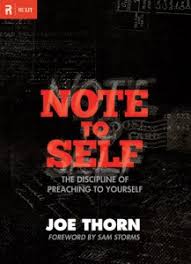
To be a disciple of Jesus you must belong to and work with, for, and through the local church. You need the strengthening, encouragement, and reproof that only the church can give, and you need the church to be faithful to the command of Jesus. God calls his followers to live in community together, loving, serving, sharing, and discipling one another. The church, for all its faults, is essentially connected to God's mission and our spiritual life. You simply cannot survive spiritually on a weekly worship service, podcasts, and books. You need the community more than you probably realize. You can't make it alone; nor can anyone else.
Wednesday, November 16, 2011
Benefits of attributing omnipotence to God
Those who attribute due praise to the omnipotence of God thereby derive a double benefit. He to whom heaven and earth belong, and whose nod all creatures must obey, is fully able to reward the homage which they pay to him, and they can rest secure in the protection of Him to whose control everything that could do them harm is subject, by whose authority, Satan, with all his furies and engines, is curbed as with a bridle, and on whose will everything adverse to our safety depends. In this way, and in no other, can the immoderate and superstitious fears, excited by the dangers to which we are exposed, be calmed or subdued. I say superstitious fears. For such they are, as often as the dangers threatened by any created objects inspire us with such terror, that we tremble as if they had in themselves a power to hurt us, or could hurt at random or by chance; or as if we had not in God a sufficient protection against them.
In this excerpt for The Institutes of the Christian Religion, Calvin puts forward two benefits to those who praise God for and exult in His omnipotence. He indicates that the recognition and resulting regard for the righteous power that resplendently resides in the Ruler of the universe results in two advantages. First, a supremely powerful God has the wherewithal to do good to those who subject themselves to Him. And secondly, superlative safety is within the purview of One to whom all harmful things, of this world or otherwise, are subservient to. God's omnipotence supports His sovereignty. He can back himself up!
Tuesday, November 15, 2011
Book Review - Work Matters
"The worst of work nowadays is what happens to people when they cease to work.” This quote by G. K. Chesterton reveals the high regard in which this famous English writer held work. In his enigmatic style, Chesterton somewhat paradoxically praises work and the worker. Tom Nelson, pastor of Christ Community Church in Leawood, Kansas, also holds work in high regard. In his recently released book, Work Matters, Nelson embarks on a journey in which, as the book's subtitle suggests, he tries to connect Sunday worship to Monday work.
Nelson endeavours to explore work both theologically and practically. He wants the reader to perceive the profound honour of work due to its theological foundation as well as help the reader transform how he actually works. Nelson explicates a theology of vocation by considering work in light of the meta-narrative of the Bible; creation, fall, redemption, and restoration.
Simply put, “To be an image-bearer is to be a worker” (22). Nelson maintains that God is a worker, and one of the most important ways we reflect His glory is through our work. We were created for this. However, as a result of sin, work has become difficult, disillusioning, and distorted. “We must recognize that at this point in redemptive history, our work will not be all we want it to be” (47). The futility of work is not the end of this story the author reminds us. Though sin has marred and maimed work, Christ's work of redemption encompasses what we have called 'the daily grind'. Nelson informs us of the positive and negative aspects of the gospel's effects on work. We are encouraged that “as new creations in Christ ... we are again able to do the work we were created for” (58) and yet we are warned that without Christ “your work will never be all that God intended it to be” (61). Finally, the author touches upon a few ideas concerning the afterlife. Our work here on earth will be rewarded. And, writes Nelson, “if our daily work ... in some way carries over to the new heavens and the new earth, then our present work itself is overflowing with immeasurable value and eternal significance” (73).
I found this section of the book very encouraging as I considered my job and the daily work-a-day life that many of us live. These deep theological truths infuse our work with value, significance, and purpose far beyond the accumulation of money. These are the types of teachings which will indeed help us connect worship and work.
Though Nelson never leaves his theological and doctrinal moorings, he moves on to practical implications of the theology he has just demonstrated. Nelson covers topics such as the witness of our work, our sanctification through work, and common grace and our work. He also examines individual work issues such as contentment, calling, giftedness, and growth.
This was a helpful book written convincingly. It offers a solid theological basis for holding work in high regard and helps us see the inseparable connection between our lives as worshipers and our lives as workers. The truths in this book are fodder for continual application of truth from God to our lives as they are lived daily. For and educational and engaging look into vocation and its theology, I recommend this book.
Nelson, Tom. Work Matters: Connecting Sunday Worship with Monday Work. Wheaton, IL: Crossway, 2011. Print.
Nelson endeavours to explore work both theologically and practically. He wants the reader to perceive the profound honour of work due to its theological foundation as well as help the reader transform how he actually works. Nelson explicates a theology of vocation by considering work in light of the meta-narrative of the Bible; creation, fall, redemption, and restoration.
Simply put, “To be an image-bearer is to be a worker” (22). Nelson maintains that God is a worker, and one of the most important ways we reflect His glory is through our work. We were created for this. However, as a result of sin, work has become difficult, disillusioning, and distorted. “We must recognize that at this point in redemptive history, our work will not be all we want it to be” (47). The futility of work is not the end of this story the author reminds us. Though sin has marred and maimed work, Christ's work of redemption encompasses what we have called 'the daily grind'. Nelson informs us of the positive and negative aspects of the gospel's effects on work. We are encouraged that “as new creations in Christ ... we are again able to do the work we were created for” (58) and yet we are warned that without Christ “your work will never be all that God intended it to be” (61). Finally, the author touches upon a few ideas concerning the afterlife. Our work here on earth will be rewarded. And, writes Nelson, “if our daily work ... in some way carries over to the new heavens and the new earth, then our present work itself is overflowing with immeasurable value and eternal significance” (73).
I found this section of the book very encouraging as I considered my job and the daily work-a-day life that many of us live. These deep theological truths infuse our work with value, significance, and purpose far beyond the accumulation of money. These are the types of teachings which will indeed help us connect worship and work.
Though Nelson never leaves his theological and doctrinal moorings, he moves on to practical implications of the theology he has just demonstrated. Nelson covers topics such as the witness of our work, our sanctification through work, and common grace and our work. He also examines individual work issues such as contentment, calling, giftedness, and growth.
This was a helpful book written convincingly. It offers a solid theological basis for holding work in high regard and helps us see the inseparable connection between our lives as worshipers and our lives as workers. The truths in this book are fodder for continual application of truth from God to our lives as they are lived daily. For and educational and engaging look into vocation and its theology, I recommend this book.
Nelson, Tom. Work Matters: Connecting Sunday Worship with Monday Work. Wheaton, IL: Crossway, 2011. Print.
Monday, November 14, 2011
Promoting the life of faith through examination
Another means to be used diligently for the promoting the life of faith is examination of our state and ways according to the Word, whether we be at present
in a state of sin and wrath,
or of grace and salvation;
that, if we be in a state of sin, we may know our sickness and come to the great Physician while it is called today;
and, if we be in a state of grace, we may know that we are of the truth, and assure our hearts before God with greater confidence, by the testimony of a good conscience (1 John 3:19, 21);
that so our hearts may be more strongly comforted by faith and established in every good work;
and that, if our ways be evil, we may turn from them to the Lord our God through Christ; without whom none come to the Father (Lam. 3: 40; John 14:6).
The Gospel Mystery of Sanctification by Walter Marshall
(line breaks mine)
I am of the opinion that we do not examine our 'state and ways' as often as we should. At least, we don't examine ourselves in light of the Word. We either make a lot of assumptions about the state of our heart and actions, or if we do examine ourselves, we use man-made standards instead of God's standards. Both of these routes will lead us into peril. But this should not dissuade us from a serious search of our inner life to see if we 'be in a state of grace' or 'if our ways be evil'.
Sunday, November 13, 2011
A Mixed Bag

In Work Matters, author Tom Nelson brings the following verses from Ecclesiastes to our attention:
So I hated life, because what is done under the sun was grievous to me, for all is vanity and a striving after wind.Nelson then goes on to comment
I hated all my toil in which I toil under the sun, seeing that I must leave it to the man who will come after me, ... What has a man from all the toil and striving of heart with which he toils beneath the sun? For all his days are full of sorrow, and his work is a vexation. Even in the night his heart does not rest. This also is vanity.
(Ecclesiastes 2:17-18, 22-23 ESV)
The writer of Ecclesiastes reminds us that work in this fallen world is a mixed bag. Work is both a curse and a gift. Work greets us with both frustration and exhilaration. Our work gives evidence of our glorious creation as well as our great estrangement from God and our need for a Savior who will redeem us from sin's devastating curse. (42)
Friday, November 11, 2011
Pre-Piperian Christian Hedonism
Any of you who are familiar with John Piper likely are aware that he is a proponent of and the key spokesperson for a concept he has termed "Christian hedonism". Briefly, Christian hedonism according to Desiring God-Piper's ministry-is defined and explained in this excerpt:
A "Christian Hedonist" sounds like a contradiction, doesn't it? If the term makes you squirm, we understand. But don't throw this paper away just yet. We're not heretics (really!). Nor have we invented another prosperity-obsessed theology by twisting the Bible to sanctify our greed or lust. We are simply stating an ancient, orthodox, Biblical truth in a fresh way.
"All men seek happiness," says Blaise Pascal. "This is without exception. Whatever different means they employ, they all tend to this end. The cause of some going to war, and of others avoiding it, is the same desire in both, attended with different views. The will never takes the least step but to this object. This is the motive of every action of every man, even of those who hang themselves." We believe Pascal is right. And, with Pascal, we believe God purposefully designed us to pursue happiness.
Does seeking your own happiness sound self-centered? Aren't Christians supposed to seek God, not their own pleasure? To answer this question we need to understand a crucial truth about pleasure-seeking (hedonism): we value most what we delight in most. Pleasure is not God's competitor, idols are. Pleasure is simply a gauge that measures how valuable someone or something is to us. Pleasure is the measure of our treasure.
We know this intuitively. If a friend says to you, "I really enjoy being with you," you wouldn't accuse him of being self-centered. Why? Because your friend's delight in you is the evidence that you have great value in his heart. In fact, you'd be dishonored if he didn't experience any pleasure in your friendship. The same is true of God. If God is the source of our greatest delight then God is our most precious treasure; which makes us radically God-centered and not self-centered. And if we treasure God most, we glorify Him most.
Does the Bible teach this? Yes. Nowhere in the Bible does God condemn people for longing to be happy. People are condemned for forsaking God and seeking their happiness elsewhere (Jeremiah 2:13). This is the essence of sin. The Bible actually commands us to delight in the Lord (Psalm 37:4). Jesus teaches us to love God more than money because our heart is where our treasure is (Matt. 6:21). Paul wants us to believe that gaining Christ is worth the loss of everything else (Phil 3:8) and the author of Hebrews exhorts us to endure suffering, like Jesus, for the joy set before us (Heb. 12: 1-2). Examine the Scriptures and you'll see this over and over again.
Christian Hedonism is not a contradiction after all. It is desiring the vast, ocean-deep pleasures of God more than the mud-puddle pleasures of wealth, power or lust. We're Christian Hedonists because we believe Psalm 16:11, "You show me the path of life; in Your presence there is fullness of joy, in Your right hand are pleasures for evermore."
Join us in this pursuit of satisfaction in God, because God is most glorified in us when we are most satisfied in him.With that in mind, I thought I would share a quote from Fyodor Dostoyevsky's novel, The Brothers Karamazov, that hinted at some thoughts of the author that seem to support this idea of Christian hedonism.
If I seem so happy to you, you could never say anything that would please me so much. For men are made for happiness, and any one who is completely happy has a right to say to himself, ‘I am doing God’s will on earth.’ All the righteous, all the saints, all the holy martyrs were happy."
Though perhaps Piper would want to, in our current use of the language, differentiate between joy and happiness, I think Dostoyevsky, speaking through the character Father Zossima, is probably speaking to the same thing. Dostoyevsky's character is recognizing that an enduring quality of the righteous, of the saints, despite sickness and other sufferings, is a profound happiness-or joy-found in God and that this happines should be pursued.
Thursday, November 10, 2011
Dostoyevsky on Repentance

"Fear nothing and never be afraid; and don’t fret. If only your penitence fail not, God will forgive all. There is no sin, and there can be no sin on all the earth, which the Lord will not forgive to the truly repentant! Man cannot commit a sin so great as to exhaust the infinite love of God. Can there be a sin which could exceed the love of God? Think only of repentance, continual repentance, but dismiss fear altogether. Believe that God loves you as you cannot conceive; that He loves you with your sin, in your sin. It has been said of old that over one repentant sinner there is more joy in heaven than over ten righteous men. Go, and fear not. Be not bitter against men. Be not angry if you are wronged. Forgive the dead man in your heart what wrong he did you. Be reconciled with him in truth. If you are penitent, you love. And if you love you are of God. All things are atoned for, all things are saved by love. If I, a sinner, even as you are, am tender with you and have pity on you, how much more will God. Love is such a priceless treasure that you can redeem the whole world by it, and expiate not only your own sins but the sins of others."
-spoken by Father Zossima in The Brothers Karamazov
Wednesday, November 9, 2011
God uses the sun, but needs it not
No creature has a force more wondrous or glorious than that of the sun. For besides lighting the whole earth with its brightness, how great a thing is it that by its heat it nourishes and quickens all living things! That with its rays it breathes fruitfulness into the earth! That it warms the seeds in the bosom of the earth, draws them forth with budding greenness, increases and strengthens them, nourishes them anew, until they rise up into stalks! That it feeds the plant with continual warmth, until it grows into a flower, and from flower into fruit! That then, also, with baking heat it brings the fruit to maturity! Yet the Lord, to claim the full credit for all these things, willed that, before he created the sun, light should come to be and earth be filled with all manner of herbs and fruits [Gen. 1:3, 11, 14]. Therefore a godly man will not make the sun a principal or necessary cause of these things which existed before the creation of the sun, but merely the instrument that God uses because he so wills; for with no more difficulty he might abandon it, and act through himself. John Calvin, Institutes 1.16.2
Tuesday, November 8, 2011
A compartmentalized modern life

Monday, November 7, 2011
Desperate sinfulness and alone sufficiency
The most effectual knowledge for your salvation, is, to understand these two points;
- Walter Marshall, The Gospel Mystery of Sanctification
- the desperate sinfulness and misery of your own natural condition,
- and the alone sufficiency of the grace of God in Christ for your salvation;
- Walter Marshall, The Gospel Mystery of Sanctification
Sunday, November 6, 2011
It’s (Past) Time for a Charismatic Reformation
This article appeared at CHARISMANEWS:
Long before there was an Occupy Wall Street, Martin Luther staged the most important protest in history. He was upset because Roman Catholic officials were promising people forgiveness or early escape from purgatory in exchange for money. So on October 31, 1517, Luther nailed a long list of complaints on the door of a church in Wittenberg, Germany.
Luther’s famous 95 theses were translated from Latin into German and spread abroad. Like a medieval Jeremiah, Luther dared to ask questions that had never been asked, and he challenged a pope who was supposedly infallible. Through this brave monk, the Holy Spirit sparked the Protestant Reformation and restored the doctrine of grace to a church that had become corrupt, religious, dysfunctional, political and spiritually dead.
I am no Luther, but I’ve grown increasingly aware that the so-called “Spirit-filled” church of today struggles with many of the same things the Catholic church faced in the 1500s. We don’t have “indulgences”—we have telethons. We don’t have popes—we have super-apostles. We don’t support an untouchable priesthood—we throw our money at celebrity evangelists who own fleets of private jets.
In honor of Reformation Day, I’m offering my own list of needed reforms in our movement. And since I can’t hammer these on the Wittenberg door, I’ll post them online. Feel free to nail them everywhere.
1. Let’s reform our theology. The Holy Spirit is the third person of the Trinity. He is God and He is holy. He is not an “it.” He is not a blob, a force, or an innate power. We must stop manipulating Him, commanding Him and throwing Him around.
2. Let’s return to the Bible. The Word of God is the foundation for the Christian experience. Any dramatic experience, no matter how spiritual it seems, must be tested by the Word and the Holy Spirit’s discernment. Visions, dreams, prophecies and encounters with angels must be in line with Scripture. If we don’t test them we could end up spreading deception.
3. It’s time for personal responsibility. We charismatics must stop blaming everything on demons. People are usually the problem.
4. Stop playing games. Spiritual warfare is a reality, but we are not going to win the world to Jesus just by shouting at demonic principalities. We must pray, preach and persevere to see ultimate victory.
5. Stop the foolishness. People who hit, slap or push others during prayer should be asked to sit down until they learn gentleness is a fruit of the Holy Spirit.
6. End all spiritual extortion now. Christian television ministries must cease and desist from all manipulative fundraising tactics. We must stop giving platforms to ministers who make outlandish claims of supernatural financial returns, especially when Scripture is twisted, deadlines are imposed and the poor are exploited.
7. No more Lone Rangers. Those who claim to be ministers of God—whether they are traveling evangelists, local pastors or heads of ministries—must be accountable to other leaders. Any who refuse to submit their lives to godly discipline should be corrected.
8. Expose the creeps. Churches should start doing background checks on traveling ministers. Preachers who have been hiding criminal records, lying about their past marriages, preying on women or refusing to pay child support should be exposed as charlatans and shunned if they do not repent.
9. Stop faking the anointing. God is God, and He does not need our “help” to manifest Himself. That means we don’t sprinkle glitter on ourselves to suggest God’s glory is with us, hide fake jewels on the floor to prove we are anointed or pull chicken feathers out of our sleeves to pretend angels are in the room. This is lying to the Holy Spirit.
10. Let’s return to purity. We’ve had enough scandals. The charismatic church must develop a system for the restoration of fallen ministers. Those who fall morally can be restored, but they must be willing to submit to a process of healing rather than rushing immediately back into the pulpit.
11. We need humility. Ministers who demand celebrity treatment, require lavish salaries, insist on titles or exhibit aloofness from others are guilty of spiritual pride.
12. No more big shots. Apostles are the bondslaves of Christ, and should be the most impeccable models of humility. True apostles do not wield top-down, hierarchical authority over the church. They serve the church from the bottom up as true servants.
13. Never promote gifts at the expense of character. Those who operate in prophecy, healing and miracles must also exhibit the fruit of the Spirit. And while we continue to encourage the gift of tongues, let’s make sure we don’t treat it like some kind of badge of superiority. The world needs to see our love, not our glossolalia.
14. Hold the prophets accountable. Those who refuse to take responsibility for inaccurate statements should not be given platforms. And “prophets” who live immoral lives don’t deserve a public voice.
15. Let’s make the main thing the main thing. The purpose of the Holy Spirit’s anointing is to empower us to reach others. We are at a crossroads today: Either we continue off-course, entertained by our charismatic sideshows, or we throw ourselves into evangelism, church planting, missions, discipleship, and compassionate ministry that helps the poor and fights injustice. Churches that embrace this New Reformation will focus on God’s priorities.
J. Lee Grady is contributing editor of Charisma. You can follow him on Twitter at leegrady. He expounds on these topics in his 2010 book The Holy Spirit Is Not for Sale (Chosen).
Friday, November 4, 2011
Swimming in reality for our sanctification
'Work hard' at Christianity can be a bit misleading as an imperative for sanctification. It really depends what you mean by 'work hard'. Tullian Tchividjian addresses what working out our salvation should look like. In his recently released book Jesus + Nothing = Everything, the author leans heavily on the idea that we have hard work to do in our Christian walk, but this hard work does not consist of trying to get the virtues we don't have, but rather it is the hard work of believing in Christ's work that we are called to. For example,

I’ve said before, I used to think that when the apostle Paul tells us to work out our salvation, it means go out and get what we don’t have—get more patience, get more strength, get more joy, get more love, and so on. But after reading the Bible more carefully, I now understand that Christian growth does not happen by working hard to get something we don’t have. Rather, Christian growth happens by working hard to daily swim in the reality of what we do have. Believing again and again the gospel of God’s free justifying grace every day—and resting in his verdict—is the hard work we’re called to. (171-2)
Tchividjian, Tullian. Jesus + Nothing = Everything. Wheaton, IL: Crossway, 2011. Print.
Thursday, November 3, 2011
Surprised by Oxford
A girl-meets-God style memoir of an agnostic who, through her surprising opportunity to study at Oxford, comes to a dynamic personal faith in God. Carolyn Weber arrives for graduate study at Oxford University a feminist from a loving but dysfunctional family, suspicious of men and intellectually hostile to all things religious. As she grapples with her God-shaped void alongside the friends, classmates, and professors she meets, she tackles big questions in search of love and a life that matters. This savvy, beautifully written, credible account of Christian conversion follows the calendar and events of the school year as it entertains, informs, and promises to engage even the most skeptical and unlikely reader.I have really enjoyed the book so far. It is with some envy with which I read the descriptions of studying at Oxford and there rises sensations of nostalgia when the author mentions her time spent in London, Ontario and the University of Western Ontario which I share with the author as a hometown and an alma mater.
Perhaps I will blog some more on the book later, but for know, here was an insightful quote:
No individual, by the very state of existence, can avoid life as a form of servitude; it only remains for us to decide, deny, or remain oblivious to, whom or what we serve. (5)
Wednesday, November 2, 2011
Already in possession
Because
of Christ’s finished work,
Christians already possess
the approval,
the love,
the security,
the freedom,
the meaning,
the purpose,
the
protection,
the new beginning,
the cleansing,
the forgiveness,
the
righteousness,
and the rescue
we intensely long for and,
in fact,
look for in a thousand things smaller than Jesus every day—things
transient, things incapable of delivering the goods.
The
gospel is the only thing big enough to satisfy our deepest, eternal
longings—both now and forever. (77, line breaks mine)
Tchividjian, Tullian. Jesus + Nothing = Everything. Wheaton, IL: Crossway, 2011. Print.
Tuesday, November 1, 2011
The encumberance of entitlement
Tchividjian, Tullian. Jesus + Nothing = Everything. Wheaton, IL: Crossway, 2011. Print.
Monday, October 31, 2011
Tullian on Colossians
Tullian on Colossians from Jesus + Nothing = Everything:

Paul
doesn’t teach doctrines in Colossians that we can’t also find in
his other letters. What’s special about Colossians is not its
doctrine; what’s special about it is its dimensions. Paul’s
statements in Colossians about Christ are truly colossal—sweeping
and immense, soaring beyond the boundaries of our understanding.
As we’ll see, this letter also has huge things to say about our sin and even larger things to say about the gospel and what it accomplishes. In Colossians, Paul is writing to show that Jesus is big, our sin is big, the gospel is big, God’s grace is big, and our rescue is big. There’s nothing small at all about the truths this book communicates. And the epitome, the crowning point of all this vastness, is the incalculable greatness of Jesus Christ himself. (63)
Sunday, October 30, 2011
What should I look for in a local church?
Mark Dever explains some of the most basic components of a healthy church.
Saturday, October 29, 2011
Friday, October 28, 2011
How the New Testament Describes Salvation
Here is a feast for your heart and mind's consumption:
Inexhaustible richness. Luther was right—Justification – the lawcourt metaphor (Rom 5:1; Titus 3:7)
Sanctification – the cultus metaphor (1 Cor 1:2; 1 Thess 4:3)
Adoption – the familial metaphor (Rom 8:15; 1 John 3:1–2)
Reconciliation – the relational metaphor (Rom 5:1–11; 2 Cor 5:18–20)
Washing – the physical cleansing metaphor (1 Cor 6:11; Titus 3:7)
Redemption – the slave market metaphor (Eph 1:7; Rev 14:3–4)
Purchase – the financial transaction metaphor (1 Cor 6:20; 2 Pet 2:1)
Wedding – the marriage metaphor (Eph 5:31-32; Rev 21:2)
Liberation – the imprisonment metaphor (Gal 5:1; Rev 1:5)
New Birth – the physical generation metaphor (John 3:3–7; 1 Pet 1:3, 23)
Illumination – the light metaphor (John 12:35–36; 2 Cor 4:4–6)
New Creation – the redemptive-historical metaphor (2 Cor 5:17; Gal 6:15)
Resurrection – the bodily metaphor (Eph 2:6; Col 3:1)
Union with Christ – the organic or spatial metaphor (Rom 6:1–14; 2 Tim 1:9)
Thanks to Dane Ortlund for this!If a person is without warmth about matters pertaining to God and salvation, as the common man does, then the devil merely laughs. But if your words are aglow in your heart, you will put the devil to flight. (LW 22:357)
Thursday, October 27, 2011
Let us not be ashamed to take pious delight in the works of God

"Meanwhile, let us not be ashamed to take pious delight in the works of God open and manifest in this most beautiful theater. For ... although it is not the chief evidence of faith, yet it is the first evidence in the order of nature, to be mindful that wherever we cast our eyes, all things they meet are works of God, and at the same time to ponder with pious meditation to what end God created them." - John Calvin, Institutes 1.14.20

Top picture by billtacular. Bottom picture by Driss.
Wednesday, October 26, 2011
Churches and the breat commission
More from 9Marks on churches and the great commission:
What does the Great Commission require of local churches?
In order to fulfill Jesus’ command to make disciples of all nations (Matt. 28:19), churches must:- Relentlessly preach the gospel. If a church wants to evangelize the world, it must begin by evangelizing its neighbors. First step: clearly preach the gospel in every public service of the church.
- Teach people to obey everything Jesus commanded. The Great Commission is a command to make disciples of Jesus, people who follow, imitate, and obey him. Growing disciples make better witnesses.
- Equip every member to personally evangelize. The pastor can’t be the only evangelist. A church should train and encourage all of its members in evangelism. Hold Sunday School classes that teach evangelism. Highlight evangelistic material (such as Christianity Explored [link]) for use in personal evangelism. Regularly pray with the church for evangelistic efforts.
- Seek opportunities to partner with missionaries in other nations. Churches should not only strive to evangelize their neighbors but places where Christ is not known (Rom. 15:20). Therefore, seek out partnerships with likeminded brothers and sisters who are already laboring in another country.
- Pray that God would raise up members who would bring the gospel to other nations. Every church’s situation will be different, but every church should pray that God would raise up some of its own people to pursue foreign missions
Tuesday, October 25, 2011
Ponder your privileges to support your sanctification
In the twelfth chapter of The Gospel Mystery of Sanctification, a Puritan classic on the subject of sanctification written by Walter Marshall, the author indicates one of the purposes of the chapter by stating,
Finally, Marshall encourages the reader with this,
The second thing proposed was to lay before you some necessary instructions, that your steps may be guided aright to continue and go forward in this way of holiness, until you be made perfect in Christ.Marshall is concerned, at this point, with giving practical, applicable instructions that will aid the Christian in sanctification. The author offers many advantageous admonitions, and the sixth in the series of suggestions was encouraging to me this morning. Marshall proposes,
Consider what endowments, privileges or properties of your new state are most meet and forcible to incline and strengthen your heart to love God above all, and to renounce all sin, and to give up yourself to universal obedience to His commands; and strive to walk in the persuasion of them, that you may attain to the practice of these great duties.Marshall calls us to consider, to mull over, to think and meditate upon the privileges we have in Christ as a result of being born again. This purposeful pondering will result in an invaluable increase in our sanctification. Specifically, it will strengthen our love for God and our renouncing of sin. This is powerful. So, what are these priveleges and and endowments which we should consider? Marshall lists them,
- you have fellowship with the Father and Son
- you are the temple of the living God
- you live by the Spirit
- you are called to holiness, created for good works in Christ
- your old man is crucified
- you are dead to sin and alive to Christ
- you are being made free from sin
- you have become a servant of righteousness
- you shall have eternal life and appear with Him in glory
Finally, Marshall encourages the reader with this,
Such persuasions as these, when they are deeply rooted, and constantly maintained in our hearts, do strongly arm and encourage us to practice universal obedience, in opposition to every sinful lust; because we look on it, not only as our duty, but our great privilege, to do all things through Christ strengthening us: and God does certainly work in us both to will and to do by these principles, because they properly belong to the gospel, or New Testament, which is the ministration of the Spirit, and the power of God unto salvation (2 Cor. 3:6, 8; Rom. 1:16).Reflect, reconsider, ruminate, and respond to these truths today!
Monday, October 24, 2011
We believe we're much more unhappy
"Alas," said Monte Cristo, "it is the infirmity of our nature always to believe ourselves much more unhappy than those who groan by our sides."I must confess the above quote, from Alexadre Dumas' classic work of fiction The Count of Monte Cristo, was convicting to read. The adage that all truth is God's truth is certainly true in this case. I find that I overestimate my own suffering, maximizing it's impact in my own mind. Simultaneously, I also minimize the difficulty that other people are experiencing. I want to have a disposition that recognizes other's suffering and respond accordingly. My inward focus and self- inflated view of my own troubles is far from Christ-exalting.
Sunday, October 23, 2011
Expectations
More good stuff from 9Marks:
What should a church expect from its members?
A church should expect that its members will:
- Attend services regularly. Hebrews 10:25 commands Christians not to forsake assembling together. Attending services regularly is one of the basic commitments of membership and one of the basic ways that a church member can grow in the faith, get to know other Christians, and allow the church leaders to shepherd and watch over his life.
- Attend communion particularly. Members should strive to be present when Christ’s death is commemorated and the church’s unity is displayed in communion.
- Attend members’ meetings consistently (if the church is congregational). This is when the church makes decisions as a church that affect the whole church.
- Pray regularly. If your church has a membership directory, consider encouraging members to use it as a prayer list.
- Give regularly. The apostle Paul writes, “One who is taught the word must share all good things with the one who teaches” (Gal. 6:6).
- Build relationships with other members. Being a member in a local church is like being a hand or an eye (1 Cor. 12:21). You can’t function without all the other parts of the body. Just as a body functions when each part does its job and works together with all the other members, a local church is built up into maturity in Christ as the members minister in an intimately interrelated way (Eph. 4:15-16, 1 Cor. 12:12-26). So a church should expect that its members will build relationships with other members.
- Submit to the church’s leaders. The Scripture says, “Obey your leaders and submit to them, for they are keeping watch over your souls, as those who will have to give an account. Let them do this with joy and not with groaning, for that would be of no advantage to you” (Heb. 13:17).
- Serve as God gives opportunity. God has given spiritual gifts to every member of the body of Christ so that everyone would use his or her gifts to build up the entire body (1 Cor. 12:7). A church should expect that all of its members will serve the whole church as God enables.
Saturday, October 22, 2011
Bloodlines documentary
The Christian Fellowship group I supervise at the highschool where I worked watched and enjoyed the documentary Bloodlines. I encourage you to watch it.
Bloodlines Documentary with John Piper from Crossway on Vimeo.
Friday, October 21, 2011
How to Think about Curses in the Psalms
From Justin Taylor's blog:
How to Think about Curses in the Psalms
How can it possibly be right for God’s people to pray in this way?
Many have supposed that this is an area in which the ethics of the NT improve upon and supersede the OT.
Others suggest that these only apply to the church’s warfare with its ultimate enemy, Satan, and his demons.
Neither of these is fully satisfying, both because the NT authors portray themselves as heirs of OT ethics (cf. Matt. 22:34-40) and because the NT has some curses of its own (e.g., 1 Cor. 16:22; Gal. 1:8-9; Rev. 6:9-10), even finding instruction in some of the Psalms’ curses (e.g., Acts 1:20 and Rom. 11:9-10, using Psalms 69 and 109).
Each of the psalm passages must be taken on its own, and the notes address these questions (e.g., see notes on 5:10; 35:4-8; 58:6-9; 59:11-17; 69:22-28; 109:6-20; and the note on Psalm 137, which contains the most striking curse of all). At the same time, some general principles will help in understanding these passages.
First, one must be clear that the people being cursed are not enemies over trivial matters; they are people who hate the faithful precisely for their faith; they mock God and use ruthless and deceitful means to suppress the godly (cf. 5:4-6, 9-10; 10:15; 42:3; 94:2-7).
Second, it is worth remembering that these curses are in poetic form and can employ extravagant and vigorous expressions. (The exact fulfillment is left to God.)
Third, these curses are expressions of moral indignation, not of personal vengeance. For someone who knows God, it is unbearably wrong that those who persecute the faithful and turn people away from God should get away with it, and even seem to prosper. Zion is the city of God, the focus of his affection (cf. Psalms 48; 122); it is unthinkable that God could tolerate cruel men taking delight in destroying it. These psalms are prayers for God to vindicate himself, displaying his righteousness for all the world to see (cf. 10:17-18). Further, these are prayers that God will do what he said he will do: 35:5 looks back to 1:4, and even 137:9 has Isaiah 13:16 as its backdrop. Most of these prayers assume that the persecutors will not repent; however, in one place (Ps. 83:17), the prayer actually looks to the punishment as leading to their conversion.
Fourth, the OT ethical system forbids personal revenge (e.g., Lev. 19:17-18; Prov. 24:17; 25:21-22), a prohibition that the NT inherits (cf. Rom. 12:19-21).
Thus, when the NT writers employ these curses or formulate their own (as above), they are following the OT guidelines. Any prayer for the Lord to hasten his coming must mean disaster for the impenitent (2 Thess. 1:5-10). Yet Christians must keep as their deepest desire, even for those who mean harm to the church, that others would come to trust in Christ and love his people (cf. Luke 23:34; Rom. 9:1-3; 10:1; 1 Tim. 2:4; 2 Pet. 3:9). Hence, when they pray for God to protect his people against their persecutors, they should be explicit about asking God to lead such people to repentance.
With these things in mind, then, it is still possible that the faithful today might sing or read aloud even these sections of the Psalms, if it takes place in a service of worship, under wise leadership, for the good of the whole people of God.
How to Think about Curses in the Psalms
Many psalms call on God for help as the faithful are threatened with harm from enemies (often called “the wicked”—frequently the unfaithful who persecute the godly, and sometimes Gentile oppressors). In a number of places, the requested help is that God would punish these enemies. Christians, with the teaching and example of Jesus (in passages like Matt. 5:38-48; Luke 23:34; 1 Pet. 2:19-23; cf. Acts 7:6), may wonder what to make of such curses:
From Jack Collins’s “Introduction to the Psalms” in the ESV Study Bible:How can it possibly be right for God’s people to pray in this way?
Many have supposed that this is an area in which the ethics of the NT improve upon and supersede the OT.
Others suggest that these only apply to the church’s warfare with its ultimate enemy, Satan, and his demons.
Neither of these is fully satisfying, both because the NT authors portray themselves as heirs of OT ethics (cf. Matt. 22:34-40) and because the NT has some curses of its own (e.g., 1 Cor. 16:22; Gal. 1:8-9; Rev. 6:9-10), even finding instruction in some of the Psalms’ curses (e.g., Acts 1:20 and Rom. 11:9-10, using Psalms 69 and 109).
Each of the psalm passages must be taken on its own, and the notes address these questions (e.g., see notes on 5:10; 35:4-8; 58:6-9; 59:11-17; 69:22-28; 109:6-20; and the note on Psalm 137, which contains the most striking curse of all). At the same time, some general principles will help in understanding these passages.
First, one must be clear that the people being cursed are not enemies over trivial matters; they are people who hate the faithful precisely for their faith; they mock God and use ruthless and deceitful means to suppress the godly (cf. 5:4-6, 9-10; 10:15; 42:3; 94:2-7).
Second, it is worth remembering that these curses are in poetic form and can employ extravagant and vigorous expressions. (The exact fulfillment is left to God.)
Third, these curses are expressions of moral indignation, not of personal vengeance. For someone who knows God, it is unbearably wrong that those who persecute the faithful and turn people away from God should get away with it, and even seem to prosper. Zion is the city of God, the focus of his affection (cf. Psalms 48; 122); it is unthinkable that God could tolerate cruel men taking delight in destroying it. These psalms are prayers for God to vindicate himself, displaying his righteousness for all the world to see (cf. 10:17-18). Further, these are prayers that God will do what he said he will do: 35:5 looks back to 1:4, and even 137:9 has Isaiah 13:16 as its backdrop. Most of these prayers assume that the persecutors will not repent; however, in one place (Ps. 83:17), the prayer actually looks to the punishment as leading to their conversion.
Fourth, the OT ethical system forbids personal revenge (e.g., Lev. 19:17-18; Prov. 24:17; 25:21-22), a prohibition that the NT inherits (cf. Rom. 12:19-21).
Thus, when the NT writers employ these curses or formulate their own (as above), they are following the OT guidelines. Any prayer for the Lord to hasten his coming must mean disaster for the impenitent (2 Thess. 1:5-10). Yet Christians must keep as their deepest desire, even for those who mean harm to the church, that others would come to trust in Christ and love his people (cf. Luke 23:34; Rom. 9:1-3; 10:1; 1 Tim. 2:4; 2 Pet. 3:9). Hence, when they pray for God to protect his people against their persecutors, they should be explicit about asking God to lead such people to repentance.
With these things in mind, then, it is still possible that the faithful today might sing or read aloud even these sections of the Psalms, if it takes place in a service of worship, under wise leadership, for the good of the whole people of God.
Thursday, October 20, 2011
Heidelberg and DeYoung on God's will
Question 124. Which is the third petition?
Answer: "Thy will be done on earth as it is in heaven"; that is, grant that we and all men may renounce our own will, and without murmuring obey thy will, which is only good; that every one may attend to, and perform the duties of his station and calling, as willingly and faithfully as the angels do in heaven.
I return again this morning to Kevin DeYoung's commentary on the Heidelberg Catechism entitled The Good News We Almost Forgot. I will reiterate my opinion that this is a first-rate book exploring and expounding this historical creed of immeasurable significance. What a beautiful creed and a similarly exceptional commentary on it.
As can be seen above, the Lord's Day 49-Question 124-of the Catechism concerns the will of God as it appears in the Lord's prayer. DeYoung's piercing and prudent discussion of God's will is extremely helpful. The entire chapter is worth reading, but for today consider this excerpt:
We need divine help so the God's will becomes our will ...God must make us willing. And God alone can make us able ... The will of god is not our duty or drudgery. It is our delight.And yet, it is a tortuous delight. It requires struggle against sin and the fight of faith. It means death, death, and more death. It would seem easiest for God to simply annihilate our wills and infuse our souls with His. But that's not His way. He prefers slow, glorious growth. He doesn't want His will in us as much as He wants our will to be His. He wants us to want what He wants, love what He loves, and hate what He hates. (229)
"He doesn't want His will in us as much as He wants our will to be His." What a gracious and glorious God He is to both desire this for us and enable us to, step by step, accomplish this. Let our prayer be: "Not my will but Yours be done."
Wednesday, October 19, 2011
Thomas Watson on meditation
I was re-reading some notes I made on Heaven Taken By Storm by puritan Thomas Watson. Like many puritan writers, Watson presents his ideas as an argument that is logical and meticulous. In the section I share today, Watson is discussing meditation. I have broken down his argument into point-form. I found it quite interesting. The topic is meditation.
- Meditation – “Hearing begets knowledge, but meditation begets devotion.” “Many say they cannot meditate, because they lack memory; but is it not rather because they lack affection?”
- Meditation is:
- Retiring from the world
- Serious thinking upon God
- Reasons we should provoke ourselves to meditate:
- Meditation is contrary to flesh and blood
- Satan tries to hinder us
- What should we meditate on?
- The corruption of your nature
- The death and passion of Christ
- this produces repentance
- this fires our hearts with love to God
- evidences for our participation in heaven
- Were you convinced of sin?
- Have you taken Christ on his terms?
- Do you have the indwelling presence of the Spirit of God?
- Uncertainty of earthly comforts
- This keeps us from being deceived by the world
- This moderates our affections for them
- This causes us to pursue certainty: grace
- God’s severity against sin
- Eternal life
- It is a spiritual life
- It is a glorious life
- It will cause us to long for spiritual life
- It will comfort us in the shortness of natural life
- What can meditation do?
- It makes the Word preached of profit
- It quickens the affections
- It causes transformation
- It produces reformation
These thoughts on meditation are ... well ... worth meditating on!
Tuesday, October 18, 2011
Sanctification Through Imagination

The imagination-stretching images are God's way of sliding the spiritual defibrillator over the slowing hearts of sluggish Christians. The images are for Christians who are growing lazy and beginning to compromise with the world, Christian who are allowing their hearts to become gradually hardened by sin. The answer is a spiritual shock. It is God's way of confronting worldliness and idolatry in the church. When idolatry begins to lure the Christian heart, God reaches into our imagination with images intended to stun us back to spiritual vibrancy.
- Tony Reinke in Lit!
In this passage, Reinke is discussing the power of imagination and how God uses it in our lives, particularly through the book of revelation. His larger point in regards to books and their reading is that to "view imaginative literature as a genre fit only for the amusement of children is an act of spiritual negligence." We need to use, grow, strengthen, and stretch our imagination for the purpose of our sanctification if nothing else.
I recognize the truth of this concept. Last night, while reading The Count of Monte Cristo, my affections for Christ were raised as I read of reconciliation between some of the characters. The imaginative scenario presented by Alexandre Dumas caused me to reflect upon and rejoice in the reconciliation provided by Christ. It is unlikely that a newspaper or stock quotes or weather report would have the same effect. I have enjoyed and been edified by reading more fiction literature this year-more than I have read in a long time. And I'm appreciating the encouragement and instruction found in Reinke's excellent book.
Sunday, October 16, 2011
Enslaved yet accountable

The person thus enslaved to sin cannot believe without the miracle of regeneration, but is nevertheless accountable because of the evil of his heart, which disposes him to be unmoved by reasonable motives in the gospel.
(Piper, John, and Jonathan Edwards. God's Passion for His Glory: Living the Vision of Jonathan Edwards, with the Complete Text of The End for Which God Created the World. Wheaton, IL: Crossway, 2006. Print. 88)
Friday, October 14, 2011
The Sabbath and Heidelberg
Lord's Day 38
Q. What is God's will for you
in the fourth commandment?
A. First,
that the gospel ministry and education for it be maintained,
and that, especially on the festive day of rest,
I regularly attend the assembly of God's people
to learn what God's Word teaches,
to participate in the sacraments,
to pray to God publicly,
and to bring Christian offerings for the poor.
Second,
that every day of my life
I rest from my evil ways,
let the Lord work in me through his Spirit,
and so begin already in this life
the eternal Sabbath.
I found the second part of the Heidelberg Catechism's answer to this question intriguing. To be honest, I've never heard that concept related to the day of rest. This is a wonderful facet of what 'rest' means for those under the New Covenant. To rest from my evil ways is a compelling admonition that addresses our participation in our sanctification. It is also very apparent that it is often sin that steals our rest from, whether that be in the pursuit of fame or money, or in the fretting and anxiousness of a heart not fully trusting in the goodness of our sovereign God. Let's practice the observance of the Sabbath today and in the power of Christ rest from our evil ways.
Thursday, October 13, 2011
The importance of church history
Why understanding church history is important
Andy Naselli pens 8 very good reasons for reading church history:
I often tell people that I majored in history in college because I like stories. I still like stories, but I have pursued an ongoing study of church history because I think it makes me a better Christian and a better pastor. Here are some reasons I think you should read church history, too.
1. Theological
Millard Erickson is right, “History is theology’s laboratory, in which it can assess the ideas that it espouses or considers espousing.” (Christian Theology, 28). Church history shows us our theological blind spots, reminds us of crucial topics our era ignores, provides confessional guiderails, and gives us the writings of Augustine, Luther, Calvin, and Edwards–among others.
2. Inspirational
If you are like me, ministry is often hard work and the fruit sometimes seems slow growing. Reading stories of God’s work in revivals and awakenings stretches my faith and rouses me to pray bigger prayers. Also, reading about the fruits of long-term, faithful preaching and prayer helps keep me steadfast.
3. Ecclesiological
Pragmatic approaches to “doing church” are so common today one might think that this is the way it has always been. Reading the Reformers, the Puritans, and others reveals they asked more than just, “What works?” They thought the Bible teaches what the church is and what it should do. Historical discussions of the nature and marks of a true church challenge the way we think about the church in a way the latest church growth manual simply cannot.
4. Missiological
We tend to be locally minded and even ethnocentric. Most of us envision a ministry in a place like the one we grew up in among a people that look like us. Learning what God has done to spread the Gospel over the past 2000 years helps broaden our vision.
5. Hermeneutical
Christians have not been using the same hermeneutics book for the past 2,000 years. We are now able to see some of the interpretive errors of earlier eras (for example, over-allegorizing), and try to avoid some of their pitfalls. However, we sometimes forget that our present cultural and intellectual context likely shapes our own biblical interpretation in unhelpful ways. Commentaries and sermons from other eras help reveal some of the errors in our own methods of interpreting God’s word.
6. Reformational
Jesus tells the church in Ephesus, “Remember therefore from where you have fallen; repent, and do the works you did at first” (Rev 2:5). The problem is that we often don’t “remember.” We don’t realize we have fallen because we never look back to a time when the church was more faithful in certain ways. Church history can help us realize our need for reform and call us back to faithfulness.
7. Correctional
Studying church history shows us how small deviations from biblical truth play out over time. It is helpful to know if you or someone in your church is holding a deviant or unbalanced doctrine before it infects your entire theology. Church history is one tool that will help you do so.
8. Doxological
The sheer fact of believers across centuries and continents worshiping God reminds us that our Lord is over all and everywhere. A poem scratched out by a persecuted Christian in prison, or the testimony of a missionary’s communion with Christ as he faced imminent martyrdom, or the story of whole peoples in Burma coming to Christ, all point to the God who alone can satisfy every human heart.
HT: Already Not Yet
I often tell people that I majored in history in college because I like stories. I still like stories, but I have pursued an ongoing study of church history because I think it makes me a better Christian and a better pastor. Here are some reasons I think you should read church history, too.
1. Theological
Millard Erickson is right, “History is theology’s laboratory, in which it can assess the ideas that it espouses or considers espousing.” (Christian Theology, 28). Church history shows us our theological blind spots, reminds us of crucial topics our era ignores, provides confessional guiderails, and gives us the writings of Augustine, Luther, Calvin, and Edwards–among others.
2. Inspirational
If you are like me, ministry is often hard work and the fruit sometimes seems slow growing. Reading stories of God’s work in revivals and awakenings stretches my faith and rouses me to pray bigger prayers. Also, reading about the fruits of long-term, faithful preaching and prayer helps keep me steadfast.
3. Ecclesiological
Pragmatic approaches to “doing church” are so common today one might think that this is the way it has always been. Reading the Reformers, the Puritans, and others reveals they asked more than just, “What works?” They thought the Bible teaches what the church is and what it should do. Historical discussions of the nature and marks of a true church challenge the way we think about the church in a way the latest church growth manual simply cannot.
4. Missiological
We tend to be locally minded and even ethnocentric. Most of us envision a ministry in a place like the one we grew up in among a people that look like us. Learning what God has done to spread the Gospel over the past 2000 years helps broaden our vision.
5. Hermeneutical
Christians have not been using the same hermeneutics book for the past 2,000 years. We are now able to see some of the interpretive errors of earlier eras (for example, over-allegorizing), and try to avoid some of their pitfalls. However, we sometimes forget that our present cultural and intellectual context likely shapes our own biblical interpretation in unhelpful ways. Commentaries and sermons from other eras help reveal some of the errors in our own methods of interpreting God’s word.
6. Reformational
Jesus tells the church in Ephesus, “Remember therefore from where you have fallen; repent, and do the works you did at first” (Rev 2:5). The problem is that we often don’t “remember.” We don’t realize we have fallen because we never look back to a time when the church was more faithful in certain ways. Church history can help us realize our need for reform and call us back to faithfulness.
7. Correctional
Studying church history shows us how small deviations from biblical truth play out over time. It is helpful to know if you or someone in your church is holding a deviant or unbalanced doctrine before it infects your entire theology. Church history is one tool that will help you do so.
8. Doxological
The sheer fact of believers across centuries and continents worshiping God reminds us that our Lord is over all and everywhere. A poem scratched out by a persecuted Christian in prison, or the testimony of a missionary’s communion with Christ as he faced imminent martyrdom, or the story of whole peoples in Burma coming to Christ, all point to the God who alone can satisfy every human heart.
HT: Already Not Yet
Wednesday, October 12, 2011
Let the Good News sink in
Gospel transformation
“The gospel transforms us in heart, mind, will, and actions precisely because it is not itself a message about our transformation. Nothing that I am or that I feel, choose, or do qualifies as Good News. On my best days, my experience of transformation is weak, but the gospel is an announcement of a certain state of affairs that exists because of something in God, not something in me; something that God has done, not something that I have done; the love in God’s heart which he has shown in his Son, not the love in my heart that I exhibit in my relationships. Precisely as the Good News of a completed, sufficient, and perfect work of God in Christ accomplished for me and outside of me in history, the gospel is ‘the power of God unto salvation’ not only at the beginning but throughout the Christian life. In fact, our sanctification is simply a lifelong process of letting that Good News sink in and responding appropriately; becoming the people whom God says that we already are in Christ.”
— Michael Horton
The Gospel-Driven Life (Grand Rapids, Mi.: Baker Books, 2009), 77
(HT: Already Not Yet via Of First Importance)
— Michael Horton
The Gospel-Driven Life (Grand Rapids, Mi.: Baker Books, 2009), 77
(HT: Already Not Yet via Of First Importance)
Tuesday, October 11, 2011
Book Review - Awaiting A Savior
When confronted by some social justice
issue, whether it be modern slavery or abortion or poverty, many
people have one of two reactions. The first is to do something. Write
a letter. Raise a sign. Join a march. Protest. There are many avenues
for these 'doers', but upon hearing of injustice they immediately
take action. That's not me. The other reaction that is common when
the dreadful news of some tragic circumstance is revealed is to
become overwhelmed and despair of being able to do anything about it.
Hearing of starvation, or death due to 'acts of God', or piercing
poverty can cause many to throw their arms up or to throw down their
arms. That's me. When major suffering of other people is brought to
my attention, my first reaction is often one of dejection and
despondency thoroughly mingled with pessimism. Armstrong cautions
against both these reactions and causes us to consider poverty in
another light. Perhaps that is why Aaron Armstrong's book on poverty
was a refreshing read for me.
Awaiting a Savior, to my
knowledge Armstrong's first book, is an intelligent and penetrating
look at poverty that is neither a knee-jerk reactionary call to
action nor a curmudgeonly call to maintain the present state of
affairs. Armstrong's approach does not accept my tendency to bury my
head nor does it raise the alarm for radical protesters. It is a
balanced approach to and discussion of an age-old problem; poverty.
The strength of this book is
Armstrong's consistent perspective that is based on a theological and
biblical approach to poverty. The author considers the problem of
poverty by setting aside the symptoms, as well as the cures, and
focuses mainly on the disease and its causes.
The ins and outs of poverty are
explained as Armstrong traces the origins and early history of sin
through the biblical narrative. Sin is the father of poverty and
Armstrong reminds us of, or perhaps introduces us to, poverty's
heinous legacy which was absent in the creation yet formed
quickly after the fall. This is solid Bible-saturated teaching
that gives one a foundation for understanding this social ill. This
teaching dismisses any hope for a man-centered and man-created
utopia. But, it does not leave us without hope.
Hope is found in Armstrong's analysis
of poverty in light of the redemption that Christ's life,
death, and resurrection provides. Aptly sub-titled The Gospel, The
New Creation And The End Of Poverty, this book gives us a solid
gospel-perspectives and some faith-engendering gospel remedies.
Despite Armstrong maintaining that there will be no end to poverty in
this life, he suggests how faith with works, grace-enabled service,
gratitude-inspired generosity, and a heart postured to worship Jesus
can have a profound effect on poverty and those who suffer from it.
Hope is further entrenched, despite
dire statistics and ever present sin, as the author focuses on the
restoration of all things which is, of course, the climactic
“End of Poverty and an Eternity with Jesus” (93). In his own
words, “We must bring immediate relief to those suffering from
severe drought and famine, but we must also bring them the promise
that there is one who will someday end their suffering” (98-9).
Throughout the book Armstrong
encourages endeavours to bring help to those suffering under the
weight of poverty. This is not just a book for the head and the
heart; Armstrong believes the hands must be used to help those in
need. The appendix, along with many appeals throughout the book,
gives clear and concise suggestions for an actual response on our
parts.
I found this book both encouraging and
enlightening and eagerly endorse it!
Monday, October 10, 2011
Happy Thanksgiving!
Some people I'm thankful for:

There are many others I'm thankful for, but this picture has a bunch of them!

There are many others I'm thankful for, but this picture has a bunch of them!
Sunday, October 9, 2011
Lit! Interview
I am thoroughly enjoying Lit! by Tony Reinke and I thought I would share this interview with Justin Taylor for today's post:
0:14 – Tony’s desire for the book
1:22 – What kind of books should I be reading? (6 Priorities for determining what to read)
3:17 – Creating time to read
5:10 – Tips for growing as a reader
7:21 – The value of fiction
9:08 – The theological importance of reading
0:14 – Tony’s desire for the book
1:22 – What kind of books should I be reading? (6 Priorities for determining what to read)
3:17 – Creating time to read
5:10 – Tips for growing as a reader
7:21 – The value of fiction
9:08 – The theological importance of reading
Friday, October 7, 2011
Interesting Article on Apostles
The Biblical Basis for Apostles Today
originally at adrianwarnock.com
by Don WalkerIn the synoptic gospels, the term apostle is used of the 12 disciples personally commissioned by our Lord to be the vanguard of those sent to proclaim the gospel — initially to Jerusalem, then to all the nations of the earth. In the New Testament epistles, apostles are mentioned in two contexts: Paul, in Ephesians 4:11-16, outlines the equipping gifts (Greek word-“doma”), addressing their place and function in the Church; and in 1 Corinthians 12, where Paul makes reference to the various ministries (apostles, administrators, workers of miracles, interpreters of tongues, etc.). It is these two references which provide for us the link between the apostles of the New Testament era and those throughout Church history, even unto our present day.
There are over 80 references to apostles and at least 22 individual apostles mentioned in the New Testament. (By contrast, there are only four prophets mentioned by name, only one evangelist, and one teacher.) In addition to Jesus, the Chief Apostle (Heb. 3:1), and the Twelve chosen by Him, we have the following: Matthias-chosen to replace Judas (Acts 1:24-26), Barnabas (Acts 14:4,14), Paul (Acts 14:4,14), Epaphroditus (Phil. 2:25), Silas (1 Thess. 1:1, 2:6), Timothy (1Thess. 1:1, 2:6), James, the Lord’s brother (Gal. 1:19, 2:9), Andronicus (Rom. 16:7), Junias (Rom. 16:7).
In addition to these, there are others who, by inference, could be added to the list: Apollos (I Cor. 4:6-13), Titus (II Cor. 8:23), two unnamed brethren (II Cor. 8:23), Erastus (Acts 19:22), Tychius (II Tim. 4:12), Judas (called Barsabbas) (Acts 15:22-23).
Paul is undoubtedly unique among the apostles. Unfortunately, because we know more about his apostleship than any other in the New Testament, we make him the model. This fails to take into account the unusual nature of his ministry. For this reason, before we can continue, we must consider some of the important factors involved in his New Testament Role.
Paul humbly, but consistently, attests to his apostleship in most of his epistles. He did not consider himself, in terms of this apostolic ministry, to be in any way inferior to the “Twelve” (2 Cor. 11:15, 12:11-12). He referred to himself as “one born out of due season” in relationship to the Twelve (1 Cor. 15:5-8). Paul qualified his having “seen” the Lord on the same level as those who were actual “eyewitnesses” of the Resurrection (1 Cor. 9:1-2, 15:8). Paul’s apostleship was confirmed with miraculous signs and wonders (Acts 14:27, 15:3-12; 2 Cor. 12:12). The Council at Jerusalem recognized Paul’s apostolic ministry (Gal. 2:7-8). Paul wrote 13, possibly 14, books of the New Testament. Revelation was given unto him unlike any other apostle, except maybe John. Even Peter said Paul wrote things hard to be understood, but acknowledged his writings as being inspired scripture (2 Peter 3:15-16). Paul was able to say with authority, “I received of the Lord that which I delivered to you” — not of the other apostles, who added nothing to him as far as apostolic revelation was concerned (1 Cor. 11:23, 15:3; Gal. 1:11-12, 2:1-9; Eph. 3:1-12).
If all apostles were required to have the same credentials as Paul, the field becomes quite narrow. But there were other apostles in Paul’s day, some about which we know little or nothing. Were they any less apostolic than Paul was? Certainly they did not carry the ministry Paul did, but they did function as apostles.
Not all apostles were writers of scripture (Epaphroditus, for example, or most of the “Twelve”.) Nor is their sufficient evidence to conclude that all apostles were necessarily “eyewitnesses” to the Resurrection. For example, there is no scriptural indication that Timothy was such a witness. The argument that apostles must be eyewitness of Jesus, based upon Paul’s statement, “Am I not an apostle? Have I not seen Jesus our Lord” (1Cor. 9:1) is offered by some as a “proof text” opposing apostolic ministry in the Church today. In actuality, the text seems to show that Paul’s reference to seeing Jesus is only included as a secondary credential, not as proof of his apostleship.
I would contend that apostles have always been in the Church throughout her history. They often times were not called “apostles,” but there is no other way to describe their function. These men were spiritual fathers and master builders. Some pioneered missionary works in unreached lands; others lead movements and established churches. The spheres of influence may have varied with each, but the apostolic function was apparent.
Thursday, October 6, 2011
How regeneration affects reading
It is possible to have a photographic memory and the capacity to remember everything you read with flawless recollection.But if the Spirit of God has not reached down and unwrapped the black veil from over your heart, eternal truth will be pitch darkness to you. You may see words on a cold page of paper, but you will not feel the warm brightness of Christ's glory. And you will not experience eternal life.

The day you are lit, the day God removes the veil from your heart and reveals the glory of his Son to you, is an experience that will radically change your life. And beholding the glory of Christ will transform how you read books-every book. (Reinke, Tony. Lit!: a Christian Guide to Reading Books. Wheaton, IL: Crossway, 2011. Print. 32-33)
The day you are lit, the day God removes the veil from your heart and reveals the glory of his Son to you, is an experience that will radically change your life. And beholding the glory of Christ will transform how you read books-every book. (Reinke, Tony. Lit!: a Christian Guide to Reading Books. Wheaton, IL: Crossway, 2011. Print. 32-33)
Wednesday, October 5, 2011
Mark and Doug on gifts
This is video is fabulous. Driscoll and Wilson are two funny, intelligent, gracious and serious pastors who discuss some issues about spiritual gifts. Please watch!
Doug Wilson Interviews Mark Driscoll | Part II - Spiritual Gifts & Cessationism from Canon Wired on Vimeo.
Subscribe to:
Posts (Atom)